EPA Proposes New Rules Further Eroding Clean Water Protections
Tap title to read story
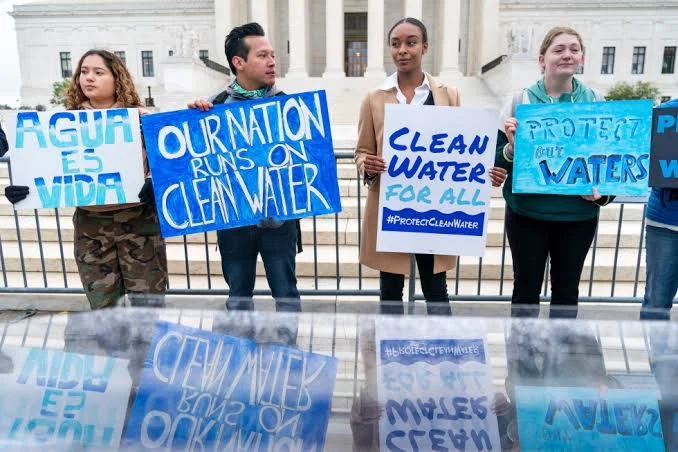
The United States Environmental Protection Agency has proposed new revisions redefining waters of the United States under the Clean Water Act. The regulatory action follows the Supreme Court's two thousand twenty-three Sackett versus Environmental Protection Agency decision, which curtailed federal authority over certain wetlands and streams. Environmental researchers and advocacy groups caution that the narrower definition excludes millions of acres of wetlands crucial for flood protection and ecological health. The proposal relies on ordinary conditions to determine permanent waterways, drawing criticism from scientists who cite intensifying climate volatility, severe droughts, and heavy precipitation events. Critics argue the updated tests prioritize commercial and industrial interests over empirical scientific evidence, potentially endangering clean drinking water resources nationwide. Conversely, proponents contend that clearer jurisdictional boundaries reduce regulatory burdens on agricultural producers, landowners, and commercial developers. Public commentary periods follow the agency's publication, with environmental organizations urging stricter federal safeguards to preserve vital aquatic ecosystems and maintain effective regional flood mitigation infrastructure across the country.
More context
Timeline
- On May twenty-fifth, two thousand twenty-three, the Supreme Court issued the landmark Sackett versus EPA ruling.
- On August twenty-ninth, two thousand twenty-three, agencies redefined waters to align with the Sackett decision.
- On January fifteenth, two thousand twenty-four, public comment submissions opened regarding preliminary jurisdictional wetland guidance.
- On November tenth, two thousand twenty-four, environmental groups filed formal petitions challenging preliminary implementation standards.
- On June twelfth, two thousand twenty-five, federal courts reviewed challenges concerning ephemeral stream and wetland classifications.
- On September tenth, two thousand twenty-five, scientific panels published reports detailing regional wetland flood mitigation values.
- On January twentieth, two thousand twenty-six, the EPA announced upcoming revisions to waters of the United States.
- On February fifth, two thousand twenty-six, agency officials released the newly proposed regulatory testing definitions.
- On March fourth, two thousand twenty-six, researchers submitted extensive data contesting ordinary condition baseline standards.
- On March sixth, two thousand twenty-six, stakeholders began reviewing the proposed rule text during public windows.
- Expectations indicate public comment evaluations will continue throughout coming months before finalization.
- Analysts predict prolonged litigation from environmental coalitions following any official rule adoption.
Why it matters
Immediate US impact: Federal oversight diminishes, leaving numerous waterways unprotected across states. Possible long-term US impact: State agencies may face increased burdens managing local water quality. Most affected groups: Environmental groups, agricultural sectors, developers, and state regulators. Reader priority: Prioritize official federal registers and peer-reviewed scientific policy assessments.
Coverage notes
Left: Environmental groups criticize weakened protections ignoring climate and flood risks. Center: Reports focus administratively on balancing judicial mandates and regulatory burdens. Right: Proponents praise reduced regulatory oversight benefiting agriculture and property development.
Primary report
EPA proposed new rules narrowing Clean Water Act protections on March 6, 2026.
Sources
- New York Times
- Washington Post
- San Francisco Chronicle
- Reuters
- The Hill
- Bloomberg Law
- Politico
- National Public Radio
- USA Today
- Chicago Tribune
- Houston Chronicle
- Star Tribune
- Seattle Times
- Miami Herald
- Detroit Free Press
- Arizona Republic
- Cleveland Plain Dealer
- St. Louis Post-Dispatch
- Sacramento Bee
- Kansas City Star
- Indianapolis Star
- Columbus Dispatch
- Milwaukee Journal Sentinel
- Baltimore Sun
- Orlando Sentinel
- Las Vegas Review-Journal
- Salt Lake Tribune
- Oklahoman
- Omaha World-Herald
- Des Moines Register
- Louisville Courier Journal
- Richmond Times-Dispatch
- Charlotte Observer
- Nashville Tennessean
- Providence Journal
- Hartford Courant
- Wall Street Journal
- Dallas Morning News
- epa.gov
JQJO Editorial Desk · Human reviewed · AI assisted. Report a correction.