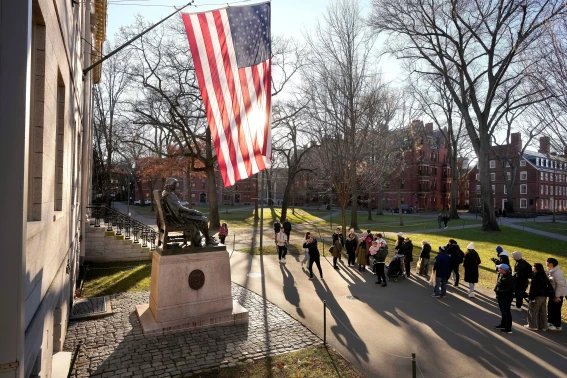
Trump administration pushes to remove tax exemption for private colleges with DEI policies
Tap title to read story
The Treasury Department and Internal Revenue Service proposed regulations Thursday that would deny tax-exempt status to private educational institutions engaging in racial discrimination. The proposal covers private primary and secondary schools, colleges, universities, professional schools and trade schools, potentially affecting as many as 18,000 institutions, according to Treasury and the IRS. It would apply to admissions, scholarships, loans, athletics, facilities and other school-supported programs, while permitting race-neutral assistance based on income, geography, hardship, first-generation status, military-family status or academic achievement. If finalized, the rules would apply to taxable years beginning on or after May 31, 2027. Treasury Secretary Scott Bessent said race-based practices cannot be rebranded to avoid the restriction. The agencies cited Supreme Court precedents including Bob Jones University and Students for Fair Admissions. The proposal remains subject to public comment and possible legal challenges. The supplied story incorrectly identifies Title IV; relevant federal civil-rights enforcement uses Title VI.
Timeline
- 1954 — On 1954, Brown v. Board rejected legally mandated school segregation.
- 1970 — On 1970, IRS began denying exemptions to segregated private schools.
- 1971 — On 1971, Green v. Connally upheld denying exemptions for discrimination.
- 1983 — On 1983, Supreme Court upheld Bob Jones University exemption denial.
- June 29, 2023 — On June 29, 2023, Supreme Court rejected race-conscious college admissions.
- June 2026 — On June 2026, White House reviewed proposed IRS racial guidance.
- August 23, 2026 — On August 23, 2026, White House completed review of regulations.
- September 3, 2026 — On September 3, 2026, Treasury and IRS issued proposed regulations.
- September 3, 2026 — On September 3, 2026, agencies estimated 18,000 institutions potentially affected.
- If finalized — If finalized, schools may revise their race-conscious policies before implementation.
- Future — Legal challenges could delay enforcement or alter the rule's scope.
- Future — Public comments may prompt Treasury to modify regulatory language significantly.
Sources
JQJO Editorial Desk · Human reviewed · AI assisted. Report a correction.