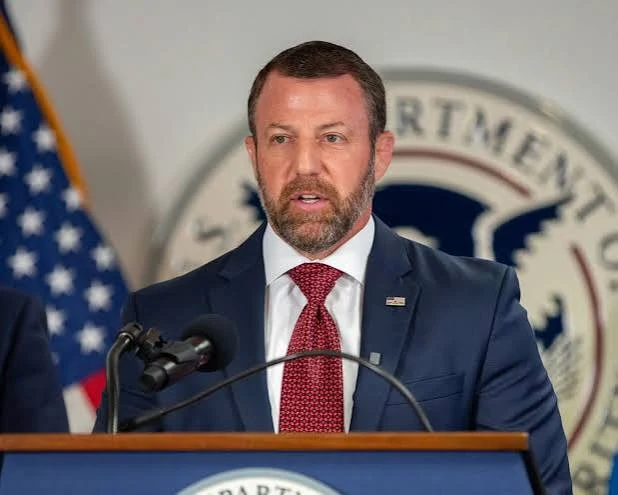
ICE Agents at Polling Places Proposed by DHS Chief
Tap title to read story
The Department of Homeland Security leadership proposed deploying Immigration and Customs Enforcement agents to polling locations across the United States. Federal officials outlined potential operational scopes for immigration enforcement personnel during active election windows, citing broader federal security coordination efforts. Civil rights organizations and congressional Democrats immediately denounced the measure as an unprecedented intervention in domestic electoral administration. State attorneys general announced plans to mount immediate legal challenges to block any federal immigration enforcement presence near voting infrastructure, arguing it violates statutory boundaries between federal law enforcement and state-managed election procedures. The deployment framework is currently under review by department administrators as preparations for upcoming election cycles accelerate nationwide. Further administrative directives regarding personnel placement at municipal and state voting sites are anticipated from federal authorities ahead of scheduled election dates as opposition lawmakers and state officials prepare to contest the proposed operational plans in court.
More context
Timeline
- On January 15, 2024, Department of Homeland Security officials discussed potential election security frameworks.
- On March 10, 2024, civil rights organizations raised initial concerns regarding federal enforcement presence.
- On June 22, 2025, federal administrators initiated formal reviews of polling place operations.
- On August 14, 2026, DHS leadership proposed deploying ICE agents to voting sites.
- On September 2, 2026, state attorneys general announced immediate legal challenges against proposals.
- Federal courts will evaluate preliminary injunction requests filed by state attorneys general.
- State election officials will coordinate physical access barriers at local polling locations.
- Department administrators will release final operational directives before scheduled election dates.
- Civil rights organizations will launch nationwide voter protection and monitoring networks.
- Congressional committees will convene oversight hearings regarding federal election intervention limits.
Why it matters
Immediate US impact: Immediate legal challenges and jurisdictional clashes emerge across multiple states. Possible long-term US impact: Prolonged litigation will test federal authority over domestic election infrastructure. Most affected groups: Immigrant communities, state election administrators, and civil rights organizations face heightened scrutiny. Reader priority: Monitor official court filings and state attorney general emergency announcements closely.
Coverage notes
Left: Framing emphasizes voter suppression risks and unprecedented federal electoral interference. Center: Framing reports policy proposals objectively alongside immediate bipartisan and legal opposition. Right: Framing highlights federal security coordination efforts and necessity of election integrity.
Primary report
DHS leadership proposed deploying ICE agents to polling locations on September 2, 2026.
Sources
JQJO Editorial Desk · Human reviewed · AI assisted. Report a correction.