Global warming will exceed limit, U.N. says in a report that maps path to get back below danger zone
Tap title to read story
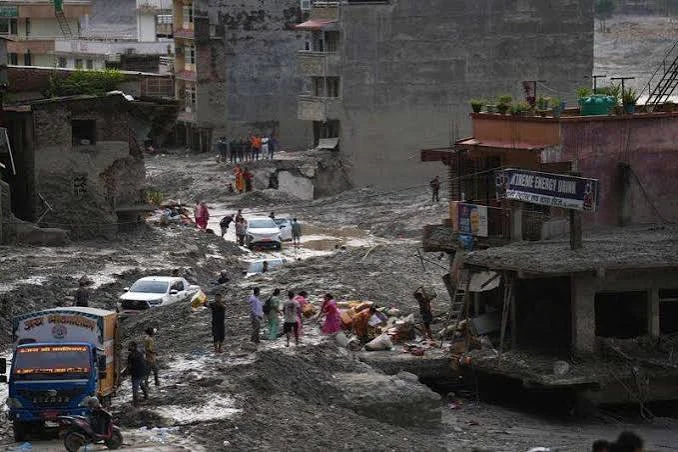
The United Nations Environment Programme released a bleak report acknowledging that Earth has lost the opportunity to prevent exceeding the 2.7-degree Fahrenheit Paris Agreement warming limit. Issued on Wednesday, the report states that global temperatures will cross the 1.5-degree Celsius threshold within the next few years. Scientists predict that temperatures could peak around 1.8 degrees Celsius by mid-century under ambitious climate goals, or reach 2.6 degrees Celsius by 2100 under current government policies. Instead of preventing the threshold breach, the new U.N. strategy emphasizes an overshoot framework, requiring aggressive carbon dioxide removal from the atmosphere to force global temperatures back down by the end of the century. Officials warn that the prolonged overshoot period will bring decades of severe weather-related disasters, rising sea levels, ecosystem collapses, and increased public health hazards. Climate experts remain divided on the feasibility of large-scale carbon removal technologies required to reverse the warming trajectory.
Timeline
- On December 12, 2015 nations formally adopted the landmark Paris climate agreement.
- On November 20, 2024 the United Nations published its annual emissions gap report.
- On September 2, 2026 the United Nations Environment Programme issued its overshoot report.
- On September 2, 2026 United Nations Secretary General António Guterres issued official warming warnings.
- On September 2, 2026 report co author Richard Betts discussed necessary climate adaptation.
- On September 2, 2026 scientist Andrew Weaver evaluated the bleak United Nations climate findings.
- Governments will officially adopt carbon overshoot adaptation strategies in coming years.
- Global average temperatures will officially exceed the 1.5 degree Celsius threshold.
- Global greenhouse gas emissions will peak before initiating mandatory atmospheric drawdown.
- Global temperatures will gradually decline below warming thresholds by century end.
Sources
JQJO Editorial Desk · Human reviewed · AI assisted. Report a correction.