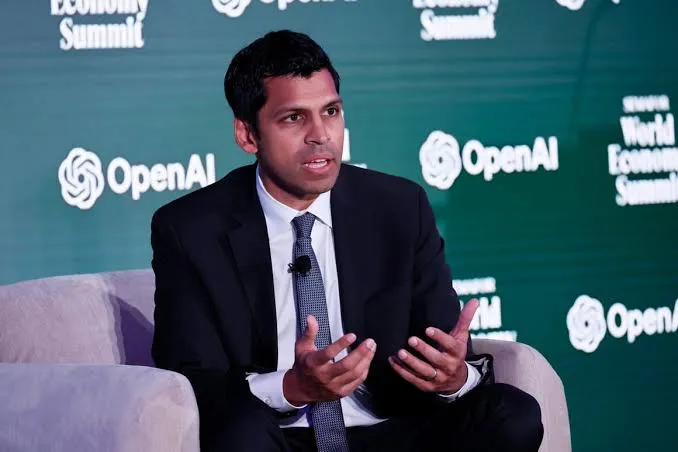
OpenAI’s chief economist sees ‘care economy’ jobs growing in AI age
Tap title to read story
OpenAI's chief economist, Ronnie Chatterji, predicts that the rise of artificial intelligence will drive significant job growth in the U.S. "care economy," which includes roles like nurses, teachers, and elder care providers [citation:1][citation:5]. Speaking to NBC News, Chatterji argued these jobs, centered on human connection and physical presence, are the least automatable [citation:1]. He suggested that while AI can handle documentation and other cognitive tasks, it cannot replicate the emotional support needed in sensitive situations [citation:1][citation:5]. This forecast aligns with OpenAI's broader industrial policy proposals, which suggest that AI-driven efficiency gains could free up workers to focus on these care-based roles [citation:4][citation:7]. A key challenge, however, is that these "essential" jobs have historically been undervalued and underpaid. To address this, OpenAI has proposed ideas like four-day workweek pilots to ensure the benefits of AI are broadly shared and that demand growth translates into improved job quality [citation:4][citation:7][citation:11]. Chatterji expects the productivity gains from AI to become visible in official statistics within 18 to 24 months [citation:5][citation:12].
More context
Timeline
- On October 22 2024 Ronnie Chatterji appointed as OpenAI's first chief economist.
- On April 6 2026 OpenAI publishes industrial policy report proposing four-day workweeks.
- On April 6 2026 OpenAI's report suggests a public wealth fund for AI gains.
- On April 6 2026 OpenAI proposes ideas for a people-first transition to superintelligence.
- On June 28 2026 Chatterji urges EU nations to adopt tailored AI labor strategies.
- On August 29 2026 Chatterji gives NBC News interview predicting care economy boom.
- On August 31 2026 Analysis of the prediction highlights risk of growing demand without improved pay.
- On August 31 2026 Debate continues on how to revalue inherently human forms of work.
- Official AI productivity impact data is expected to emerge in 18-24 months.
- Demand for care roles may rise significantly as AI automates cognitive tasks.
Why it matters
Immediate US impact: AI may shift US workforce focus toward care-oriented professions. Possible long-term US impact: Potential for economic restructuring with care work gaining new importance. Most affected groups: Nurses, teachers, healthcare workers, and elder care providers in all states. Reader priority: Follow policy debates on pay and working conditions for care roles.
Coverage notes
Left: Emphasizes risk of care jobs growing without necessary pay improvements. Center: Reports the economic prediction and notes the policy challenge of job quality. Right: Focuses on AI's potential to create new jobs and boost economic efficiency.
Primary report
NBC News interview with OpenAI's chief economist Ronnie Chatterji.
Sources
JQJO Editorial Desk · Human reviewed · AI assisted. Report a correction.