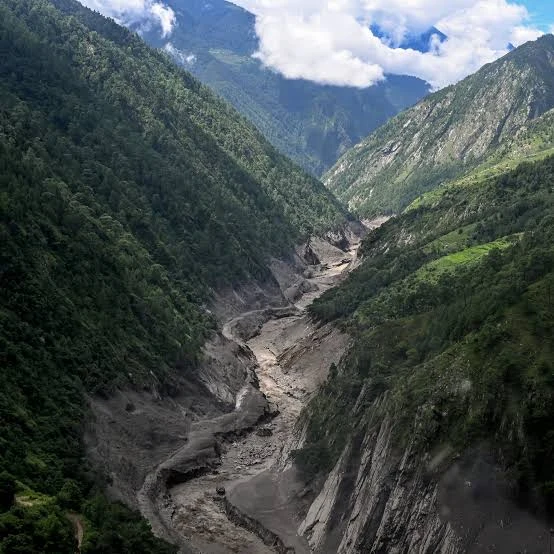
Glacier collapse that caused Nepal floods is most likely linked to thawing permafrost
Tap title to read story
The death toll from the catastrophic flash flood in Nepal has surpassed 750, with more than 3,000 people still missing as of August 30, 2026. The disaster was triggered on August 26 by a massive ice-rock avalanche on Langtang Lirung mountain, which registered as a 5.2-magnitude seismic event, initially leading to earthquake speculation. Scientists confirm the collapse was likely caused by thawing permafrost and glacier instability linked to global warming, with the Himalayas warming at twice the global average. A subsequent barrier lake breach on August 28 caused a second surge of water, prompting further evacuation warnings. The event has destroyed villages, roads, and power plants, serving as a stark warning for other mountain ranges as the climate crisis accelerates glacial retreat and permafrost thaw.
Timeline
- On January 1 2021 Rock-ice avalanche in India's Uttarakhand killed over 200 people.
- On January 1 2023 Permafrost thaw triggered rock collapse into South Lhonak Lake.
- On July 1 2025 Glacial lake outburst flood hit the Bhotekoshi valley.
- On May 1 2025 Glacier collapse in Switzerland buried part of Blatten.
- On August 24 2026 Record ground temperatures were detected near collapse site.
- On August 26 2026 Initial glacier collapse and flood struck Nepal.
- On August 28 2026 Barrier lake burst causing second flood wave.
- On August 30 2026 Nepal issued fresh flood warnings for residents.
- On August 30 2026 Death toll was confirmed at over 750.
- Similar events will likely increase in frequency due to global warming.
- Rising temperatures will destabilize more mountain slopes worldwide.
- International cooperation on data sharing will be crucial for prevention.
- Hydropower infrastructure remains at high risk from future climate hazards.
- Mountain communities must adapt to rapidly changing environmental conditions.
Sources
JQJO Editorial Desk · Human reviewed · AI assisted. Report a correction.