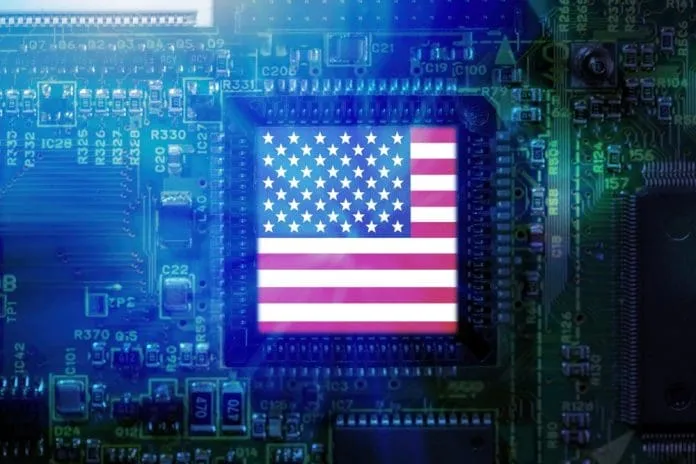
US CHIPS Act Announces $874 Million for Semiconductor Research
Tap title to read story
The United States Department of Commerce has issued letters of intent for eight hundred seventy-four million dollars in funding under the CHIPS and Science Act to support advanced semiconductor research and development. Announced on August twenty-seventh, the allocation targets multiple technology firms including Kepler, Extropic, Thintronics, OBSIDIA Semiconductors, and Aeluma to advance next-generation chip design, packaging, and materials. Enacted in 2022, the legislation authorized approximately two hundred eighty billion dollars to reverse the decline in domestic manufacturing, which currently accounts for roughly twelve percent of global production compared to thirty-seven percent in 1990. Driven by growing demands in artificial intelligence, automotive electronics, and consumer devices, the administration has prioritized domestic semiconductor production for national security and economic competitiveness. Funding recipients are expected to enhance supply chain resilience, secure hardware integrity against foreign vulnerabilities, and accelerate technological innovation across critical commercial and defense infrastructure sectors nationwide.
More context
Timeline
- On August ninth, 2022, Congress enacted the landmark CHIPS and Science Act.
- On August twenty-seventh, officials announced eight hundred seventy-four million in research funding.
- On August twenty-seventh, recipients signed non-binding letters of intent for awards.
- On August twenty-seventh, analysts evaluated potential impacts on domestic technology supply chains.
- On August twenty-seventh, experts monitored equity stake models tied to federal awards.
- In coming months, agencies finalize formal agreements with selected semiconductor firms.
- In coming years, companies deploy capital toward advanced computing research initiatives.
- In coming years, researchers develop next-generation artificial intelligence hardware and packaging solutions.
- In coming years, domestic manufacturing capacity aims to capture larger market shares.
- In coming years, federal oversight evaluates technological competitiveness and supply chain security.
Why it matters
Immediate US impact: Immediate domestic funding boosts next-generation semiconductor research and development efforts. Possible long-term US impact: Long-term domestic manufacturing capacity and supply chain resilience increase significantly. Most affected groups: Semiconductor technology firms, researchers, and federal agencies are most affected. Reader priority: Readers should prioritize official agency announcements and specialized industry reports.
Coverage notes
Left: Federal investments strengthen domestic manufacturing and protect critical supply chains. Center: Government allocates funds for semiconductor research under existing legislative frameworks. Right: Subsidies risk market distortion despite bolstering national security and technological competitiveness.
Primary report
Department of Commerce announced eight hundred seventy-four million in research funding on August twenty-seventh.
Sources
- CNN Business
- MSNBC
- Reuters
- Associated Press
- Bloomberg
- Wall Street Journal
- CNBC
- TechCrunch
- The Verge
- Ars Technica
- Wired
- Financial Times
- Politico
- The Hill
- VentureBeat
- ZDNet
- Tom's Hardware
- Semiconductor Engineering
- EE Times
- AnandTech
- Protocol
- Axios
- Reuters
- Associated Press
- Forbes
- Business Insider
- Yahoo Finance
- MarketWatch
- Fox Business
- National Review
- Reuters (via Fidelity)
JQJO Editorial Desk · Human reviewed · AI assisted. Report a correction.