Elon Musk Sets Condition to Retire Falcon 9 Rockets, Sparking NASA Concerns
PUBLISHED Aug 24, 2026, 9:02 AM ET
Read, Watch or Listen
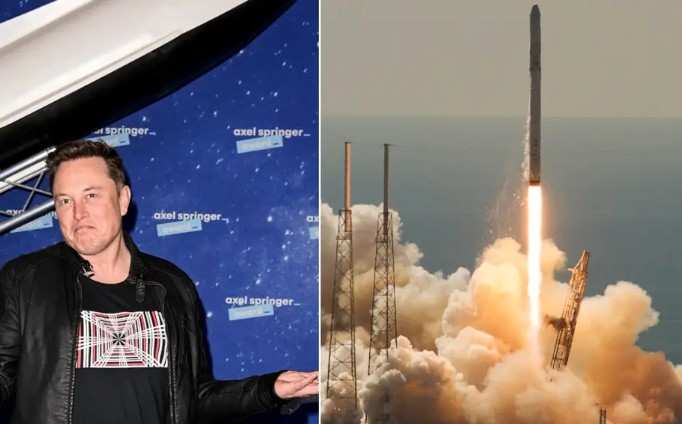
Elon Musk said SpaceX would wind down its Falcon rocket program once Starship flies reliably several times each week, directing scarce engineering and production resources toward higher Starship launch rates. Musk made the statement Aug. 22 on X while responding to physicist Casey Handmer, who cited reported NASA unease about retiring Falcon after years of successful operations. Falcon 9 remains SpaceX’s principal launch vehicle, and the company completed its 100th Falcon launch of 2026 on Aug. 22, according to Space.com. Reuters reported earlier this month that SpaceX was prioritizing Starlink missions and that many commercial customers could not secure Falcon launches until 2028 or 2029. Starship has not demonstrated the repeated weekly cadence Musk identified as the retirement condition. NASA continues using Falcon 9 and Crew Dragon for International Space Station crew transportation. Falcon’s retirement timing remains uncertain as Starship development and certification continue. Recovery milestones also remain unresolved today.
By Michael Grant | JQJO News
Timeline of Events
- On September 21, 2014, NASA awarded SpaceX Commercial Crew funding.
- On March 2, 2019, Crew Dragon first flew to ISS.
- On May 30, 2020, SpaceX launched astronauts aboard Crew Dragon.
- On November 2020, NASA certified SpaceX Crew Dragon for missions.
- On August 19, 2026, SpaceX completed its 100th mission overall.
- On August 22, 2026, SpaceX completed its 100th Falcon launch.
- On August 22, 2026, Musk tied Falcon’s wind-down to Starship reliability.
- By late 2026, Starship Flight 14 may test orbital capability.
- During coming months, SpaceX may attempt its Starship tower catch.
- By early 2027, SpaceX expects Starship’s first vehicle reflight attempt.
- Through 2028, commercial Falcon availability may remain increasingly constrained globally.
- By 2030, Starship could eventually replace Falcon if reliability scales.
News Intelligence
- Immediate US impact: Falcon remains critical for American commercial and government launches.
- Possible long-term US impact: Starship could reshape launch capacity if reliability scales successfully.
- Most affected groups: NASA, Space Force, satellite operators, launch customers, SpaceX workers, investors.
- Reader priority: Readers should prioritize Musk’s statement, NASA records, launch data, and independent reporting.
- Articles Published:
- 17
- Right Leaning:
- 0
- Left Leaning:
- 0
- Neutral:
- 17
- Distribution:
- Left 0%, Center 100%, Right 0%
Left: Coverage emphasizes launch-market concentration, NASA dependence, and transition risks. Center: Coverage emphasizes Musk’s conditional statement, current Falcon dominance, and Starship uncertainty. Right: Coverage emphasizes SpaceX innovation, launch efficiency, and Musk’s long-term strategic vision.
On August 22, Musk linked Falcon’s wind-down directly to Starship reliability. https://x.com/elonmusk/status/2091287025555214632
Coverage of Story:
From Left
No left-leaning sources found for this story.
From Center
Elon Musk Sets Condition to Retire Falcon 9 Rockets, Sparking NASA Concerns
Teslarati Reuters Ars Technica Space.com Space.com Space.com Spaceflight Now Yahoo Finance Stocktwits Teslarati We Talk Tesla Space Daily Investors.com The Motley Fool finanzen.ch Reuters ReutersFrom Right
No right-leaning sources found for this story.






Comments