NASA's Roman Space Telescope Cleared for Final Launch Preparations
Tap title to read story
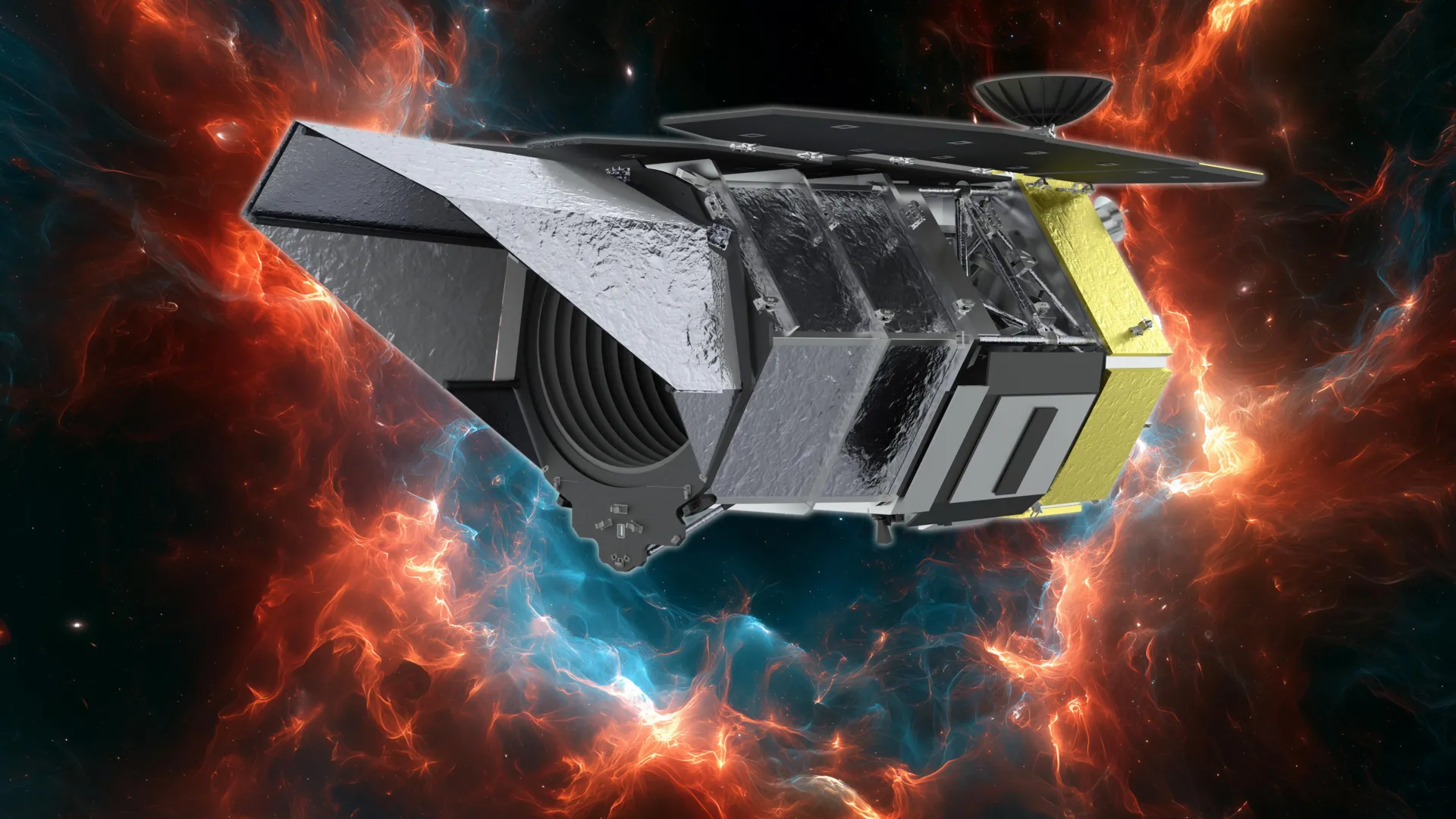
NASA has officially cleared the Nancy Grace Roman Space Telescope for final launch preparations, targeting liftoff as early as August 30, 2026, aboard a SpaceX Falcon Heavy rocket from Kennedy Space Center's Launch Complex 39A. Officials from NASA, the Roman mission team, and SpaceX concluded a successful Flight Readiness Review on August 21, 2026, certifying the observatory for launch operations. The mission is proceeding nine months ahead of its baseline schedule. Equipped with a 2.4-meter primary mirror and a 300-megapixel Wide Field Instrument featuring 18 4k detectors, Roman offers a field of view 100 times larger than the Hubble Space Telescope. The observatory will map cosmic expansion, investigate dark energy, and conduct an extensive exoplanet census towards the galactic center. Additionally, its Coronagraph Instrument will demonstrate high-contrast imaging of distant gas giants. Data generated will reach 1.4 terabytes daily and remain immediately available to the public.
Timeline
- On 2020-03-02 NASA formally named space telescope after Nancy Grace Roman.
- On 2021-09-29 NASA completed critical design review for Roman Space Telescope.
- On 2024-11-07 NASA integrated Wide Field Instrument into Roman space observatory.
- On 2026-08-21 NASA concluded flight readiness review clearing Roman for launch.
- On 2026-08-24 teams encapsulated Roman telescope inside Falcon Heavy payload fairing.
- On 2026-08-30 SpaceX will launch Roman telescope from pad 39A Florida.
- In coming days teams will roll out Falcon Heavy rocket pad.
- In coming months Roman telescope will travel to Lagrange point two.
- In coming months engineers will conduct commissioning of wide field instrument.
- By next year Roman observatory will begin regular public science operations.
Sources
JQJO Editorial Desk · Human reviewed · AI assisted. Report a correction.