NASA Telescope Rescue Mission Fails
Tap title to read story
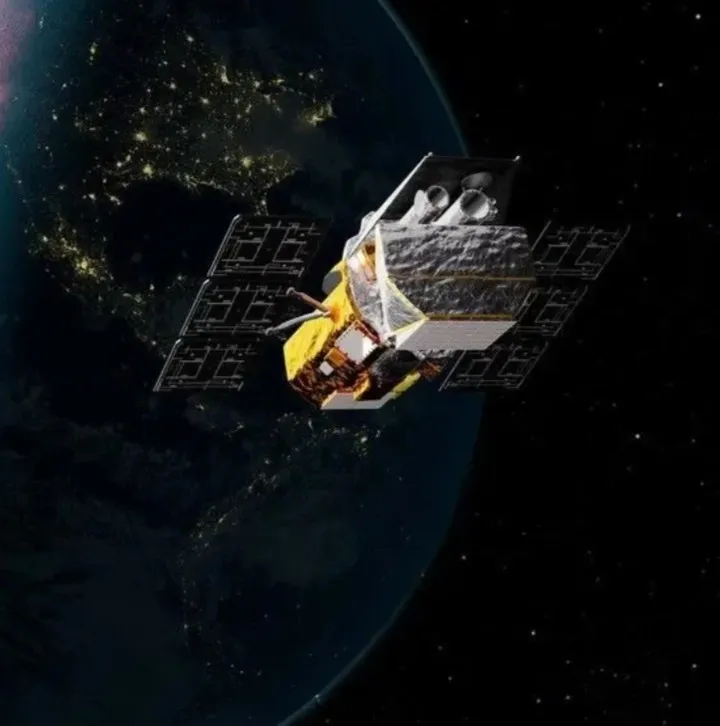
NASA and Katalyst Space Technologies have officially abandoned the $30 million mission to rescue the aging Neil Gehrels Swift Observatory, leaving the space telescope to burn up in Earth's atmosphere later this year . The decision came after the Link rescue spacecraft, launched July 3, suffered critical attitude control issues, including an uncontrollable spin caused by reaction wheel and thruster problems . While engineers slowed the spin from 9 to 1.47 degrees per second, persistent positioning problems made capture impossible . "This is not the outcome we were working toward," NASA Administrator Jared Isaacman said . Swift, launched in 2004 to study gamma-ray bursts, had its orbit decaying to 347 kilometers amid heightened solar activity . The failure also clouds similar life-extension plans for the Hubble Space Telescope . Katalyst will continue operating Link near Swift to demonstrate technologies for future missions .
More context
Timeline
- On November 20, 2004: Swift launched on two-year mission to study gamma-ray bursts.
- · In September 2025: NASA awarded Katalyst $30 million rescue contract.
- · On July 3, 2026: Link launched from Kwajalein Atoll via Pegasus XL.
- · By July 15, 2026: Link passed initial checks after early reaction wheel issue.
- · On July 28, 2026: NASA reported two reaction wheels and thrusters failed.
- · By July 31, 2026: Thruster burns slowed Link's spin from 9 degrees per second.
- · On August 6, 2026: Engineers reduced spin to 1.47 degrees per second.
- · On August 19, 2026: NASA and Katalyst announced rescue mission officially canceled.
- · As of August 2026: Swift orbiting at 347 km; re-entry expected later this year.
- · In future years: NASA to study Link data for future satellite servicing missions.
Why it matters
Immediate US impact: Loss of gamma-ray burst early warning and research capabilities . Long-term US impact: Hubble's future uncertain; commercial satellite servicing credibility damaged . Affected groups: Astronomers, NASA Astrophysics Division, Katalyst Space, Hubble program scientists. Reader priority: Follow NASA's lessons-learned reports and Hubble rescue alternatives.
Coverage notes
Left: Emphasizes commercial space failure and need for robust public oversight. Center: Reports facts, mission costs, technical failure, and scientific consequences neutrally. Right: Frames as smart risk-taking, private innovation, and valuable learning experience.
Primary report
publication_date: 2026-08-19 trigger_description: Joint NASA-Katalyst statement announced mission cancellation due to attitude control issues.
Sources
JQJO Editorial Desk · Human reviewed · AI assisted. Report a correction.