LA Brand Backlash for Selling Saree as ₹26,000 'Maxi Dress'
Tap title to read story
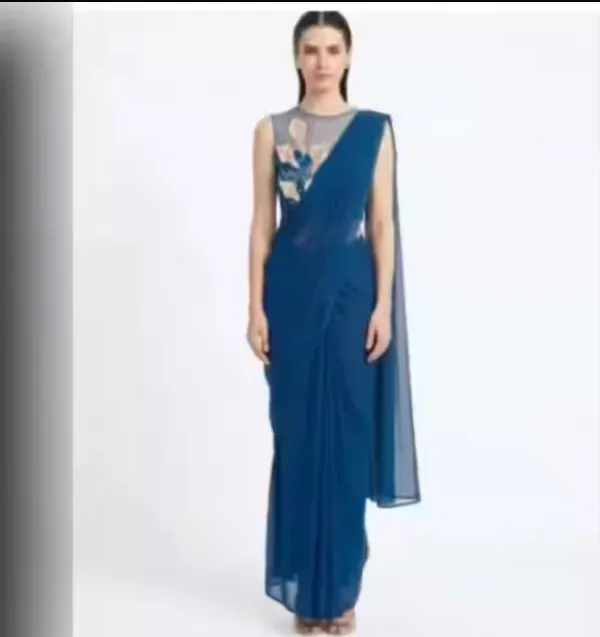
A California-based fashion label, JW PEI, has sparked outrage for marketing a traditional South Asian saree as a "Botanical Embellished Draped Overlay Maxi Dress," priced at approximately $310. The controversy ignited after a Threads user highlighted the cultural appropriation, pointing out the garment's distinct waist pleats and pallu. Initially, the listing did not acknowledge the saree's origins. Following the backlash, JW PEI renamed the product to "Embellished Saree-Inspired Gown" and updated its description to credit the traditional South Asian garment. Despite this damage control, critics remain vocal, arguing that the rebranding without credit constitutes cultural extraction. This incident mirrors a 2025 controversy involving luxury brand Prada, which faced similar accusations for marketing Kolhapuri chappals without acknowledgment. The situation continues to unfold as the broader fashion industry grapples with ethics and cultural appreciation versus appropriation .
More context
Timeline
- Past Events
- On 2025, Prada faced backlash for selling Kolhapuri chappals without crediting Indian heritage .
- On August 22, 2026, JW PEI listed saree as a "maxi dress" online .
- On August 22, 2026, social media users began criticizing the brand's appropriation .
- On August 22, 2026, the product listing was updated to acknowledge saree inspiration .
- On August 22, 2026, critics demanded better credit for cultural artifacts .
- Present Events
- On August 23, 2026, the controversy remains a top social media trend .
- On August 23, 2026, JW PEI has not issued further public statements .
- On August 23, 2026, public anger persists over the rebranding .
- On August 23, 2026, the product is still available on the website .
- On August 23, 2026, discussions about fashion ethics are intensifying .
- Future Scenarios
- In 2026, more brands will scrutinize cultural references in marketing .
- In 2026, consumers may demand stricter ethical sourcing labels .
- In 2027, potential legislation could mandate cultural credit in fashion .
- In 2027, the trend of cultural appropriation backlash will likely grow .
- In 2027, brand reputations will depend on cultural sensitivity .
Why it matters
Immediate US impact: Social media outrage highlights cultural sensitivity for American brands. Long-term US impact: Brands will adopt stricter cultural compliance to avoid backlash. Affected groups: South Asian diaspora, fashion consumers, and JW PEI leadership. Reader priority: Monitor brand responses and verify cultural origins of products.
Coverage notes
Left: Outrage focuses on cultural exploitation and lack of credit. Center: Coverage reports on the controversy and brand's response. Right: Emphasis may be on brand's right to design.
Primary report
publication_date: August 22, 2026 trigger_description: Social media user's Threads post called out brand's cultural appropriation.
Sources
JQJO Editorial Desk · Human reviewed · AI assisted. Report a correction.