U.S. Labor Unions Propose 0.5% Tax on AI Compute
PUBLISHED Aug 21, 2026, 1:15 PM ET
Read, Watch or Listen
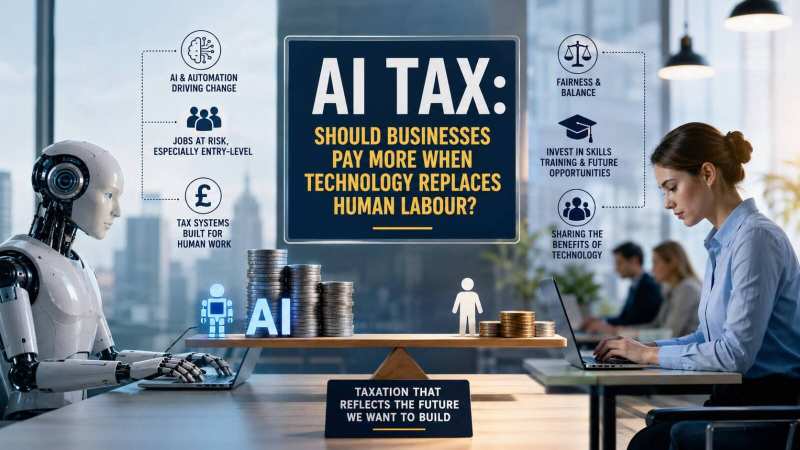
A reported joint proposal by the AFL-CIO and Teamsters to impose a 0.5% tax on high-compute businesses could not be independently verified in public records reviewed Friday. The supplied claim says the “automation special tax” would cover hyperscale data centers above 20 megawatts of IT load and companies buying more than $10 million in annual cloud and AI compute, potentially raising $1.1 billion to $1.25 billion yearly. No legislation, union announcement, congressional filing, or direct union statement establishing those provisions was located. The Information Technology and Innovation Foundation did publish a June 8 analysis opposing AI compute taxes, arguing they could raise deployment costs, slow productivity gains, shift investment overseas and do little to preserve tax revenues. ITIF’s publication confirms a broader policy debate, but does not substantiate the alleged AFL-CIO-Teamsters measure. The story should therefore be held pending primary evidence of the claimed legislation or joint union proposal itself.
By Sidra | JQJO News
Timeline of Events
- On March 2017, Bill Gates proposed taxing robots replacing workers.
- On September 2019, labor debates connected automation with potential worker protections.
- On April 2018, researchers examined federal automation-tax options for displaced workers.
- On June 8, 2026 ITIF criticized taxes targeting AI compute.
- On June 19, 2026 ITIF argued taxes could slow AI innovation.
- On August 21, 2026 alleged AFL-CIO-Teamsters proposal remained publicly unverified.
- On August 21, 2026 no congressional legislation matching reported provisions was located.
- Over coming months, unions may develop clearer automation-tax proposals publicly.
- Over coming months, lawmakers may debate taxation of AI infrastructure.
- Over coming years, AI taxation could evolve alongside labor-market disruption.
News Intelligence
- Immediate US impact: No confirmed federal tax change currently affects AI compute.
- Possible long-term US impact: Tax proposals could influence AI investment, productivity, and workforce policy.
- Most affected groups: AI companies, cloud providers, unions, workers, data-center operators, investors.
- Reader priority: Readers should prioritize primary documents, official statements, and independently verified reporting.
Coverage of Story:
From Left
No left-leaning sources found for this story.
From Center
Taxing AI Compute Would Be a Mistake
Information Technology and Innovation Foundation (ITIF) Information Technology and Innovation Foundation (ITIF)From Right
No right-leaning sources found for this story.







Comments