Trump Claims Full Control of Strait of Hormuz as Iran Rejects U.S. Blockade
PUBLISHED Aug 19, 2026, 4:51 PM ET
Read, Watch or Listen
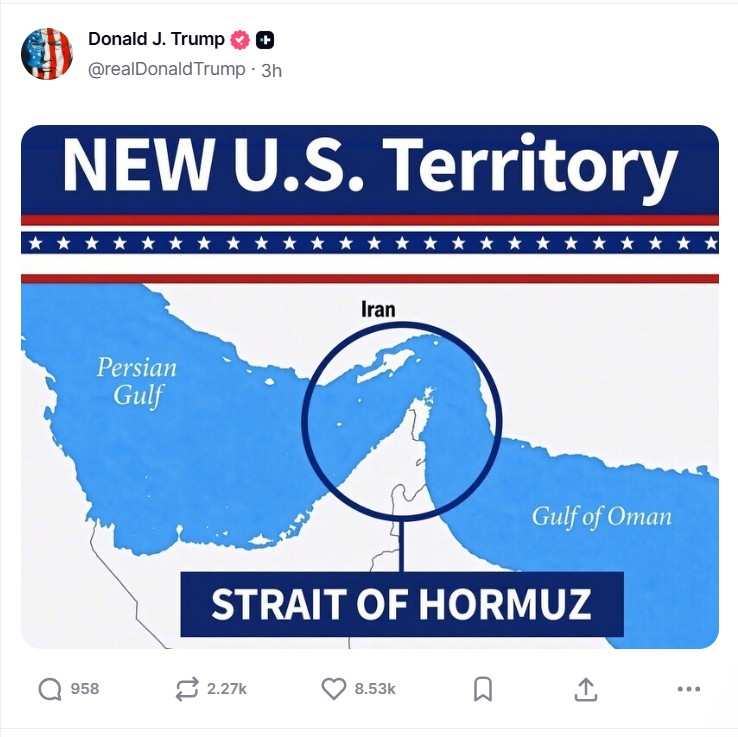
President Donald Trump on Tuesday claimed the United States has full control of the Strait of Hormuz and posted a map labeling the waterway “new U.S. territory,” escalating his confrontation with Iran. Trump also said the strait was open, while Iran maintained that it remained closed until Washington met its demands. Iranian officials rejected Trump’s territorial claim. Reuters reported Wednesday that six commodity vessels crossed Hormuz on Tuesday, below a recent daily average of 11, underscoring the gap between Washington’s description and commercial traffic. Shipping disruptions have persisted amid the U.S. blockade of Iranian ports and attacks on merchant vessels. A vessel struck near Oman on August 18 had one crew member killed, maritime authorities reported. Oil prices rose, with Brent settling at $91.62 a barrel. Iran and Oman have discussed arrangements to facilitate shipping, but Washington and Tehran remain publicly at odds over future diplomacy and the waterway's reopening.
By Emily Rhodes | JQJO News
Timeline of Events
- On June 23, 2026, Oman and Iran affirmed passage commitments.
- On June 25, 2026, IMO paused evacuations following vessel attack.
- On June 26, 2026, IMO evacuated 136 vessels from Gulf.
- On July 13, 2026, IMO reaffirmed navigation rights through Hormuz.
- On July 14, 2026, U.S. blockade targeted Iranian port shipping.
- On August 12, 2026, Trump claimed total control over Hormuz.
- On August 17, 2026, Trump threatened Oman over negotiations involving Hormuz.
- On August 18, 2026, Iran demanded concessions before reopening strait.
- On August 18, 2026, vessel attack killed one crew member.
- On August 19, 2026, Reuters recorded six commodity-vessel crossings Tuesday.
- In coming days, traffic likely remains depressed absent security guarantees.
- In coming months, oil prices remain elevated if disruptions persist.
- Over coming months, diplomacy could restore navigation if parties compromise.
- Over coming years, Gulf shipping may diversify routes and insurance.
News Intelligence
- Immediate US impact: Higher oil prices could pressure gasoline, inflation, consumers.
- Possible long-term US impact: Prolonged disruption could reshape energy security and alliances.
- Most affected groups: Consumers, refiners, shippers, energy firms, military, Gulf-linked businesses.
- Reader priority: Readers should prioritize primary statements, shipping data, and independent reporting.
- Articles Published:
- 32
- Right Leaning:
- 0
- Left Leaning:
- 4
- Neutral:
- 28
- Distribution:
- Left 13%, Center 88%, Right 0%
Left: Coverage emphasizes legal questions, escalation risks, and civilian shipping disruption. Center: Coverage emphasizes competing claims, verified traffic data, and diplomatic uncertainty. Right: Coverage emphasizes American naval strength, blockade effectiveness, and pressure on Iran.
On August 18, Trump posted map labeling Hormuz U.S. territory. https://truthsocial.com/@realDonaldTrump
Coverage of Story:
From Left
Trump threatens to bomb Oman if it ‘gets in the way’
The Washington Post Al Jazeera The Guardian TIMEFrom Center
Trump Claims Full Control of Strait of Hormuz as Iran Rejects U.S. Blockade
CNBC Reuters Reuters Reuters Associated Press CBS News ABC News The Wall Street Journal The Wall Street Journal Axios Anadolu Agency Arab News Al-Monitor gCaptain Lloyd's List The Maritime Executive Splash247 Riviera Maritime Media Iran International AzerNews The New Arab Georgia Today Turkiye Today WANA Mehr News RBC Ukraine The National Desk Indian ExpressFrom Right
No right-leaning sources found for this story.





Comments