Tech Companies Push to Launch AI Data Centers Into Orbit to Bypass Earth Energy Limits
PUBLISHED Aug 16, 2026, 11:11 PM ET
Read, Watch or Listen
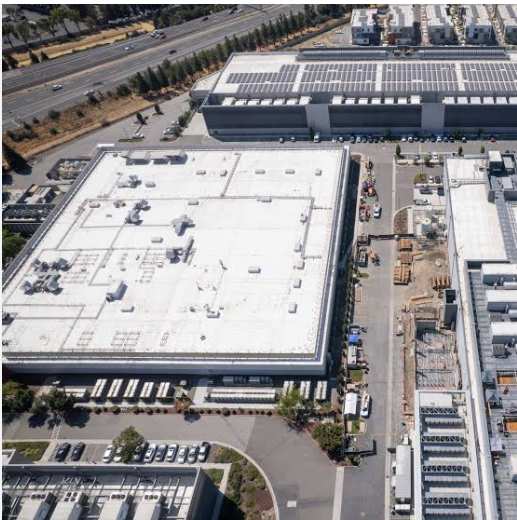
"Technology companies are advancing initiatives to move artificial intelligence data centers into low Earth orbit to bypass severe terrestrial energy and cooling constraints. A single hyperscale artificial intelligence facility can consume electricity equivalent to one hundred thousand homes. To address this, Google has proposed Project Suncatcher, envisioning satellite constellations equipped with processor units powered by continuous solar exposure. Independent models from researchers like Slava Turyshev and evaluations by the Government Accountability Office indicate significant technical hurdles, including thermal radiation management in a vacuum, space radiation hardware resilience, and orbital collision hazards. Google plans a preliminary two satellite validation mission partnered with Planet by early 2027. Meanwhile, federal regulators face growing license applications for orbital computing infrastructure. While space based processing offers access to constant sunlight and vacuum cooling via giant thermal radiators, substantial economic and engineering barriers remain before orbital data centers can scale commercially to replace traditional ground facilities.
By Michael Grant | JQJO News
Timeline of Events
- On November 4, 2025, Google proposed orbital artificial intelligence data center research initiative publicly.
- On April 28, 2026, The federal agency evaluated orbital computing resource constraints and feasibility.
- On April 29, 2026, Physics papers detailed spacecraft constraints and economic viability calculations publicly.
- On August 14, 2026, Commercial insurance firms evaluated satellite infrastructure hazards and deployment risks.
- On August 17, 2026, Industry publications highlighted massive energy demands driving space data centers.
- On August 17, 2026, Federal communications agencies processed multiple constellation license requests from companies.
- Google and Planet will launch two validation satellites into orbit.
- Commercial companies expect initial orbital computing hardware deployments to begin.
- Global regulators will establish strict space traffic management safety rules.
- Operational orbital data centers could supplement heavy terrestrial grid networks.
News Intelligence
- Immediate US impact: Increased regulatory filings and investor interest in space infrastructure technology.
- Possible long-term US impact: Relieved terrestrial energy grids through orbital data processing power networks.
- Affected Groups: Technology corporations, aerospace manufacturers, energy providers, and federal regulatory agencies.
- Reader Priorities: Track regulatory filings, launch milestones, and independent engineering feasibility studies.
- Articles Published:
- 31
- Right Leaning:
- 0
- Left Leaning:
- 0
- Neutral:
- 31
- Distribution:
- Left 0%, Center 100%, Right 0%
Left: Emphasizes climate sustainability, regulatory oversight, and orbital debris environmental risks. Center: Focuses on engineering feasibility, energy constraints, and corporate technological innovations. Right: Highlights market competition, private enterprise, deregulation, and American technological leadership.
Space Daily published orbital artificial intelligence data center report today. https://spacedaily.com/t-ai-data-centre-100000-homes-orbit-sunlight-radiators/
Coverage of Story:
From Left
No left-leaning sources found for this story.
From Center
Tech Companies Push to Launch AI Data Centers Into Orbit to Bypass Earth Energy Limits
Space Daily Space Daily InfoQ SatNews Astronomy Magazine MLQ.ai Analytics Insight Reuters AP News TechCrunch Wired MIT Technology Review The Verge Bloomberg Ars Technica CNN Business Financial Times The Information Space News Defense One Scientific American CNBC Wall Street Journal ZDNET PCMag New Scientist IEEE Spectrum Engadget Futurism Digital Trends Popular MechanicsFrom Right
No right-leaning sources found for this story.






Comments