Blue Origin Expands Pad After Explosion
Tap title to read story
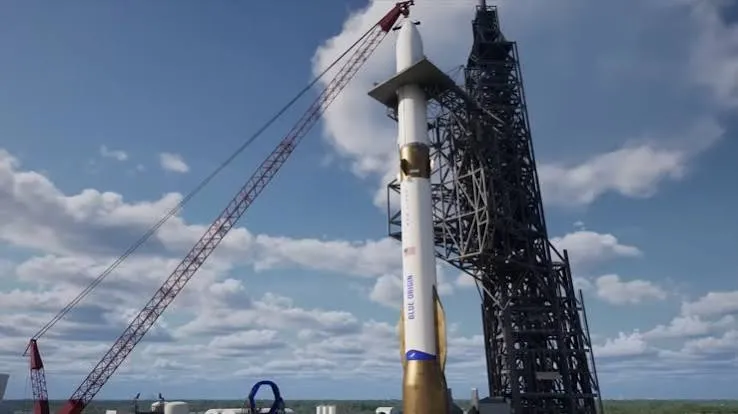
Blue Origin is adding a second launch pad to its Cape Canaveral complex while simultaneously repairing damage from a recent rocket explosion. The facility adjustments follow the failure of a New Glenn 7x2 rocket during static fire tests at Launch Complex-36 in May. Blue Origin CEO Dave Limp confirmed that rebuilding LC-36A remains the primary priority to ensure the New Glenn rocket flies before the end of the year. Alongside the ongoing repairs, a separate team has initiated construction on LC-36B. The new operational pad will support the larger New Glenn 9x4 configuration. The expansion project requires sourcing 2,500 tons of steel, a significant portion of which will construct a 700-foot-tall launch tower. The initial New Glenn first stage relies on seven BE-4 engines, while the second stage utilizes two BE-3Us, and both are engineered for vertical landing and reusability. The upcoming 9x4 version will upgrade to nine BE-4 engines on the first stage and four BE-3Us on the second stage to handle heavier payloads. The May explosion reduced Blue Origin's scheduled 2026 launch manifest from up to twelve missions down to a single planned flight.
More context
Timeline
- On May 28, 2026, a New Glenn rocket exploded during static fire tests.
- On June 4, 2026, initial mishap investigations began across federal space installations.
- On August 5, 2026, Blue Origin published hotfire anomaly investigation updates.
- On August 6, 2026, executives identified the BE-4 main oxygen valve failure.
- On August 12, 2026, Blue Origin formally commenced construction on Launch Complex 36B.
- On August 17, 2026, official site expansion details and steel requirements were disclosed.
- On September 30, 2026, updated hardware retrofits for BE-4 engines are expected.
- On December 31, 2026, Blue Origin targets its revised commercial return-to-flight window.
- On March 31, 2027, serial number one vehicle preparations are projected for completion.
- On December 31, 2027, expanded 9x4 configuration testing phases will likely conclude.
Why it matters
Immediate US impact: Accelerates commercial heavy-lift infrastructure development across Florida space corridors. Possible long-term US impact: Establishes redundant launch capabilities for long-term orbital payload delivery. Affected Groups: Aerospace contractors, Florida technicians, and commercial satellite operators face scheduling shifts. Priorities: Monitor primary company briefings, aerospace industry trackers, and federal filings.
Coverage notes
Left: Emphasizes corporate infrastructure spending and regulatory oversight of aerospace operations. Center: Focuses strictly on technical timelines, engineering upgrades, and launch manifest changes. Right: Highlights private enterprise resilience, technological scaling, and domestic space leadership advancements.
Primary report
Blue Origin announces construction of LC-36B pad during site repairs on August 17, 2026.
Sources
JQJO Editorial Desk · Human reviewed · AI assisted. Report a correction.