US Approves Orbiting Space Mirror
PUBLISHED Aug 16, 2026, 5:32 AM ET
Read, Watch or Listen
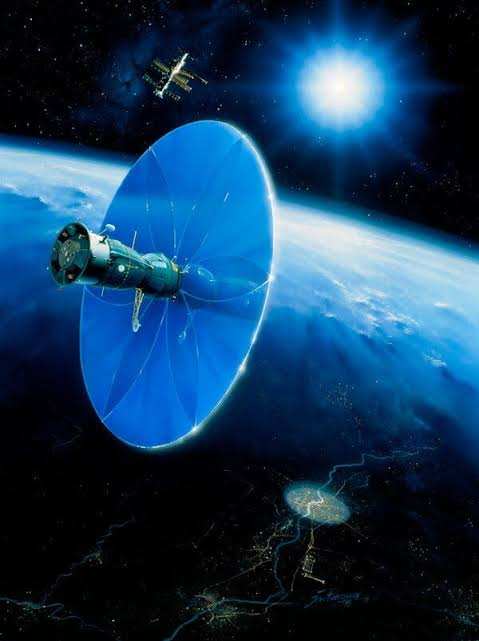
The Federal Communications Commission has authorized California startup Reflect Orbital to operate its Eärendil-1 demonstration satellite. The spacecraft, equipped with an 18-meter deployable mirror, is designed to redirect concentrated sunlight onto specific terrestrial locations during nighttime hours. Regulatory approval covers a two-year testing window for the single experimental prototype, which will fly in low-Earth orbit approximately 388 miles above the surface. Company executives state the technology aims to extend solar farm generation past sunset and support emergency response operations. Scientific organizations, including the American Astronomical Society, opposed the filing, warning that orbital reflectors introduce severe light pollution, interfere with research observatories, and pose optical hazards. The FCC Space Bureau concluded that spectrum management and debris mitigation criteria were met, noting that broader environmental concerns regarding future constellations fall outside its regulatory jurisdiction. Reflect Orbital ultimately envisions a network of up to 50,000 mirror satellites.
By Sarah Whitman | JQJO News
Timeline of Events
- On October 2021, Reflect Orbital was founded in Santa Monica, California.
- On March 2024, balloon tests successfully demonstrated prototype sunlight redirection onto ground panels.
- On September 2024, venture capital firms led a six point five million seed round.
- On May 2025, the company secured twenty million dollars in Series A funding.
- On July 9, 2026, the Federal Communications Commission officially approved the Eärendil-1 license.
- On August 16, 2026, regulatory implications spark intense debates across astronomical and technological sectors.
- On late 2026, the company plans to launch the prototype on a SpaceX mission.
- On 2030, the enterprise projects deploying over five thousand operational reflector satellites.
- On 2035, developers anticipate scaling the global constellation to fifty thousand units.
- On coming decades, commercial space lighting will fundamentally alter global night skies.
News Intelligence
- Immediate US impact: US commercial space operations expand into artificial nighttime illumination markets.
- Possible long-term US impact: Orbital reflectors could permanently alter astronomical observations and night skies.
- Affected Groups: Astronomers, aerospace startups, federal regulators, and energy sector businesses.
- Reader Priorities: Monitor regulatory filings, scientific journals, and upcoming spacecraft launch schedules.
- Articles Published:
- 30
- Right Leaning:
- 1
- Left Leaning:
- 1
- Neutral:
- 28
- Distribution:
- Left 3%, Center 93%, Right 3%
Left: Emphasizes environmental degradation, light pollution risks, and unchecked corporate space exploitation. Center: Focuses on regulatory procedures, startup commercial milestones, and scientific community pushback. Right: Highlights technological innovation, deregulation benefits, and competitive commercial space advancement.
Federal Communications Commission approved Reflect Orbital demonstration satellite on July 9, 2026. https://www.astronomy.com/science/fcc-approves-reflect-orbital-filing-for-mirror-in-space/
Coverage of Story:
From Center
US Approves Orbiting Space Mirror
v Space.com Astronomy Magazine SpaceDaily OK Diario Wikipedia The Verge Reuters Associated Press Bloomberg TechCrunch Ars Technica Wall Street Journal CNBC The Information CNN MIT Technology Review Financial Times Washington Post Los Angeles Times San Francisco Chronicle Forbes Scientific American Nature Engadget CNET Popular Mechanics Defense One





Comments