SpaceX Rocket Crashes into Moon, Highlighting Lunar Settlement Risks
PUBLISHED Aug 14, 2026, 9:07 AM ET
Read, Watch or Listen
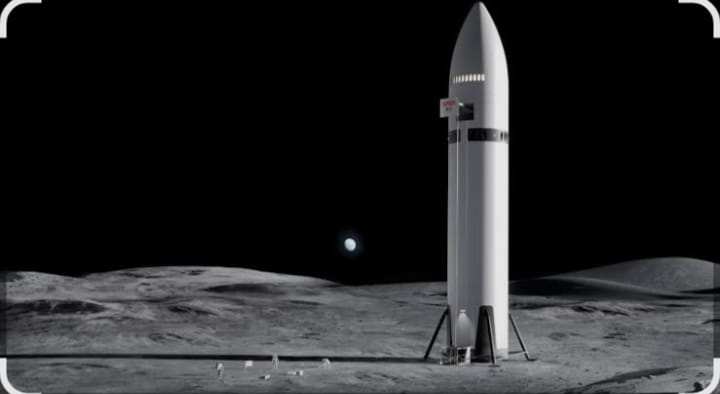
A spent SpaceX Falcon 9 upper stage struck the Moon near Einstein Crater on Aug. 5, creating a fresh impact site and renewed attention to lunar debris management. The roughly four-ton stage, designated 2025-010D, launched Jan. 15, 2025, carrying Firefly Aerospace’s Blue Ghost and ispace’s Resilience landers. It later remained in an Earth-Moon-crossing orbit after completing its mission and ultimately hit the lunar surface at about 5,400 mph, according to tracking and scientific studies. South Korea’s Danuri spacecraft obtained before-and-after images showing the resulting crater, while the European Southern Observatory’s Very Large Telescope detected sodium and lithium signatures from the impact plume. NASA’s Lunar Reconnaissance Orbiter is expected to provide additional observations. Researchers say the event offers rare data on artificial lunar impacts and highlights future cislunar debris-management challenges. However, experts previously assessed the immediate danger to lunar missions as very low, making claims of an imminent settlement threat premature.
By Mahnoor A. | JQJO News
Timeline of Events
- On January 15, 2025, Falcon 9 launched two lunar landers.
- On March 2, 2025, Blue Ghost landed on Moon surface.
- On February 26, 2026, astronomers logged 1,053 observations of 2025-010D.
- On July 16, 2026, researchers published observation plans for impact.
- On August 1, 2026, simulations predicted ejecta from impact plume.
- On August 5, 2026, Falcon 9 impacted Moon near Einstein.
- On August 6, 2026, Danuri images revealed the crater site.
- On August 6, 2026, ESO observations detected sodium and lithium signatures.
- On August 10, 2026, viral impact footage was identified as AI-generated.
- Over coming months, LRO observations should refine impact size and ejecta.
- Over coming years, lunar missions may adopt stricter disposal planning.
- Future cislunar traffic could require international coordinated debris tracking frameworks.
- Future habitats could face ejecta hazards if impacts occur nearby.
News Intelligence
- Immediate US impact: No immediate public safety impact; event mainly affects lunar science.
- Possible long-term US impact: Growing lunar traffic could increase US pressure for debris-management standards.
- Reader priority: Prioritize primary agency data, orbital analyses, and independently verified imagery.
- Most Affected: NASA, SpaceX, lunar scientists, commercial space firms, and Artemis planners.
Coverage of Story:
From Left
Here Are the First Images of the Crater Left on the Moon by SpaceX's Rocket
Wired The GuardianFrom Center
Defunct SpaceX rocket crashes into the moon, kicks up dust
Reuters Associated Press Space.com Space.com Space.com Popular Mechanics Smithsonian Magazine Scientific American Ars Technica TechRadar Phys.org IFLScience Quartz Universe Today EarthSky Nautilus Rte Net Org BBC News18 VietnamFrom Right
No right-leaning sources found for this story.






Comments