AI Used to Design Entirely New Viruses in World-First Breakthrough
PUBLISHED Aug 11, 2026, 5:17 PM ET
Read, Watch or Listen
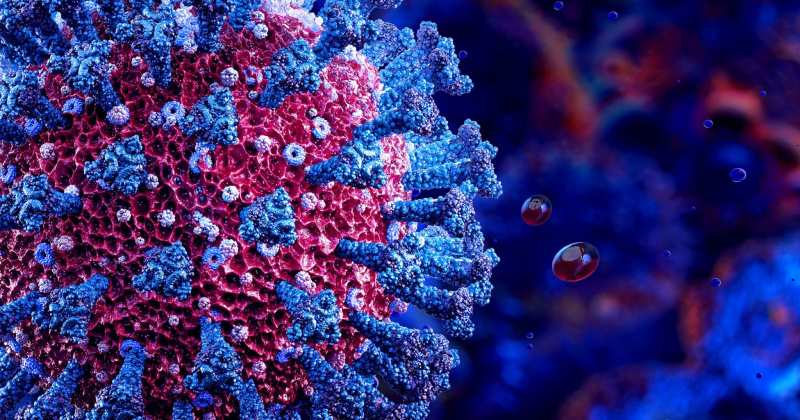
Researchers at Stanford University have used Artificial Intelligence to design and synthesize brand new viruses that are fully functional and capable of replicating in a laboratory setting. According to a report by the BBC, this marks the first time whole genomes have been successfully designed by AI. The resulting 16 novel viruses, known as bacteriophages, were created to infect specific bacteria and currently pose no threat to people . The breakthrough was achieved using AI models named Evo1 and Evo2, which were trained on genetic codes from viruses, bacteria, plants, and people. The technology works similarly to large language models but predicts the language of life instead of text. The Stanford researchers selected 302 promising AI designs and synthesized them in the lab. Of these, 16 proved effective at killing E. coli bacteria . Brian Hie, an assistant professor at Stanford University, described the achievement as a "next step in the complexity that's designable by generative AI," noting it is the first time such a complete genome has been generated . While the research could unlock new ways to treat diseases, such as developing phages to combat antibiotic-resistant infections, the development has raised urgent safety and security concerns. In a commentary accompanying the publication in the journal Science, experts Dr. Thomas Inglesby and Dr. Moritz Hanke from the Johns Hopkins Center for Health Security warned the findings pose "urgent biosafety and biosecurity questions" regarding the potential for creating new diseases . The researchers took steps to maximize safety by excluding viruses that could infect complex organisms from the training database and using secure laboratory protocols. Prof. Patrick Cai, chair of synthetic genomics at the Manchester Institute of Biotechnology, called the study an "important milestone," stating that "genome language models are beginning to learn the design principles encoded by evolution, opening the door to AI-assisted genome writing" .
By Ayesha A. | JQJO News
Timeline of Events
- On 1917, Bacteriophages discovered as viruses that infect bacteria only.
- · Past: On 1977, ΦX174 bacteriophage became first genome fully sequenced by scientists.
- · Past: On 2019, Antibiotic resistance declared global health crisis by WHO officials.
- · Past: On 2024, Evo1 AI model trained on microbial genomes for biological tasks.
- · Past: On 2025, Evo2 model expanded to 9 trillion base pairs of data.
- · Present: On August 5, 2026, Stanford paper published in Science journal reveals breakthrough.
- · Present: On August 5, 2026, AI generated 700,000 candidate phage genomes computationally.
- · Present: On August 5, 2026, Researchers synthesized 285 designs and tested viability.
- · Present: On August 5, 2026, Sixteen AI-designed phages killed E. coli in labs.
- · Future: On 2027, Researchers will attempt AI design of more complex genomes.
- · Future: On 2028, Regulatory frameworks for AI genome design may emerge.
- · Future: On 2030, Phage cocktails could enter clinical trials against superbugs.
News Intelligence
- Immediate US impact: Breakthrough accelerates AI-driven biotech but raises urgent safety alarms.
- Possible long-term US impact: AI genome design could revolutionize medicine or enable bioweapon creation.
- Most affected groups: Biotech firms, researchers, public health agencies, and biosecurity policymakers.
- Reader priority: Verify claims, distinguish phage from human viruses, track regulatory responses.
Coverage of Story:
From Left
No left-leaning sources found for this story.







Comments