Trump Demands Iran Pay Compensation for Decades of Conflict As Strait of Hormuz Talks Stall
PUBLISHED Aug 10, 2026, 10:01 PM ET
Read, Watch or Listen
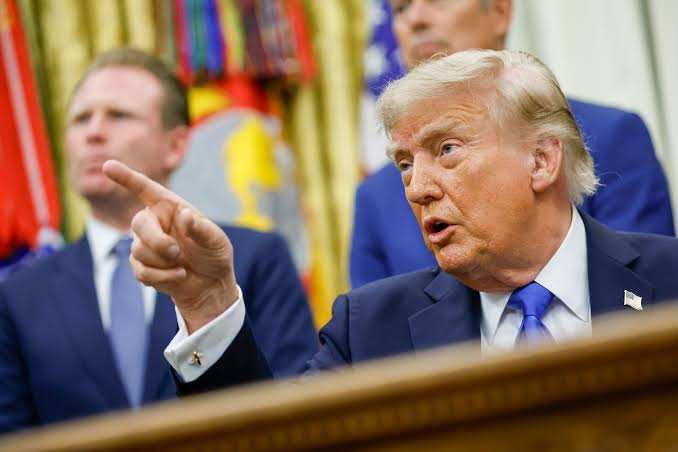
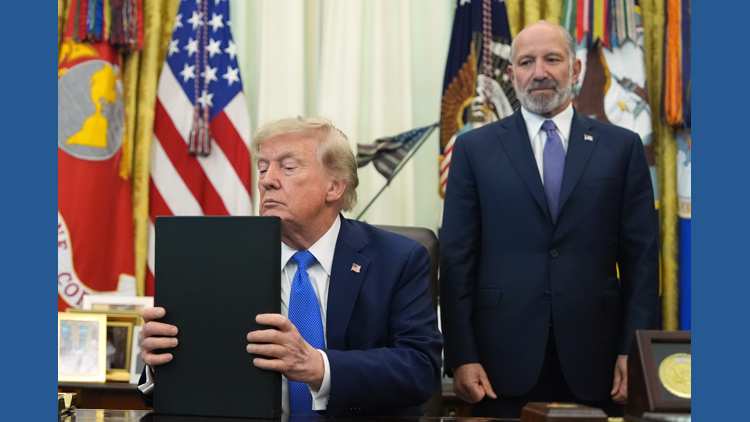
U.S. President Donald Trump demanded financial compensation from Iran for decades of conflict on Monday, August 10, 2026, sharply escalating tensions and stalling negotiations to reopen the strategic Strait of Hormuz. The announcement came in direct response to Tehran outlining strict preconditions for restoring maritime traffic, which included demands for U.S. war reparations, lifting sanctions, and ending military threats. Rejecting these terms on Truth Social, Trump insisted Iran must pay damages for casualties and destruction spanning fifty years across Lebanon, Syria, Yemen, and Gaza, alongside compensation for families of U.S. service members killed in historical regional attacks. The public standoff halted fragile diplomatic efforts led by regional mediators like Oman and Pakistan. Consequently, global oil prices surged five percent on Monday as energy markets reacted to prolonged uncertainty surrounding the vital shipping chokepoint. The active U.S. naval blockade remains in place, leaving bilateral talks deadlocked over mutually exclusive political preconditions.
By James Porter | JQJO News
Timeline of Events
- On February 28, 2026: United States and regional allies launched major airstrikes against Iran.
- On April 8, 2026: Both warring nations agreed to a temporary initial regional ceasefire.
- On July 8, 2026: President Trump officially declared the previous active ceasefire completely over.
- On August 8, 2026: Iranian officials formally demanded financial compensation for war damages.
- On August 10, 2026: President Trump demanded extensive financial compensation from Tehran governing authorities.
- On August 11, 2026: Global petroleum prices surged five percent across international energy markets.
- On August 11, 2026: Strait of Hormuz diplomatic negotiations stalled completely amid mutual disagreements.
- On September 1, 2026: Commercial shipping transportation costs through the Persian Gulf will rise.
- On October 1, 2026: Active naval military blockades will face severe international economic pressure.
- On November 1, 2026: Geopolitical tensions will directly impact upcoming United States midterm elections.
News Intelligence
- Higher gasoline prices and immediate economic anxiety for consumers nationwide.
- Sustained inflation risks and prolonged geopolitical instability in global markets.
- American energy consumers, petroleum investors, and commercial shipping industry businesses.
- Prioritize official White House statements and verified energy market reports.
- Articles Published:
- 27
- Right Leaning:
- 0
- Left Leaning:
- 0
- Neutral:
- 27
- Distribution:
- Left 0%, Center 100%, Right 0%
Framing emphasizes reckless escalation threatening global stability and energy markets. Reporting focuses strictly on official statements and stalled diplomatic negotiations. Coverage highlights strong deterrence against hostile regimes and national defense.
Reuters published President Trump's compensation demand on August 10, 2026. https://www.cbc.ca/lite/story/9.7302186
Coverage of Story:
From Left
No left-leaning sources found for this story.
From Center
Trump Demands Iran Pay Compensation for Decades of Conflict As Strait of Hormuz Talks Stall
Reuters CBS News CBC The Hindu TIME Financial Times UK Parliament Research Wikipedia Wikipedia Wikipedia Wikipedia Council on Foreign Relations TIME CBS News Arab News Devdiscourse Washington Post Encyclopædia Britannica Wikipedia Wikipedia CBC News The Hindu Financial Times UK Parliament Research Wikipedia Wikipedia Council on Foreign RelationsFrom Right
No right-leaning sources found for this story.


Comments