Intel CEO Secures U.S. Approval for $20 Billion Stock Sale
PUBLISHED Aug 11, 2026, 7:28 PM ET
Read, Watch or Listen
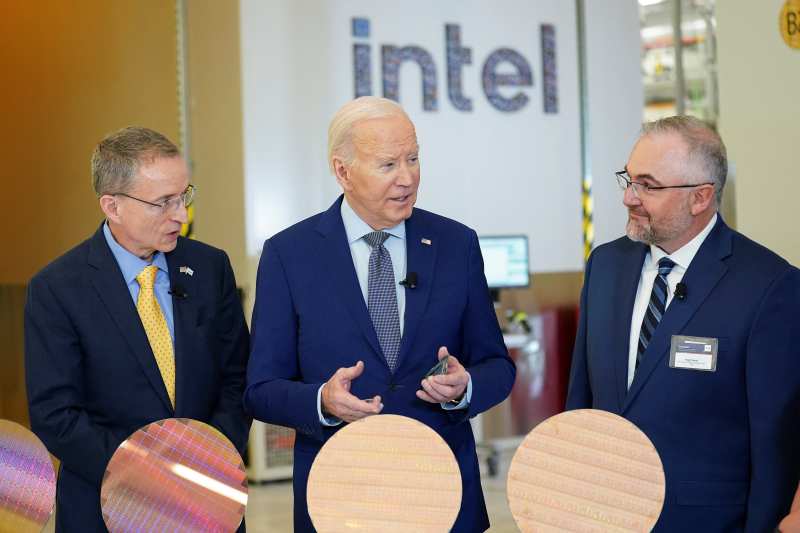
Intel CEO Lip-Bu Tan personally called U.S. Commerce Secretary Howard Lutnick to seek government approval before the company announced a massive $20 billion stock offering . Secretary Lutnick approved the plan, but the U.S. government ultimately decided not to participate in the purchase . Neither Intel nor the Department of Commerce have commented on the matter . The stock offering is the largest in Intel's history since 1971, having been increased from $150 billion to $200 billion . It is the second largest stock refinancing in history, surpassed only by Google's recent offering . The purpose of the capital raise is to fund Intel's AI-related initiatives, including the construction of the delayed Ohio chip factory . This is the first time since 1971 that Intel has conducted a public stock offering . The decision implies that Intel's leadership believes the external environment is favorable for such a move, signaling that there is clear customer demand for its AI and foundry services to justify the dilution of current shares . The relationship between Intel and the U.S. government is critical to this news. The Commerce Department’s investment in Intel a year ago has resulted in a 375% book return . However, this new $20 billion offering will dilute the government's current 9.9% stake in the company . For Tan, the government’s endorsement is a significant validation of his leadership . Relations between Intel and Washington had stagnated under previous CEO Pat Gelsinger, but have improved under Tan. Despite former President Trump publicly calling for Tan's resignation last summer, his position is now seen as stable due to his management of Washington relations and the company's growth over the past two years . Tan demonstrated a pragmatic approach by notifying the company's largest shareholder before the market action, thus reducing political risk . Following the announcement, Intel's stock price fell 4% due to the dilutive effect of the offering, though it closed up 0.19% on Tuesday
By Ayesha A. | JQJO News
Timeline of Events
- On October 13, 1971, Intel completed its historic initial public stock offering.
- On August 15, 2025, United States government acquired a 9.9% stake in Intel.
- On August 10, 2026, Intel formally announced a proposed $15 billion common stock offering.
- On August 11, 2026, reports revealed CEO Lip-Bu Tan sought early Commerce approval.
- On August 11, 2026, sources confirmed the equity offering was upsized to $20 billion.
- On August 11, 2026, Intel shares dipped approximately 4 percent on dilution concerns.
- On August 12, 2026, market trading stabilized with Intel closing with slight gains.
- On August 12, 2026, federal officials declined direct participation in the secondary share purchase.
- Intel will close the expanded public stock offering in coming weeks.
- Intel will channel net proceeds toward completing the Ohio factory.
News Intelligence
- Federal approval validates private turnaround strategy without adding taxpayer exposure.
- Massive capital infusion accelerates domestic semiconductor manufacturing and supply chain independence.
- Semiconductor investors, technology sector firms, and federal regulatory bodies.
- Monitor official corporate filings alongside financial wire reports for updates.
Coverage of Story:
From Left
No left-leaning sources found for this story.
From Center
Commerce Department gives quiet blessing to Intel’s massive stock offering
Politico Qz Theinformation Barrons Protocol Zdnet Forbes Businessinsider Fortune Wired Pcmag Tomshardware Arstechnica Theverge Techcrunch Yahoo AP News Investors Thestreet BarronsFrom Right
No right-leaning sources found for this story.





Comments