Lake Mead Plummets to Historic Low, 30 Million at Risk
PUBLISHED Aug 10, 2026, 5:54 PM ET
Read, Watch or Listen
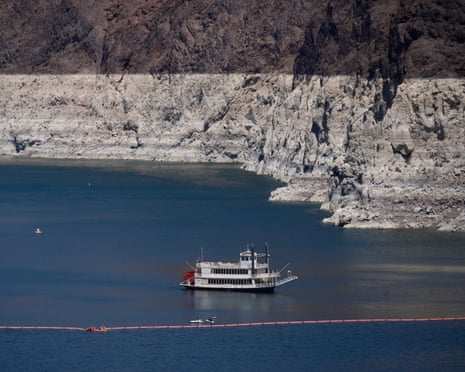
Lake Mead, the largest reservoir in the United States, has dropped to its lowest water level since it was first filled nearly 90 years ago, according to federal data. The reservoir, which straddles the Arizona-Nevada border outside Las Vegas, hit 1,040.4 feet (317.1 meters) above sea level on Friday. This marks a new record low, falling just below the previous record set on July 28, 2022. The declining water levels are a stark indicator of the ongoing crisis gripping the Colorado River system, which is relied upon by 40 million people across seven U.S. states, tribal nations, and Mexico. J.B. Hamby, chairman of the Colorado River Board of California, stated, "It's extremely significant and extremely concerning. You have three-quarters of the population of the Colorado River Basin, some 30 million people, who are directly impacted by risks to Lake Mead". The situation has been exacerbated by the worst snowpack on record for the Colorado River Basin this past winter, adding immense stress on farmers, industry, wildlife, and hydropower producers. Years of overuse, combined with drought and rising temperatures, have been depleting both Lake Mead and Lake Powell, the country's second-largest reservoir. Both are now at their lowest levels in nearly seven decades. To protect the strained system's ability to produce hydropower, federal officials have decided against releasing cool water from Lake Powell to protect a threatened native fish, the humpback chub. This difficult choice highlights the severity of the water shortage. States that rely on the Colorado River—California, Colorado, Arizona, Nevada, New Mexico, Wyoming, and Utah—have failed to reach a long-term agreement on how to share the dwindling resource. The Bureau of Reclamation has proposed a flexible plan calling for the Lower Basin states of Arizona, California, and Nevada to take less water, with deeper cuts possible in drier times. The consequences of the low water levels are already visible. The severe drought in 2022 exposed human remains and forced water officials in Las Vegas to pump water from deeper within the reservoir to continue supplying the millions of people who depend on it. Boat ramps at Lake Powell have had to be moved or shut down as it has become difficult to reach the water. Federal officials do not believe the record will stand for long, as modeling done in July forecasts Lake Mead will continue to drop through much of the rest of the year.
By Sidra | JQJO News
Timeline of Events
- · On July 28, 2022, Lake Mead recorded 1,040.58 feet, previous historic low.
- · On 1937, Lake Mead first filled after Hoover Dam construction completed.
- · On July 2026, combined Lake Mead-Powell storage hit lowest since 1957.
- · On July 31, 2026, Reclamation released Post-2026 Operational Guidelines FEIS.
- · On August 5, 2026, Lake Mead stood at 1,040.74 feet, inches above record.
- · On August 6, 2026, Lake Mead hit 1,040.50 feet, breaking 2022 record.
- · On August 7, 2026, level dropped to 1,040.46 feet between midnight-1am.
- · On August 7, 2026, Reclamation said it will not release cool water for fish.
- · On August 7, 2026, Lake Mead fell to 1,040.4 feet on Friday.
- · On August 10, 2026, Reclamation data showed level at 1,040.3 feet.
- · On August 11, 2026, Lake Mead remains at record-low levels.
- · On August 11, 2026, reservoir operates at approximately 27% total capacity.
- · On August 11, 2026, federal officials forecast continued dropping through year.
- · On August 11, 2026, seven basin states failed to reach long-term agreement.
- · On August 11, 2026, J.B. Hamby calls situation extremely significant and concerning.
- · On August 11, 2026, Lake Powell also nears record low levels.
- · On August 11, 2026, Reclamation proposes flexible cuts for Lower Basin states.
- · On August 11, 2026, Hoover Dam hydropower at risk below 1,035 feet.
- · On August 11, 2026, Bureau projects year-end level around 1,037.3 feet.
- · On August 11, 2026, Central Arizona Project canal could go dry.
- · Lake Mead will set new record lows nearly every month through 2028.
- · Lake Mead could fall below 1,035 feet by spring 2027.
- · Reclamation may impose cuts up to 3 million acre-feet annually.
- · Hoover Dam stops power generation at elevation 950 feet.
- · Lake Mead could reach dead pool at 895 feet elevation.
- · New records likely daily until 2026-2027 winter snowpack runoff.
- · Combined Mead-Powell storage will keep falling daily.
- · Federal officials expect record will not stay where it is.
- · Hydropower capacity at Hoover Dam could drop by 70%.
- · Water cuts could cause severe disruption for 40 million people.
News Intelligence
- Immediate US impact: 40 million people face water supply uncertainty across seven states.
- Long-term US impact: Western US water crisis intensifies with no state agreement.
- Affected groups: Arizona, California, Nevada, Colorado River Basin residents and farmers.
- Reader priority: Focus on Bureau of Reclamation forecasts and state water decisions.
Coverage of Story:
From Left
No left-leaning sources found for this story.
From Right
No right-leaning sources found for this story.





Comments