Lake Mead Hits Record Low Water Level
Tap title to read story
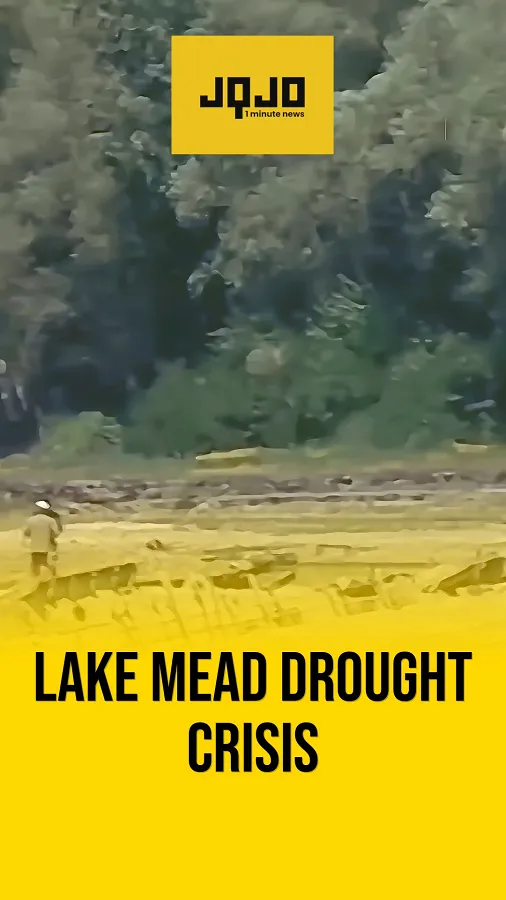
Lake Mead, the largest reservoir in the United States, has fallen to a historic low water level, according to data published by the U.S. Bureau of Reclamation. Water levels dropped to 1,040.5 feet, breaking the previous record low of 1,040.58 feet set in July 2022. The drop places the reservoir lower than at any point since its creation in the mid-1930s following the construction of the Hoover Dam on the Colorado River. Lake Mead, located along the Nevada-Arizona border, supplies drinking water, irrigation, and municipal resources to more than 20 million people across the American Southwest. Jack Schmidt, director of the Centre for Colorado River Studies at Utah State University, stated that breaking the record serves as clear evidence of the uncharted territory facing the entire Colorado River Basin. The decline is driven by persistent regional drought, climate shifts, and heavy water consumption across southwestern states. A bleached high-water mark, commonly known as a bathtub ring, remains visible along the rocky canyon walls surrounding Black Canyon and the Hoover Dam, illustrating the massive loss of volume over recent decades. The U.S. Bureau of Reclamation continues to monitor reservoir metrics as state and federal officials face complex negotiations regarding water allocations, conservation mandates, and infrastructure strains. The unprecedented decline heightens pressure on regional management plans designed to address shrinking supplies across the vital river system.
More context
Timeline
- On June 25, 1935, Hoover Dam creation formed Lake Mead.
- On July 1, 2022, Lake Mead hit prior record low.
- On November 20, 2024, officials published future Colorado River steps.
- On August 15, 2025, federal water cuts affected lower states.
- On August 7, 2026, Lake Mead fell to record low.
- On August 7, 2026, Bureau of Reclamation published new data.
- On August 6, 2026, water levels dropped to 1040.57 feet.
- In coming months, extreme drought will strain western municipal supplies.
- By October 2026, federal operating rules deadline approaches fast now.
- Over coming years, severe water shortages will force agricultural cutbacks.
Why it matters
Western states face immediate pressure for emergency water conservation measures. Permanent water scarcity threatens regional economic stability and population growth. Southwestern farmers, municipal utilities, residents, and tribal communities face impacts. Readers should monitor official federal releases and regional utility updates.
Coverage notes
Climate change accelerates severe western drought threatening essential water supplies. Bureau of Reclamation data shows Lake Mead hitting record lows. Federal overreach and failed local management worsen southwest water shortages.
Primary report
U.S. Bureau of Reclamation released record water level data today. (August 7, 2026)
Sources
- SFGATE
- Sierra Club
- The Guardian
- CTV News
- Industrial Info Resources
- MeatEater
- World Atlas
- Aspen Public Radio
- The Colorado Sun
- Circle of Blue
- Associated Press
- Northeastern University News
- Associated Press
- Associated Press
- Associated Press
- Associated Press
- Associated Press
- Associated Press
- Associated Press
- Associated Press
- Associated Press
JQJO Editorial Desk · Human reviewed · AI assisted. Report a correction.