Unprecedented images may explain one of greatest mysteries of the sun
Tap title to read story
Highest-ever resolution pictures of our star could help show why its corona is millions of degrees hotter than its surface
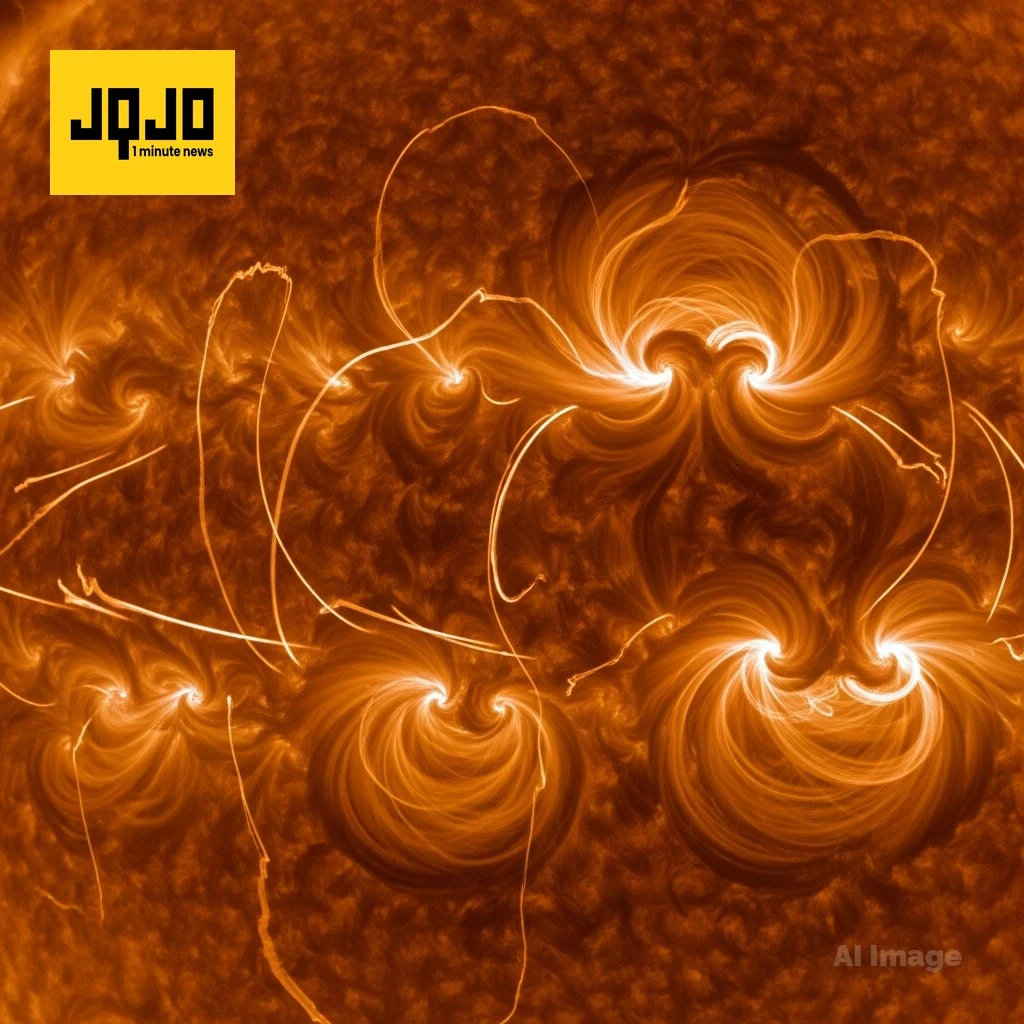
Golden bands and swirling vortices have been spotted on the sun in the most detailed images ever captured of the turbulent surface of our home star.
Astronomers observed the sun with the Inouye solar telescope in Hawaii, the world's most powerful solar telescope, and saw new features smaller than 20km (12 miles) across in a magnetically active region close to a sun spot.
T
More context
Timeline
- On January 29, 2020: The telescope captured early highly detailed images of solar granules.
- On February 8, 2020: Researchers identified initial tiny bright markers representing energetic magnetic fields.
- On December 29, 2023: Scientists realized previous images lacked sufficient detail to explain heating.
- On August 5, 2026: The telescope observed the sun discovering previously unseen turbulent features.
- On August 5, 2026: Scientists identified small swirling vortices as Kelvin Helmholtz fluid instabilities.On August 5, 2026: Researchers concluded these instabilities cause layers of plasma to slide.
- On August 5, 2026: The team determined these vortices twist magnetic lines creating tension.
- On August 5, 2026: Experts published their detailed findings regarding the instability in Nature.
- Researchers will analyze data to refine theories of coronal heating.
- The observations will help forecasters predict dangerous space weather events.
Why it matters
Scientists possess new data to study dangerous space weather threats. Improved forecasting will eventually protect national power grids and satellites. Astronomers, space agencies, satellite operators, grid managers, and telecommunications companies. Seek primary sources and avoid exaggerated claims of immediate doom.
Coverage notes
Left: The Guardian highlighted the scientific wonder and mystery solving aspects. Center: Neutral sources focused objectively on telescope capabilities and physics discoveries. Right: Evidence was insufficient to determine a typical conservative media framing.
Primary report
ugust 5, 2026: Nature published researchers' unprecedented solar surface findings.
Sources
JQJO Editorial Desk · Human reviewed · AI assisted. Report a correction.