US Senate Fails to Limit Trump War Powers
PUBLISHED Jul 30, 2026, 9:52 PM ET
Read, Watch or Listen
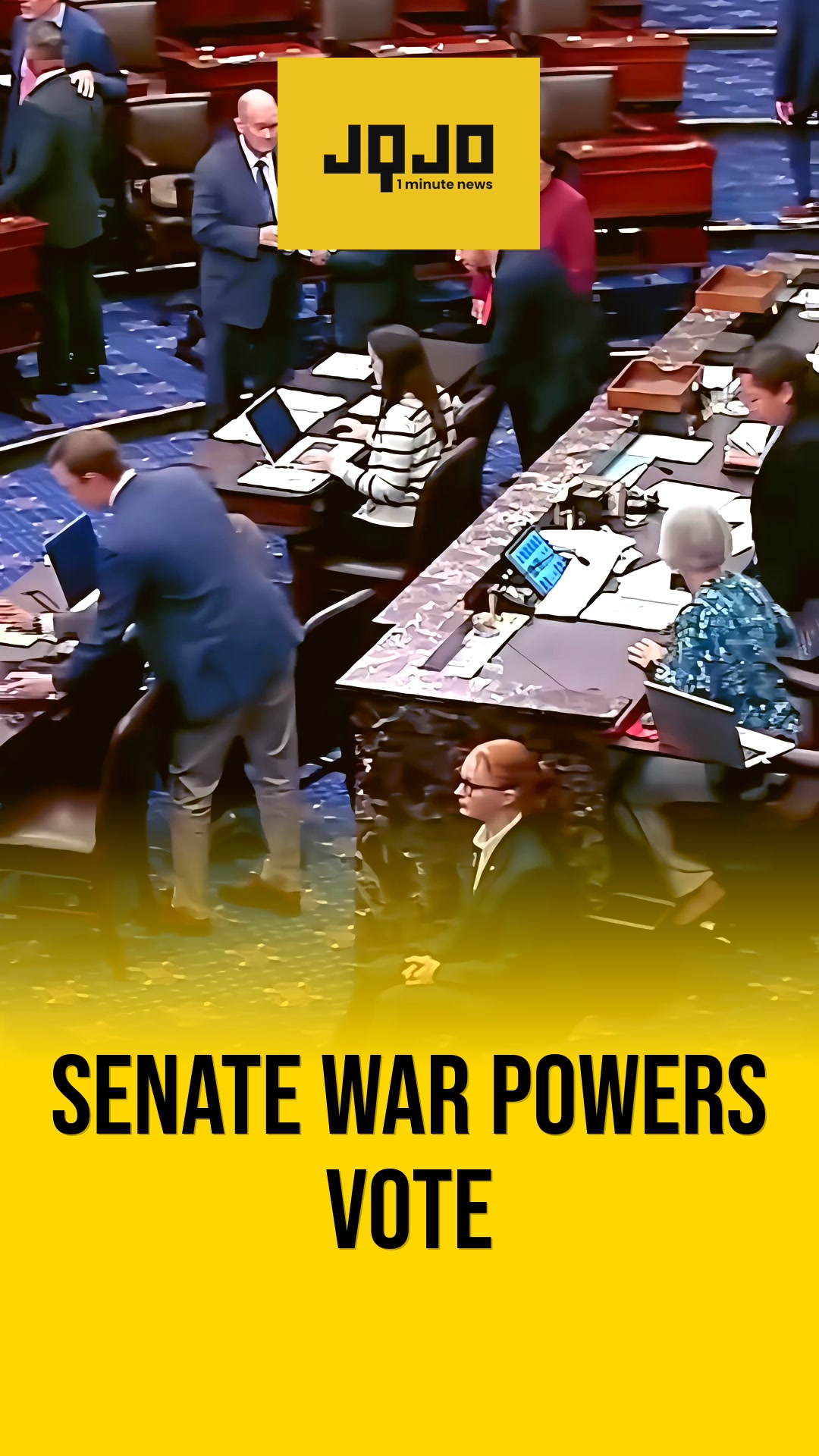
The United States Senate rejected a war powers resolution on Thursday aimed at limiting President Donald Trump's authority to wage military operations against Iran. The measure failed in a 49-50 vote, marking the second time in two weeks the legislative chamber attempted to force an end to hostilities. The vote followed a heavy wave of retaliatory U.S. airstrikes launched against dozens of targets belonging to Iran's Revolutionary Guards Corps. The military action came in response to an Iranian missile attack targeting an American base in Jordan, which resulted in renewed fighting after a brief ceasefire collapse. Pennsylvania Senator John Fetterman broke ranks to vote with Republicans against the measure, making him the only Democrat to do so. Meanwhile, Republican Senators Susan Collins of Maine, Lisa Murkowski of Alaska, and Rand Paul of Kentucky crossed the aisle to vote in favor of the resolution, which would have mandated the withdrawal of U.S. forces from hostilities without explicit congressional authorization. The conflict has stretched past five months, significantly exceeding initial administration projections. The Pentagon has informed Congress that it requires approximately $80 billion more to sustain the war effort, building on more than $37 billion already spent. A recent Associated Press-NORC Center for Public Affairs Research poll indicated that roughly two-thirds of U.S. adults view the war as not worthwhile.
By Najma A. | JQJO News
Timeline of Events
- On January 20, 2025, Donald Trump assumed the United States presidency.
- On June 1, 2026, Iranian forces targeted a U.S. base in Jordan.
- On July 15, 2026, the United States launched massive airstrikes against Iran.
- On July 20, 2026, the Pentagon requested eighty billion dollars more funding.
- On July 25, 2026, public polling showed widespread opposition to military conflict.
- On July 30, 2026, the U.S. Senate voted on war powers.
- On July 31, 2026, the Senate rejected the war powers limitation measure.
- On August 1, 2026, administration officials defended military necessities before congressional committees.
- On August 2, 2026, defense contractors anticipated increased federal spending allocations soon.
- On August 3, 2026, international diplomats urged immediate restraint between opposing nations.
- In August 2026, Congress will debate additional military appropriations bill packages.
- In September 2026, public sentiment regarding foreign interventions may influence elections.
- In October 2026, military expenditure totals could exceed projected budget caps.
- In November 2026, midterm electoral campaigns will feature intense foreign policy debates.
- In December 2026, regional security dynamics in the Middle East remain volatile.
- In January 2027, administration defense strategies face formal legislative reviews.
- In February 2027, international allies evaluate economic impacts from prolonged hostilities.
- In March 2027, defense analysts project continued operational deployments in Jordan.
- In April 2027, congressional oversight hearings will examine military escalation justifications.
- In May 2027, domestic political polarization regarding foreign conflicts will intensify nationwide.
News Intelligence
- Legislative failure ensures continued presidential authority over military operations abroad.
- Prolonged conflict increases federal spending and deepens national political divisions.
- Military families, taxpayers, and active-duty service members experience direct consequences.
- Verify official legislative records and monitor updates from major wire services.
- Articles Published:
- 20
- Right Leaning:
- 2
- Left Leaning:
- 6
- Neutral:
- 12
- Distribution:
- Left 30%, Center 60%, Right 10%
Left: Outlets emphasized congressional failure to check presidential wartime authority. Center: Reports focused strictly on the narrow 49-50 vote breakdown. Right: Coverage highlighted legislative support for commander in chief decisions.
The Guardian published the breaking legislative report on July 31, 2026, 3:29 AM PKT. https://www.theguardian.com/us-news/2026/jul/30/donald-trump-senate-iran-war-power
Coverage of Story:
From Left
Senate narrowly defeats push to restrict military action against Iran
CNN The New York Times The Washington Post NBC News Latimes BostonglobeFrom Right
Senate backs commander in chief in close war powers vote
Fox News The Wall Street Journal






Comments