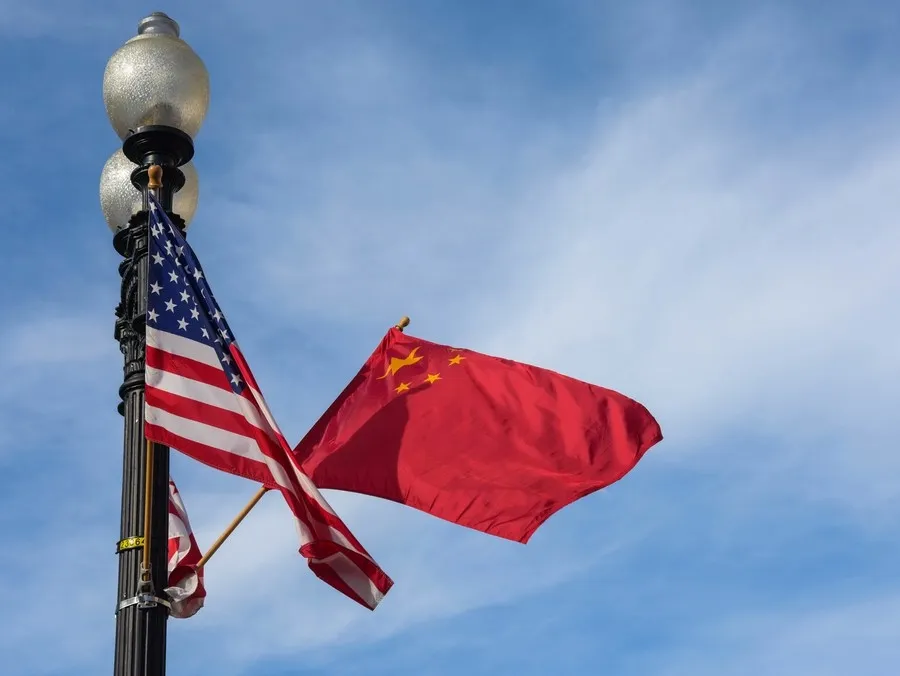
US Senate Names China Top Threat, Seeks Alliances
Tap title to read story
Washington: On May 8 a bipartisan group of U.S. senators led by Senator Chris Coons introduced a resolution that names China the "foremost rival and strategic competitor" of the United States, saying Beijing has the intent and capacity to undermine U.S. and allied security and prosperity. The measure accuses China of rapidly expanding nuclear, cyber, maritime and space capabilities, using coercive, aggressive and deceptive actions in the Indo-Pacific and attempting to change the status quo in the Taiwan Strait by coercion or force. It also links China to support for Iran, North Korea and Russia and to the flow of precursor chemicals used to produce illicit fentanyl and nitazenes.
Washington: The non-binding resolution urges deeper engagement with India, including through the Quadrilateral Security Dialogue linking the United States, Japan, Australia and India, and reaffirms U.S. commitments to partners such as Japan, South Korea, Australia and the Philippines. Senators called for stronger deterrence, tighter export controls, restrictions on investments in strategic U.S. industries, efforts to preserve freedom of navigation in the South China Sea and Taiwan Strait, and policies to ensure U.S. leadership in artificial intelligence and other foundational technologies.
More context
Timeline
- 1. Longstanding U.S.-China strategic rivalry over economics, technology, and security precedes recent action.
- 2. Early May: Reports and assessments highlight Chinese military and technological expansion in multiple domains.
- 3. May 8: Bipartisan Senate resolution introduced by Senator Chris Coons naming China the foremost strategic competitor.
- 4. Resolution cites alleged Chinese coercion in the Taiwan Strait and transfers to Iran, North Korea, and Russia.
- 5. Resolution calls for deeper U.S. engagement with India and strengthening of Indo-Pacific alliances; follow-up actions depend on policy adoption.
Why it matters
This resolution could impact your safety and finances. If tensions escalate, it could affect global markets and your investments. It might also lead to increased cyber-security threats. Stay informed about the situation and consider discussing your investment strategy with a financial advisor.
Sources
JQJO Editorial Desk · Human reviewed · AI assisted. Report a correction.