
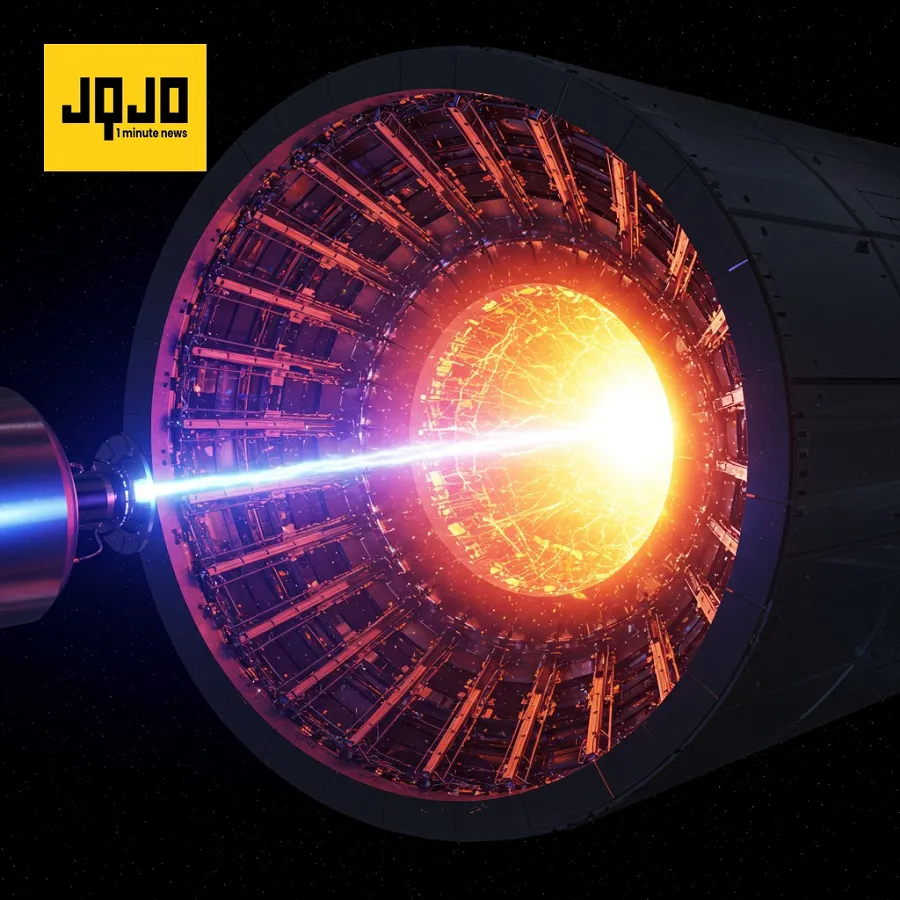
Is This Big Bang Machine About to Rewrite History?
Tap title to read story
0:00 / 0:47
Scientists have successfully tested the sPHENIX detector, a massive instrument designed to study the quark-gluon plasma (QGP), a state of matter that existed just after the Big Bang. This 1000-ton detector, an upgrade to the PHENIX detector, can measure 15,000 particle collisions per second. By smashing gold ions, sPHENIX recreates the extreme conditions of the early universe, allowing researchers to study the QGP's properties. This successful test means sPHENIX is ready to begin collecting data that could revolutionize our understanding of the universe's origin.
More context
Sources
JQJO Editorial Desk · Human reviewed · AI assisted. Report a correction.