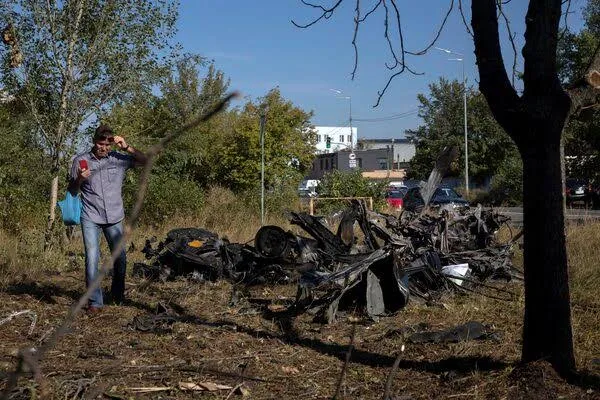
Widespread sexual violence in Ukraine war, most cases tied to Russia, says UN report
Tap title to read story
0:00 / 1:12

Tap title to read story
Tap title to read story
Researchers at the Salk Institute are field-testing genetically modified, deep-rooted soybean varieties across midwestern states to combat climate change and agricultural stress. Backed by an eighteen million dollar grant from the Bezos Earth Fund, scientists identified three hundred forty-seven genes linked to root growth and carbon storage to engineer plants with deeper root systems and elevated levels of suberin. These modifications allow crops to access moisture during severe droughts and trap carbon deep beneath the soil. Field trials at the University of Illinois Urbana-Champaign and other sites in Missouri, Kansas, and Iowa evaluate whether the plants maintain standard yields while sequestering carbon. Modeling studies suggest widespread adoption across major staples like corn and cotton could remove roughly a gigaton of carbon dioxide annually by the year two thousand forty, though researchers must still verify long-term storage viability under commercial farming conditions.
Tap title to read story
United States factory production unexpectedly fell 0.3 percent in August following seven consecutive months of growth, according to Federal Reserve data released Friday. The contraction was driven by a 0.5 percent drop in durable goods, led by declines in motor vehicles, parts, computers, and peripheral equipment. Economists polled by Reuters had anticipated a 0.3 percent increase. The slowdown reflects mounting economic pressures from higher oil prices hovering above one hundred dollars per barrel, ongoing geopolitical conflicts, and tighter monetary policy after the Federal Reserve raised benchmark interest rates. Although artificial intelligence infrastructure spending and defense expenditures continue to provide foundational support, rising energy and borrowing costs threaten broader industrial activity. Analysts remain divided on whether aggressive trade policies and tariffs have effectively stimulated domestic manufacturing, noting that capacity utilization rates remain below historical averages. The Federal Reserve reported that overall industrial output stayed unchanged as utilities jumped 1.8 percent.

Tap title to read story
Tap title to read story

Tap title to read story
Tap title to read story
Director Walter Thompson-Hernandez has released his feature film, If I Go Will They Miss Me, in U.S. theaters. The movie explores life under the Los Angeles International Airport flight path and stars Danielle Brooks and J. Alphonse Nicholson. The cinematic project expands upon an award-winning short film inspired by a 2020 incident where a Delta Air Lines jet dumped fifteen thousand gallons of fuel over Cudahy schools. That hazardous event triggered a lawsuit by local teachers, culminating in a seventy-nine million dollar settlement last year. The narrative follows a young boy named Lil Ant who mythologizes his absent father into a Greek god. This fictional portrayal mirrors the filmmaker's own childhood experiences growing up with asthma and navigating community trauma in Watts. The release brings renewed attention to the environmental and health challenges faced by working-class residents near major metropolitan airports.

Tap title to read story

Tap title to read story

Tap title to read story