US forecaster says more than 83% chance of very strong El Niño through early 2027
PUBLISHED Oct 8, 2026, 1:12 PM ET
Read, Watch or Listen
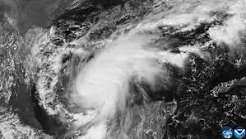
U.S. forecasters say El Niño is strengthening, with more than an 83% chance that strong-to-very-strong conditions will continue through January-March 2027. NOAA’s Climate Prediction Center said Thursday that sea-surface temperature anomalies exceeded 4 degrees Celsius in parts of the eastern equatorial Pacific, while its Niño-3.4 index reached 2.1 degrees Celsius. The agency said there is an 83% chance during October-December of a historic-strength event, defined as a three-month relative Niño index of at least 2.5 degrees Celsius, surpassing events recorded since 1950. The World Meteorological Organization said Thursday that El Niño is nearly certain to persist through February 2027 and could rank among the strongest since 1950. The forecasts raise risks of altered rainfall, drought, flooding and extreme heat. A Climate Impact Lab projection estimates 451,000 excess heat deaths through February, but that figure is a projection, not a confirmed toll. The estimate compares projected mortality with a normal year.
By Haya | JQJO News
Timeline of Events
- On 1950, El Niño records established the modern comparison period.
- On 1982, El Niño produced widespread global weather disruptions worldwide.
- On 1997, El Niño peaked strongly across tropical Pacific waters.
- On 2015, El Niño reached exceptional strength across Pacific waters.
- On June 11, NOAA reported El Niño conditions strengthening into winter.
- On September 3, WMO forecast persistence through February 2027.
- On October 6, FEWS NET assessed food-security risks globally.
- On October 7, NOAA GFDL forecast the event nearing peak.
- On October 8, NOAA reported greater than eighty-three percent probability.
- On October 8, WMO forecast record Pacific temperatures through December.
- On December 1 2026 By December 2026, WMO expects El Niño to peak strongly.
- On February 1 2027 Through February 2027, WMO expects El Niño conditions to persist.
News Intelligence
- Immediate US impact: Strong El Niño raises U.S. risks for heat, rain, drought.
- Possible long-term US impact: Persistent El Niño could reshape U.S. winter weather and agriculture.
- Most affected groups: California, Gulf Coast, farmers, utilities, insurers, and emergency agencies nationwide.
- Reader priority: Prioritize NOAA forecasts, observed data, and clearly attributed scientific projections.
Coverage of Story:
From Left
El Niño is very likely to be the strongest since records began 75 years ago, feds say
San Francisco Chronicle Washington Post Washington PostFrom Center
US forecaster says more than 83% chance of very strong El Niño through early 2027
Reuters Iowa Public Radio Iowa Public Radio Iowa Media Wire KSL Moneycontrol Indian Express Jakarta Post Channels Television SBS News Philippine Information Agency Philippine Information Agency Philippine Information Agency Philippine Information Agency GMA News AccuWeather The Weather Channel CBS News FOX Weather Climate Central Phys.org NewsJaws Severe Weather Europe Pogodnik Interaksyon The Sun Times News NOAA Climate Prediction Center NOAA Climate Prediction Center NOAA Climate Prediction Center NOAA GFDL WMO WMO WMO FEWS NET FEWS NET UNICEF USA Drought.gov National Weather Service National Weather Service National Weather Service NASA Earth Observatory NOAA Climate.gov NOAA National Centers for Environmental Information NOAA Physical Sciences Laboratory International Research Institute for Climate and Society Bureau of Meteorology Australia Copernicus Climate Change Service European Centre for Medium-Range Weather Forecasts USDA National Agricultural Statistics Service NOAA National Hurricane Center NOAA National Hurricane Center NOAA National Weather Service Climate Prediction Center NOAA National Weather Service USGS CDC WHO University of Chicago Climate Impact Lab Climate Impact Lab PAGASA GMA News Philstar ABS-CBN News Rappler CNN Weather BBC Weather Al Jazeera NPR PBS NewsHour ABC News NBC News USA Today Associated PressFrom Right
No right-leaning sources found for this story.




Comments