Ruben Gallego, weighing a presidential run, debuts a new economic plan
Tap title to read story
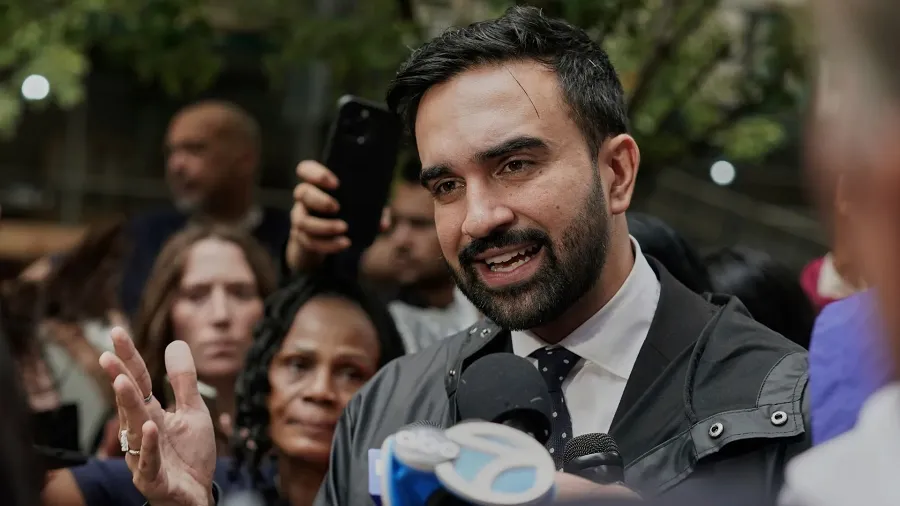
Senator Ruben Gallego, a Democrat from Arizona, introduced a comprehensive economic blueprint targeting middle-class job growth and worker protections. The framework proposes taxing artificial intelligence companies and hyper-scale data centers to directly fund displaced-worker safety nets and retraining programs. To address cost-of-living pressures and expanding corporate consolidation, Gallego advocates raising the federal minimum wage to $20 per hour, strengthening antitrust enforcement, and introducing sectoral bargaining to boost private-sector union coverage. Additionally, the plan pitches a New Deal-style federal public works initiative to drive domestic infrastructure development and sustained employment. While framed as a legislative platform to define Democratic priorities in Congress, political analysts view the proposal as a foundational blueprint for Gallego’s potential 2028 presidential bid. The platform bridges Sun Belt electoral politics with worker-centric populism, attempting to reclaim working-class voters across key swing states. Opponents and industry groups cite concerns over wage-driven inflation and capital flight within tech manufacturing.
More context
Timeline
- On November 5 2024 Ruben Gallego was elected US Senator representing the state Arizona.
- On January 3 2025 Ruben Gallego was formally sworn into the United States Senate.
- On March 15 2025 Gallego joined Senate Banking Committee to address regional economic policy.
- On August 10 2025 Gallego initiated bipartisan roundtable discussions on domestic artificial intelligence impacts.
- On November 12 2025 Labor leaders met with Gallego regarding sectoral bargaining reform frameworks.
- On February 4 2026 Arizona tech leaders raised concerns regarding proposed regional data taxation.
- On May 18 2026 Gallego drafted public works legislation addressing Sun Belt infrastructure needs.
- On October 7 2026 Ruben Gallego officially unveiled his landmark presidential economic policy framework.
- On October 8 2026 Congressional committees plan preliminary policy reviews on proposed worker protections.
- On December 1 2027 Expected late 2027 Gallego to formalize decision regarding a 2028 presidential campaign.
Why it matters
Immediate US impact: Immediate US impact: Sparks national debate on federal minimum wage and AI taxation. Possible long-term US impact: Long-term US impact: Shapes Democratic policy strategy and legislative labor frameworks through 2028. Most affected groups: Most affected groups: Tech corporations, data center operators, low-wage workers, union leadership. Reader priority: Reader priority: Track legislative progress and potential tech industry pushback against taxation.
Coverage notes
Left: Framing emphasizes worker protections, anti-monopoly measures, and AI mitigation taxes. Center: Framing focuses on policy details and potential 2028 presidential positioning. Right: Framing highlights economic burdens, wage-push inflation, and tech tax concerns.
Primary report
Senator Ruben Gallego released official economic platform statement on 2026-10-07
Sources
- Politico
- The Washington Post
- NBC News
- HuffPost
- San Francisco Chronicle
- Reuters
- The Associated Press
- Bloomberg
- The Hill
- Axios
- USA Today
- MarketWatch
- Arizona Republic
- NPR
- Dallas Morning News
- Miami Herald
- Seattle Times
- Chicago Tribune
- Houston Chronicle
- Detroit Free Press
- Cleveland Plain Dealer
- Star Tribune
- The Oregonian
- The Arizona Republic
- The Tennessean
- The Charlotte Observer
- Pittsburgh Post-Gazette
- The Baltimore Sun
- Milwaukee Journal Sentinel
- Sacramento Bee
- The Wall Street Journal
- Forbes
- The Washington Times
- Las Vegas Review-Journal
- The Oklahoman
- gallego.senate.gov
JQJO Editorial Desk · Human reviewed · AI assisted. Report a correction.