South Korea’s Lee Urges North Korea to Resume Dialogue, Pledges Self-Reliant Military Buildup to Reclaim Wartime Control From US
Tap title to read story
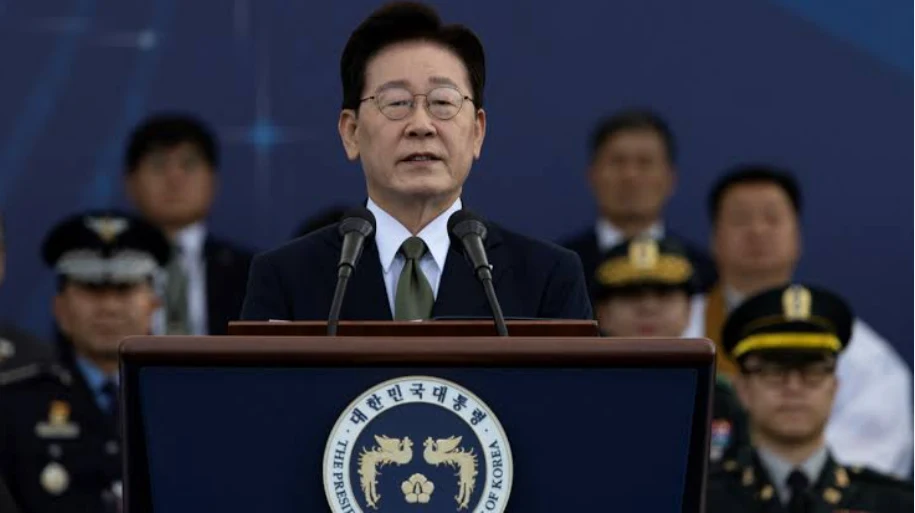
South Korean President Lee Jae Myung urged Pyongyang to resume stalled diplomatic dialogue during an Armed Forces Day address in Gyeryong. The appeal followed a disputed landmine explosion in the Demilitarized Zone that injured three South Korean soldiers, prompting sharp security exchanges between Seoul and North Korean leadership. President Lee simultaneously announced plans to pursue sovereign defense capabilities, including acquiring wartime operational control from the United States and developing advanced submarines by the mid-2030s. He emphasized that strengthening domestic military deterrence and advancing artificial intelligence command systems are vital for national sovereignty. While reaffirming the enduring strategic alliance with Washington, the South Korean administration aims to balance regional diplomacy amid rising geopolitical tensions. North Korea has largely rejected recent diplomatic overtures, continuing border fortification efforts as international observers monitor stability on the peninsula. The speech underscores Seoul's complex dual approach combining robust military readiness with persistent diplomatic outreach efforts today.
More context
Timeline
- On July 27 1953: The historic Korean War concluded with an uneasy armistice agreement.
- On June 19 2007: Seoul and Washington agreed on wartime operational control transfer plans.
- On January 15 2026: Unauthorized drone flights across the northern border escalated regional tensions.
- On June 4 2025: President Lee Jae Myung assumed office following national snap elections.
- On August 25 2025: Leaders held bilateral talks regarding defense partnerships and mutual alliances.
- On September 24 2026: President Lee addressed global leaders at the United Nations headquarters.
- On September 21 2026: Explosions occurred inside the Demilitarized Zone severely injuring military personnel.
- On September 30 2026: Seoul military officials formally demanded a direct Pyongyang official apology.
- On October 1 2026: President Lee urged renewed dialogue during an Armed Forces address.
- On Mid 2030s: South Korea plans completing advanced nuclear powered submarine fleet deployments.
Why it matters
Immediate US impact: Washington monitors Korean peninsula stability amid rising military readiness concerns. Possible long-term US impact: Future alliance shifts depend on successful operational control transfer negotiations. Most affected groups: American military personnel stationed across East Asian defense command posts. Reader Priorities: Track official statements from Seoul and Washington regarding alliance updates.
Coverage notes
Left: Emphasizes diplomatic outreach and reducing regional tensions through bilateral engagement. Center: Reports official statements on military buildup and wartime control transfer. Right: Highlights national defense modernization and firm deterrence against Pyongyang provocations.
Primary report
President Lee urged Pyongyang dialogue during Armed Forces Day address.
Sources
- The Guardian
- The New York Times
- Washington Post
- Yonhap News Agency
- Seoul Economic Daily
- SBS News
- Korea JoongAng Daily
- The Korea Times
- The Straits Times
- Anadolu Agency
- Bangladesh Sangbad Sangstha
- Asia News Network
- Korea.net
- KBS World
- Arirang News
- Reuters
- Associated Press
- Bloomberg News
- Financial Times
- The Japan Times
- The Diplomat
- The Chosun Ilbo
- The Wall Street Journal
JQJO Editorial Desk · Human reviewed · AI assisted. Report a correction.