The latest ploy to get rid of D.C.’s mosquitoes? Releasing thousands more.The latest ploy to get rid of D.C.’s mosquitoes? Releasing thousands more.
Tap title to read story
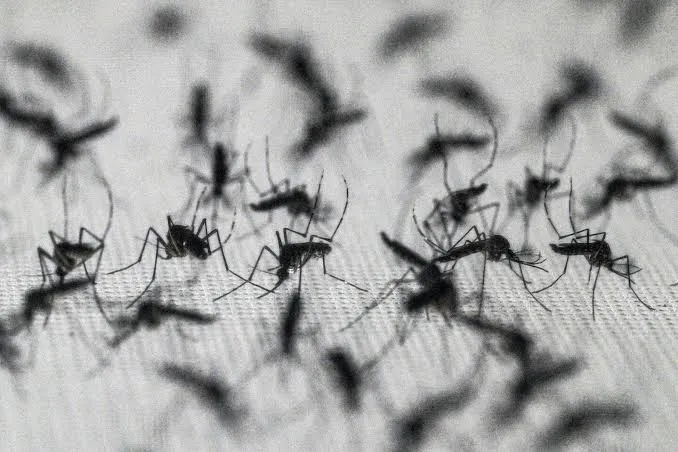
To combat rising mosquito populations and reduce dependence on chemical insecticides, pest control authorities in Washington, D.C., are releasing hundreds of thousands of lab-raised, non-biting male mosquitoes infected with the Wolbachia bacterium. Operating as a form of biological birth control, these sterile males mate with wild female mosquitoes, causing eggs to fail and suppressing local pest populations without harming surrounding ecosystems. Only female mosquitoes require blood meals and bite humans, ensuring the released males do not increase nuisance biting or disease transmission risks. Traditional control methods heavily rely on chemical larvicides and adulticides that can degrade environmental quality and negatively affect beneficial pollinators like bees and butterflies. This species-specific initiative targets invasive insects while offering sustainable, long-term suppression across urban neighborhoods. Program administrators stress that continuous multi-season releases remain necessary because mosquitoes frequently migrate from adjacent untreated municipal jurisdictions.
More context
Timeline
- On January 12 2024 Researchers evaluated biological control methods for urban mosquito management.
- On May 15 2024 Laboratory facilities scaled up Wolbachia bacteria production protocols.
- On August 20 2024 Pilot testing confirmed non-biting male survival rates in urban settings.
- On November 10 2024 Environmental impact assessments cleared the bacterial release strategy safely.
- On February 5 2025 Municipal funding agreements secured regional pest control equipment upgrades.
- On June 18 2025 Initial small-scale male releases began in controlled suburban sectors.
- On September 22 2025 Monitoring data showed significant reductions in local hatching rates.
- On January 14 2026 Washington D.C. officials announced expanded spring release programs.
- On May 1 2026 Public outreach campaigns explained safety measures to neighborhood residents.
- On September 28 2026 Municipal agencies released hundreds of thousands of sterile males.
Why it matters
Immediate US impact: Urban communities experience reduced chemical pesticide exposure and lower mosquito populations. Possible long-term US impact: Sustainable biological control methods replace chemical insecticides nationwide across metropolitan areas. Most affected groups: Washington D.C. residents, local environmental agencies, and urban pest control operators. Reader priority: Prioritize verified municipal announcements over sensationalized social media claims.
Coverage notes
Left: Environmental benefits and chemical reduction highlighted by progressive urban analysts. Center: Neutral reporting focused on scientific mechanisms and municipal implementation facts. Right: Cost-effectiveness and government program efficiency debated by conservative commentators.
Primary report
Washington D.C. launched a sterile male mosquito release program.
Sources
- DCist
- Gizmodo
- New York Times
- San Francisco Chronicle
- The Washington Post
- The Independent
- Washingtonian
- News in Levels
- Associated Press
- Reuters
- NPR
- USA Today
- Politico
- The Hill
- Bloomberg
- Chicago Tribune
- Miami Herald
- Dallas Morning News
- Seattle Times
- Detroit News
- Star Tribune
- Houston Chronicle
- Phoenix Business Journal
- Axios
- The Baltimore Sun
- Richmond Times-Dispatch
- Wall Street Journal
- Daily Caller
JQJO Editorial Desk · Human reviewed · AI assisted. Report a correction.