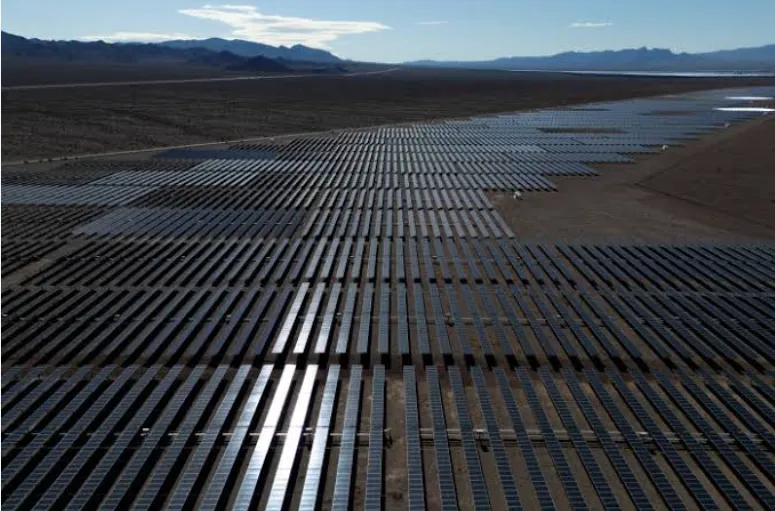
Nevada Is Making Surprising Gains on Solar Energy
Tap title to read story
Nevada is experiencing a significant expansion in solar energy capacity driven by surging electricity demands from data centers expanding across Las Vegas and Reno. According to state energy data and utility reports, solar power now accounts for roughly a quarter of the energy mix served by NV Energy. Utility forecasts indicate peak electricity demand will increase by over forty percent within five years. To address this growth, NV Energy proposed acquiring 4,550 megawatts of utility-scale solar projects alongside 5,400 megawatts of battery storage. Declining photovoltaic costs have positioned solar as a highly competitive electricity source in western regions, supported by landmark developments like the Gemini Solar Project. Despite federal regulatory headwinds, state mandates require fifty percent renewable electricity by 2030, keeping numerous solar and storage projects moving through interconnection queues across Nevada counties.
More context
Timeline
- 2020-2025 — State renewable portfolio standards established target of 50 percent renewable electricity by 2030.
- 2024 — Gemini Solar Project near Las Vegas became operational with millions of photovoltaic panels.
- September 2026 — NV Energy reported solar power accounts for 26 percent in Northern Nevada and 25 percent in Southern Nevada.
- September 2026 — Utility forecasts projected peak electricity demand in Nevada to increase by more than 40 percent over five years.
- September 2026 — NV Energy outlined resource plan proposing 4,550 megawatts of utility-scale solar and 5,400 megawatts of storage.
- 2030 — Target year for Nevada utilities to achieve the mandated 50 percent renewable electricity portfolio standard.
Why it matters
Immediate US impact: Accelerated deployment of utility-scale solar and battery storage in the American Southwest to support growing data center infrastructure. Possible long-term US impact: Progress toward regional grid decarbonization and compliance with state renewable portfolio standards despite federal policy headwinds. Most affected groups: Nevada utility customers, commercial data center operators, renewable energy developers, and local ratepayers. Reader priority: High relevance for stakeholders tracking regional grid capacity, clean energy economics, and infrastructure growth.
Coverage notes
Left: leaning and environmental outlets emphasize climate change mitigation, green transition acceleration, and the urgent need to expand renewables to reduce carbon emissions and combat global warming. Center: wire reporting outlets focus on objective economic factors, grid reliability, electricity demand from data centers, and utility regulatory filings without ideological spin. Right: leaning outlets highlight market-driven cost efficiencies, grid reliability concerns regarding intermittent power sources, and the influence of commercial tech expansion over state regulatory mandates.
Primary report
Integrated resource plan filings and utility generation reports detailing solar capacity expansion and load growth.
Sources
JQJO Editorial Desk · Human reviewed · AI assisted. Report a correction.