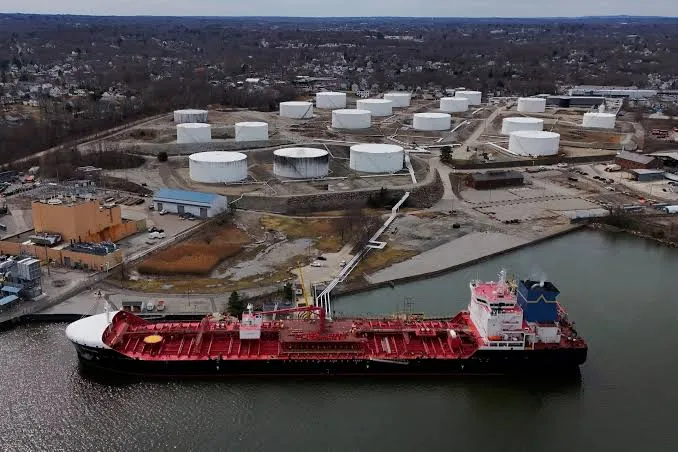
Talk of US export ban on diesel deepens US crude futures' discount to global benchmark
Tap title to read story
The Trump administration is weighing voluntary restraint or a potential export ban on diesel to combat record-high fuel prices touching $6.514 per gallon in the United States and Europe. Spurred by supply disruptions stemming from the military conflict with Iran, skyrocketing fuel costs threaten to aggravate inflation and disproportionately impact key agricultural constituencies ahead of the November midterm elections. Simultaneously, skyrocketing maritime freight rates—with very large crude carrier transport costs from the US Gulf Coast to Asia surging from sixteen million dollars to fifty million dollars—have neutralized the arbitrage incentive typically provided by a widening WTI-Brent crude discount. Although the WTI-Brent spread has remained at a discount of four dollars or wider since July, US crude exports have stayed flat and are tracking toward their third consecutive monthly decline in September. Market analysts note that elevated logistics and war risk premiums are preventing domestic crude barrels from clearing abroad efficiently, keeping domestic inventories insulated.
More context
Timeline
- On February 1, 2026, military conflict with Iran disrupted global oil supplies.
- On July 7, 2026, the WTI-Brent price spread traded exclusively at wider discounts.
- On August 1, 2026, US crude exports reached approximately 3.72 million barrels daily.
- On September 1, 2026, September US crude exports tracked toward three consecutive monthly declines.
- On September 24, 2026, US diesel prices remained elevated at $6.514 per gallon.
- On September 25, 2026, Wright engaged refinery executives regarding voluntary diesel export restraints.
- On September 25, 2026, Signal Maritime reported VLCC shipping costs reached fifty million dollars.
- On September 25, 2026, Mizuho reported required arbitrage discount thresholds doubled to minus eight dollars.
- On September 25, 2026, NitrolOil noted international crude carries a heavy logistics premium.
- On September 26, 2026, analysts anticipate continued political pressure on refiners before midterms.
Why it matters
Immediate US impact: Administration weighs export curbs as surging fuel prices threaten midterms. Possible long-term US impact: Persistent shipping costs may permanently alter traditional global crude trade flows. Most affected groups: American refiners, agricultural sectors, and consumers face heightened energy expenses. Reader priority: Readers should monitor official administration statements and verified shipping rate indices.
Coverage notes
Left: Framing emphasizes protecting domestic consumers and curbing rising inflationary burdens. Center: Framing focuses on objective market mechanics, shipping costs, and trade data. Right: Framing highlights government overreach risks and impacts on energy production.
Primary report
Reuters reported administration discussions regarding voluntary diesel export restraints on September 25.
Sources
- Politico
- New York Times
- Washington Post
- The New Republic
- HuffPost
- NPR
- Inside Climate News
- Reuters
- Bloomberg
- Financial Times
- Associated Press
- Rigzone
- Platts
- Argus Media
- MarketWatch
- Barron's
- The Hill
- Reuters (Wire)
- Bloomberg Quint
- S&P Global
- Houston Chronicle
- World Oil
- Reuters Analysis
- Bloomberg Opinion
- Financial Times Lex
- MarketWatch Commentary
- Benzinga
- The Street
- Seeking Alpha
- The Atlantic
- Time
- Newsweek
- U.S. News & World Report
- Reuters Commodities
- Bloomberg Markets
- Financial Times Energy
- Argus Global Markets
- Platts Oilgram
- Rigzone Analytics
- Crain's Chicago Business
- Wall Street Journal
- Forbes
- Washington Times
- Wall Street Journal Opinion
- Daily Caller
- Wall Street Journal Energy
JQJO Editorial Desk · Human reviewed · AI assisted. Report a correction.