Barr urges Supreme Court to stop state climate 'lawfare' against oil industries
Tap title to read story
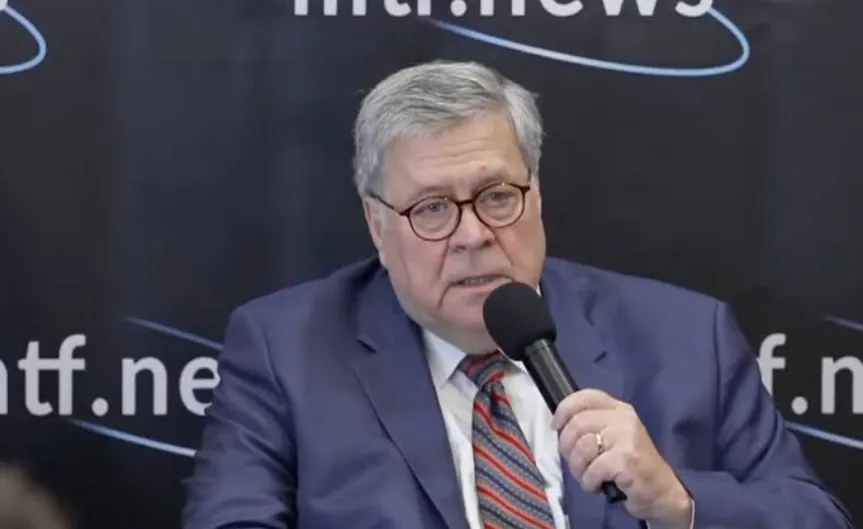
Former U.S. Attorney General Bill Barr urged the U.S. Supreme Court to review and halt state-level climate change lawsuits targeting energy companies, arguing that such litigation improperly attempts to establish national environmental policy through state courts[cite: 1]. Speaking at the National Press Club, Barr stated that these coordinated actions by state and local politicians create significant financial exposure for the domestic energy sector[cite: 1]. The underlying legal battles involve multiple jurisdictions seeking substantial damages from major energy producers over climate-related weather impacts[cite: 1]. Critics characterize the strategy as lawfare designed to bypass federal regulatory frameworks established by Congress and the Environmental Protection Agency[cite: 1]. Meanwhile, plaintiffs maintain their lawsuits pursue consumer protection and deceptive marketing claims under state laws[cite: 1].
More context
Timeline
- 2018 — Boulder County and the city of Boulder file a climate-related lawsuit against energy companies[cite: 1].
- 2011 — The U.S. Supreme Court issues its ruling in American Electric Power v. Connecticut[cite: 1].
- 2025 — A study is published in Nature estimating global economic losses from extreme heat linked to specific emitters[cite: 1].
- September 21, 2026 — Former U.S. Attorney General Bill Barr publicly urges the Supreme Court to stop state climate lawsuits[cite: 1].
Why it matters
Immediate US impact: Potential acceleration of federal judicial review regarding state-level climate lawsuits against domestic energy corporations[cite: 1]. Possible long-term US impact: Could reshape how climate change liability and environmental policy are litigated across U.S. state and federal courts[cite: 1]. Most affected groups: Energy companies, state and municipal governments, and legal analysts specializing in environmental law[cite: 1]. Reader priority: High for understanding the jurisdictional conflict between state tort claims and federal environmental regulations[cite: 1].
Coverage notes
Left: Left-leaning outlets tend to frame state climate litigation as an essential accountability mechanism for corporate responsibility and compensation for climate-related damages. Center: Center outlets focus primarily on the procedural and jurisdictional conflict between state tort laws and federal environmental statutes. Right: Right-leaning outlets and commentators emphasize the characterization of these lawsuits as 'lawfare' that threatens energy independence and bypasses federal policymaking.
Primary report
Coverage of Bill Barr's public statements at the National Press Club regarding Supreme Court intervention in state climate litigation.
Sources
- CNN
- The Washington Post
- The New York Times
- Los Angeles Times
- The Guardian
- The Atlantic
- DC Journal
- Associated Press
- Reuters
- Bloomberg
- USA Today
- NBC News
- ABC News
- CBS News
- Politico
- The Hill
- Axios
- NPR
- PBS NewsHour
- BBC News
- Forbes
- CNBC
- Financial Times
- Time
- Newsweek
- InsideSources
- Fox News
- The Wall Street Journal
- New York Post
- National Review
JQJO Editorial Desk · Human reviewed · AI assisted. Report a correction.