Vulnerable Republicans Are Increasingly Defying President Trump Ahead of the Midterms
Tap title to read story
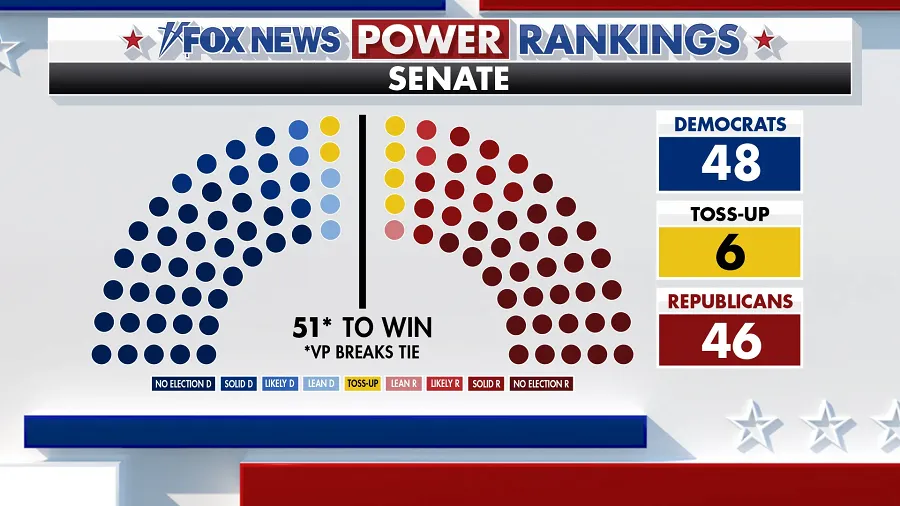
As the November midterm elections approach, vulnerable Republican lawmakers and candidates are increasingly breaking with President Donald Trump on key legislative votes and public messaging. Recent legislative actions illustrate this widening split as incumbents navigate tough battleground districts. Iowa Republican Representatives Zach Nunn and Mariannette Miller-Meeks joined fellow GOP lawmakers in voting to limit presidential war powers regarding the ongoing conflict involving Iran. Miller-Meeks stated publicly that she would not support open-ended military engagements that increase financial burdens on voters at fuel pumps. Additionally, Florida Representative Maria Salazar publicly criticized administration immigration policies, prompting a response from President Trump acknowledging political disagreement while maintaining support for her reelection bid. Campaign data highlights a tactical shift, with Republican candidates in competitive races allocating minimal ad spending to feature the president's name amid challenging polling environments. While some conservative lawmakers criticized colleagues for distancing themselves, vulnerable incumbents continue charting independent legislative courses.
More context
Timeline
- On June 19, 2026, tensions rose between President Trump and senators.
- On August 13, 2026, a public rift emerged regarding midterm messaging.
- On September 6, 2026, the unofficial campaign sprint kicked off nationwide.
- On September 8, 2026, Reuters reported low approval ratings imperiling majorities.
- On September 10, 2026, the Republican midterm convention concluded in Dallas.
- On September 13, 2026, vulnerable House Republicans embraced distinct campaign strategies.
- On September 16, 2026, three additional GOP members voted on powers.
- On September 18, 2026, prominent figures detailed party strategy concerns publicly.
- On September 19, 2026, CNN reported vulnerable Republicans defying President Trump.
- On September 19, 2026, local coverage highlighted candidates distancing themselves.
- In the coming months, political analysts expect heightened intraparty friction.
Why it matters
Immediate US impact: Intensifies legislative friction and significantly alters nationwide Republican campaign strategies. Possible long-term US impact: Threatens congressional majorities and directly shapes future legislative branch control. Most affected groups: Vulnerable congressional incumbents, campaign strategists, and political party national leaders. What Readers Should Prioritize: Track localized campaign ad spending and key congressional legislative votes.
Coverage notes
Left: Highlights party fracture and electoral vulnerability for Republican congressional majorities. Center: Reports legislative divergences objectively without assuming electoral outcomes or intent. Right: Emphasizes strategic adaptability and unity on core issues despite disagreements.
Primary report
CNN published reporting regarding vulnerable Republicans defying Trump September 2026.
Sources
- CNN
- The Guardian
- Center for American Progress
- New York Times
- Washington Post
- Los Angeles Times
- Boston Globe
- The Daily Beast
- Slate
- Brookings Institution
- University of California Santa Barbara
- Australian Strategic Policy Institute
- WTTW Chicago
- Associated Press
- Reuters
- Politico
- The Hill
- Bloomberg
- CNBC
- USA Today
- NBC News
- CBS News
- ABC News
- NPR
- PBS NewsHour
- Fox News
- Wall Street Journal
- National Review
- Washington Examiner
- The Washington Times
JQJO Editorial Desk · Human reviewed · AI assisted. Report a correction.