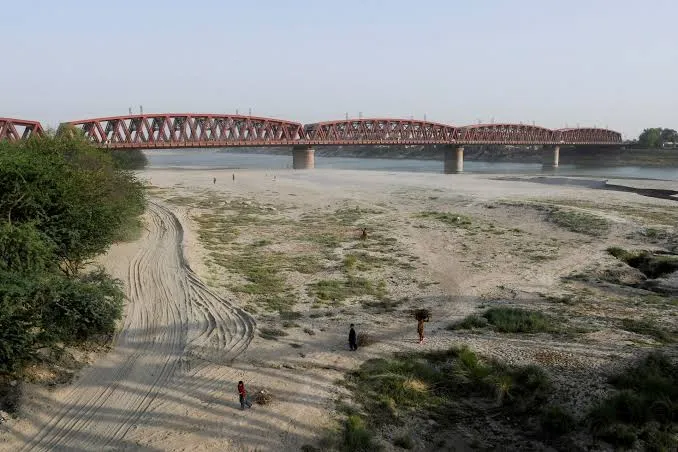
River flows were among driest in decades in 2025, World Meteorological Organization says
Tap title to read story
The World Meteorological Organization reported that global river flows reached historic lows in 2025, with more than one-third of river basins experiencing below-normal water levels. Released on Thursday, the annual State of Global Water Resources report highlighted a persistent decade-long decline in terrestrial water storage across groundwater, lakes, vegetation, and snowpack since 2014. WMO Secretary-General Celeste Saulo warned that humanity is rapidly depleting critical hydrological buffers needed during exceptionally dry periods. While widespread droughts and glacier losses affected multiple regions globally, certain areas such as South Asia experienced severe flooding and excess water due to intensifying weather volatility. The United Nations agency emphasized that these polarized extremes pose serious long-term risks to global food security, energy generation, and overall water availability. Analysts note that ongoing climate shifts continue to disrupt normal precipitation patterns worldwide, necessitating urgent infrastructure adaptations and enhanced international water monitoring strategies to mitigate future resource shortages.
More context
Timeline
- On January 1 2014 Global terrestrial water storage began a persistent decade-long decline.
- On December 31 2016 Researchers documented compounding negative anomalies across surface water storage networks.
- On January 1 2022 Consecutive years of heavy glacier retreat impacted global river basins.
- On January 1 2024 Widespread water scarcity warnings intensified across multiple international weather agencies.
- On January 1 2025 Over a third of global river basins recorded below-normal flows.
- On December 31 2025 WMO concluded its thirty-fifth year of global water data collection.
- On September 17 2026 WMO published its comprehensive State of Global Water Resources report.
- On September 17 2026 WMO Secretary-General Celeste Saulo issued a statement on depletion.
- On September 18 2026 International environmental policy analysts evaluated the long-term economic risks.
- On September 19 2026 Meteorological teams prepared regional hydrological adjustments for coming months.
- Future global water storage levels will decline further across vulnerable regions.
- Future international policy summits will address escalating global freshwater security threats.
Why it matters
Immediate US impact: Immediate US impact on agricultural irrigation and domestic water supply regulations. Possible long-term US impact: Long-term US economic pressures on municipal water infrastructure and agricultural yields. Most affected groups: Most affected groups include agricultural producers, municipal planners, and water management agencies. Reader priority: Readers should prioritize official meteorological reports over speculative commentary across outlets.
Coverage notes
Left: Emphasizes systemic climate change drivers and urgent regulatory intervention needs. Center: Reports official UN metrics and scientific findings without political bias. Right: Focuses on economic impacts and local resource management policy challenges.
Primary report
World Meteorological Organization published global water resources report on Thursday.
Sources
- New York Times
- Washington Post
- Independent
- Toronto Star
- Reuters
- Associated Press
- Bloomberg
- Financial Times
- Time
- NPR
- Politico
- USA Today
- Euronews
- Reuters UK
- Associated Press UK
- Bloomberg Green
- Axios
- Forbes
- The Hill
- Politico Pro
- Newsweek
- Al Arabiya
- Japan Times
- Straits Times
- Times of India
- CBC News
- Le Monde
- Jakarta Post
- Manila Bulletin
- Straits Times Business
- Radio New Zealand
- CBC Radio
- Free Malaysia Today
- The Nation
- Taipei Times
- Wall Street Journal
- Daily Mail
- Le Figaro
JQJO Editorial Desk · Human reviewed · AI assisted. Report a correction.