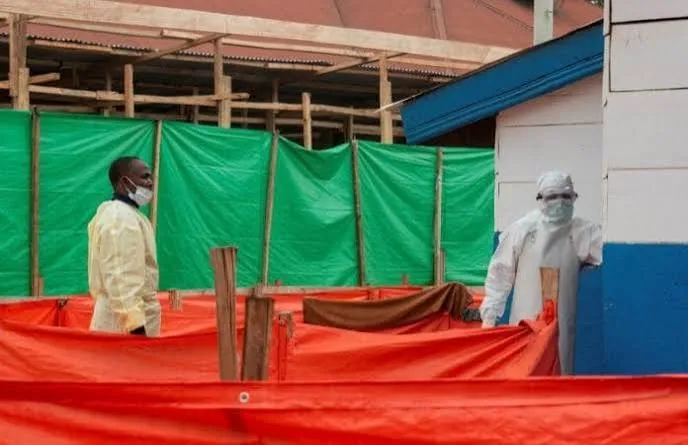
Ebola infections top 7,000 in Democratic Republic of Congo, government data show
Tap title to read story
Confirmed Ebola cases in the Democratic Republic of Congo have reached 7,022, according to government data released by the public health institute. The outbreak has spread to its seventh province, South Ubangi, located in the northwestern region of the country. This milestone highlights the ongoing challenges faced by public health officials managing the epidemic in regions impacted by weak medical infrastructure and security hurdles. The World Health Organization and local authorities continue monitoring transmission patterns, prioritizing containment efforts, contact tracing, and vaccination programs across affected health zones. While authorities noted that the infection wave peaked earlier, persistent resource limitations and geographic expansion pose ongoing hurdles to complete eradication. Public health agencies urge sustained vigilance and financial backing to support local medical teams combating the virus across impacted provinces.
More context
Timeline
- On August 15 2018 Health authorities officially declared the severe North Kivu Ebola outbreak.
- On June 11 2020 Officials declared the tenth Equateur province outbreak officially over.
- On February 7 2021 Resurgence of Ebola cases was reported in North Kivu.
- On December 16 2021 The tenth North Kivu outbreak concluded successfully with monitoring.
- On April 23 2022 A new confirmed Ebola case emerged in Mbandaka city.
- On September 27 2022 Equateur province health officials declared the 14th outbreak ended.
- On August 10 2023 Surveillance teams identified rising cluster numbers in eastern regions.
- On January 12 2025 Regional health ministries expanded monitoring across vulnerable western transit zones.
- On July 4 2026 Public health institutes scaled up vaccination coverage in provinces.
- On September 11 2026 Government data showed confirmed Ebola cases topped seven thousand.
- Epidemiologists expect containment efforts to continue reducing transmission rates across provinces.
- International health partners anticipate deploying additional resources for northwestern surveillance networks.
Why it matters
Immediate US impact: Increased domestic screening safeguards US ports against imported viral cases. Possible long-term US impact: Expanded international funding strengthens global pandemic preparedness and containment infrastructure. Most affected groups: Public health agencies, international travelers, and medical research institutions. Reader priority: Monitor official health updates and verified epidemiological situation reports.
Coverage notes
Left: Emphasized systemic healthcare deficiencies and international funding shortages for prevention. Center: Reported verified government statistics and official public health tracking updates objectively. Right: Highlighted economic impacts, administrative response efficiency, and regional security challenges.
Primary report
Government data published by public health institute on September 11 2026
Sources
- New York Times
- The Independent
- The Atlantic
- Al Mayadeen
- Reuters
- Associated Press
- Voice of America
- Africanews
- NPR
- CBC News
- NBC News
- Bloomberg
- Financial Times
- Washington Post
- USA Today
- Newsweek
- Time
- Politico
- Reuters Health
- Devex
- Science Magazine
- The Hill
- Sky News
- Euronews
- Japan Times
- CBC Radio
- Global News
- Forbes
- Quartz
- The Lancet infectious diseases
- BMJ
- New England Journal of Medicine
- Science Translational Medicine
- PLOS Medicine
- Africa News Agency
- Panapress
- The EastAfrican
- Daily Nation
- Wall Street Journal
- Daily Mail
- The Washington Times
JQJO Editorial Desk · Human reviewed · AI assisted. Report a correction.