Iran War Pushes Global Coal Use to Record High
Tap title to read story
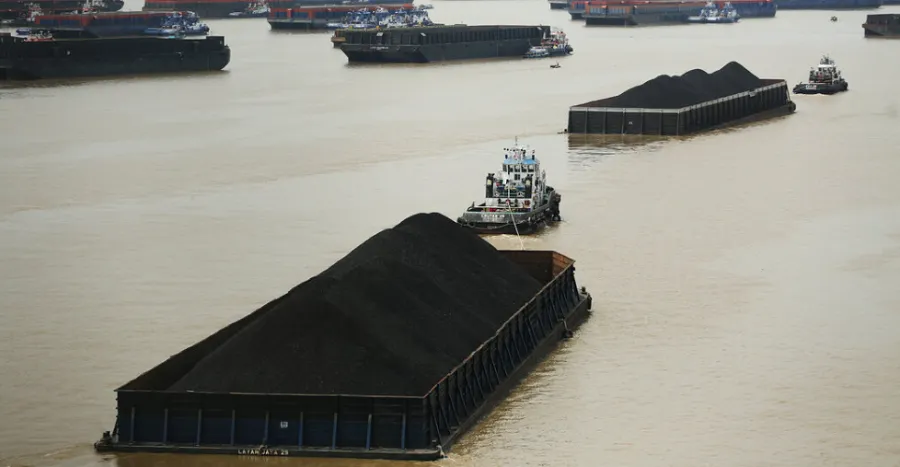
The International Energy Agency announced that global coal consumption is projected to rise 1.2% in 2026, reaching a record high of 8.94 billion metric tons. The upward revision reverses previous agency forecasts that anticipated a gradual decline in global coal demand. The shift is driven directly by the ongoing U.S.-Iran war and subsequent shipping disruptions in the Strait of Hormuz. The military conflict has restricted liquefied natural gas shipments through the critical waterway, pushing international natural gas prices to their highest levels since the 2022-2023 energy crisis. Although physical coal cargo does not transit the Strait of Hormuz, soaring gas costs made coal a significantly cheaper alternative for electricity generation. Economies possessing both gas-fired power units and spare coal capacity—including European nations, Japan, South Korea, and China—accelerated a gas-to-coal switch to keep power grids operational. Meanwhile, U.S. coal demand is projected to contract by 7%.
More context
Timeline
- On May 15, 2026, a major mine accident triggered strict safety inspections across China.
- On July 15, 2026, the IEA published its electricity market mid-year update detailing disruptions.
- On September 10, 2026, the International Energy Agency released its updated coal sector report.
- On September 10, 2026, Reuters reported the global coal demand projection of 8.94 billion tonnes.
- On September 10, 2026, Mining.com detailed the impact of LNG supply constraints on coal markets.
- On September 11, 2026, financial desks analyzed the long-term energy transition setbacks caused by conflict.
- On September 11, 2026, energy analysts noted Newcastle thermal coal futures stabilizing near $150 per ton.
- In 2027, global coal demand could decrease slightly if shipping traffic through Hormuz recovers fully.
- In 2030, analysts project that long-term renewable energy expansion will resume downward pressure on coal.
- In 2050, international climate frameworks target net-zero emissions, phasing out unmitigated global coal usage entirely.
Why it matters
Immediate US impact: Lower domestic coal consumption offsets global demand spikes across America. Possible long-term US impact: Persistently high global emissions threaten long-term international climate stabilization goals. Most affected groups: Energy intensive industries, utility companies, and global commodities markets are affected. Prioritisation Guidance: Monitor official energy agency updates and international shipping lane security reports.
Coverage notes
Left: Focuses heavily on climate setbacks and worsening global environmental emissions. Center: Emphasizes neutral data changes, market statistics, and official agency forecasts. Right: Highlights energy security challenges and economic costs of military conflicts.
Primary report
International Energy Agency released updated coal sector market report on Wednesday.
Sources
- International Energy Agency
- International Energy Agency
- International Energy Agency
- International Energy Agency
- Dawn
- BigGo Finance
- Mining.com
- ANI News
- Economic Times
- The Edge Singapore
- Business Today
- International Energy Agency
- Reuters
- CE Energy News
- Reuters Newslink
- IEA Data and Statistics
- IEA Newsroom
- Bloomberg
- S&P Global Commodity Insights
- Argus Media
- Platts
- Financial Times
- Wall Street Journal
- CNBC
- Ember Climate
- Center for Strategic and International Studies
- Energy Intelligence
- Oxford Energy
JQJO Editorial Desk · Human reviewed · AI assisted. Report a correction.