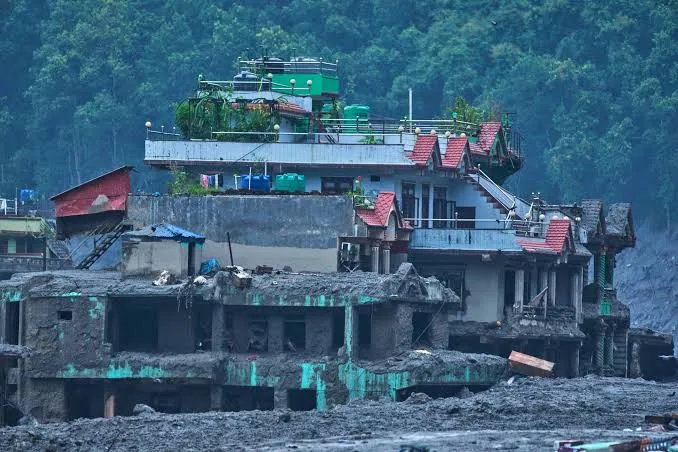
U.S. Citizens Missing Following Catastrophic Border Flash Floods
Tap title to read story
Catastrophic flash floods along the China-Nepal border have left 16 people dead and 546 missing, including 18 U.S. citizens traveling in the Tibet Autonomous Region. The disaster initiated following a glacial collapse and ice-rock avalanche on the Chokya River, triggering massive debris flows down the Poiqu River valley and surrounding basins. The U.S. Embassy and Consulates in China confirmed that American travelers are among the 261 foreign nationals from 23 countries unaccounted for in the Gyirong Port corridor. Chinese emergency management authorities deployed over 2,100 personnel utilizing search dogs and drones to navigate obstructed routes and unstable barrier lakes. The U.S. Embassy issued urgent natural disaster alerts, instructing American citizens in the region to report their status immediately to consular services in Beijing. Travel to Gyirong County and immediate border zones remains restricted as rescue teams clear debris from national roads and monitor severe secondary monsoon hazards.
More context
Timeline
- On August 25 2026 An ice-rock avalanche triggered massive catastrophic border flash floods.
- On August 26 2026 Chinese official media confirmed sixteen deaths and missing persons.
- On August 27 2026 The U.S. Embassy confirmed missing American citizens in Tibet.
- On August 28 2026 Emergency authorities deployed thousands of personnel for rescue operations.
- On August 29 2026 Rescue teams cleared debris along the G216 National Road.
- On August 30 2026 Officials continuously monitored secondary hazards from unstable barrier lakes.
- On August 31 2026 Search teams will expand operations into remote border valleys.
- On September 2 2026 Debris clearance efforts may restore limited transport corridors.
- On September 5 2026 Consular officials expect to account for missing nationals.
- On September 10 2026 Environmental teams will complete comprehensive secondary flood risk assessments.
Why it matters
Immediate US impact: Consular tracking of endangered American citizens. Possible long-term US impact: Heightened scrutiny on Himalayan tourism safety protocols. Most affected groups: American travelers, consular staff, and local families. Reader priority: Verified updates from official diplomatic and emergency channels.
Coverage notes
Left: Highlighted climate vulnerability and international consular emergency response efforts. Center: Emphasized official casualty statistics and ongoing rescue logistics coordination. Right: Focused on infrastructure destruction and foreign traveler safety warnings.
Primary report
U.S. Embassy issues natural disaster alert for border floods.
Sources
- CNN
- NPR
- The Guardian
- Washington Post
- New York Times
- Los Angeles Times
- Reuters
- Associated Press
- BBC News
- Bloomberg
- Xinhua English
- The Hindu
- Al Jazeera
- South China Morning Post
- The Straits Times
- Nikkei Asia
- Wall Street Journal
- Politico
- ABC News
- CBS News
- NBC News
- USA Today
- France 24
- DW News
- Times of India
- Kyodo News
- Fox News
- Global Times
- Daily Mail
- Telegraph
- U.S. Embassy & Consulates in China
JQJO Editorial Desk · Human reviewed · AI assisted. Report a correction.