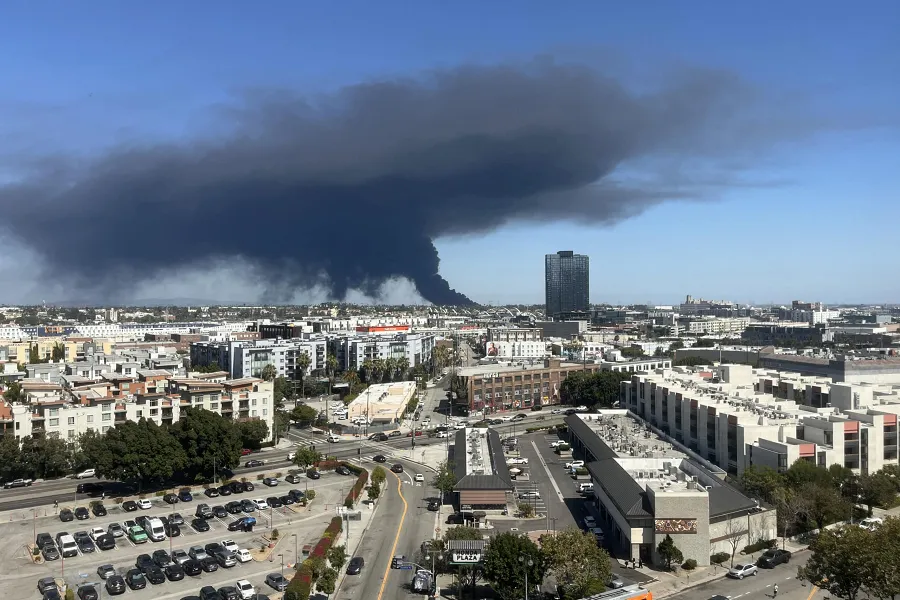
Los Angeles Declares Emergency Over Toxic Smoke from Massive Warehouse Fire
Tap title to read story
Los Angeles Mayor Karen Bass declared a state of emergency on August 20, 2026, response to a persistent commercial storage facility fire generating hazardous smoke. The blaze began on August 17 at a refrigerated distribution warehouse in Los Angeles, where flames ignited rooftop solar panels and ignited thick high-density insulation. The four-hectare facility houses 85 million pounds of frozen food, creating a severe structural challenge for emergency responders. Los Angeles Fire Department Chief Jamie Moore stated that trapped heat and slowly burning insulation continuously release irritating gases across the region. Helicopters continue aerial water drops while ground crews manage hazardous materials and monitor biological risks from decomposing food. Officials warned residents with respiratory sensitivities to avoid outdoor activities. The emergency declaration ensures the city secures critical state and federal resources to protect community health, manage environmental hazards, and mitigate long-term impacts on public safety infrastructure.
More context
Timeline
- On August 17, 2026, a massive refrigerated warehouse fire erupted unexpectedly downtown.
- On August 18, 2026, firefighters battled persistent flames and rooftop solar hazards.
- On August 19, 2026, dense smoke advisories spread across local residential communities.
- On August 20, 2026, Mayor Karen Bass declared an official state emergency.
- On August 21, 2026, hazardous materials crews monitored decomposing food safety risks.
- On August 22, 2026, aerial water drops continued targeting trapped structural heat.
- On August 23, 2026, air quality monitors recorded elevated local particulate levels.
- On August 24, 2026, emergency officials extended respiratory health warnings for residents.
- On August 25, 2026, firefighters maintained defensive operations against slow insulation burns.
- On September 1 2026 By September 2026, environmental agencies will complete hazardous runoff impact assessments.
- On October 1 2026 By October 2026, structural engineers will evaluate total facility demolition requirements.
- On November 1 2026 By November 2026, local health officials will review cold storage safety codes.
Why it matters
Immediate US impact: Immediate regional air quality warnings affect vulnerable local residents directly. Possible long-term US impact: Stricter solar panel fire safety regulations may emerge nationwide. Most affected groups: Local residents, firefighters, and surrounding Los Angeles commercial businesses. Reader priority: Monitor local emergency advisories and official municipal public health updates.
Coverage notes
Left: Emphasizes environmental health risks and government resource mobilization needs. Center: Focuses strictly on official announcements, firefighting logistics, and public safety. Right: Highlights municipal resource allocation efficiency and private property hazard impacts.
Primary report
Mayor Karen Bass declared a state of emergency on August 20.
Sources
- CNN
- NPR
- Washington Post
- San Francisco Chronicle
- Los Angeles Times
- Associated Press
- Reuters
- ABC News
- NBC News
- CBS News
- USA Today
- Wall Street Journal
- Politico
- Bloomberg
- KTLA
- KCAL News
- ABC7 Los Angeles
- NBC Los Angeles
- FOX 11 Los Angeles
- San Diego Union-Tribune
- Sacramento Bee
- Fresno Bee
- San Jose Mercury News
- Pasadena Star-News
- Press-Telegram
- Long Beach Press-Telegram
- Fox News
- Daily Mail
- New York Post
- Orange County Register
- 新黄河客户端 (Xinhua News Agency)
JQJO Editorial Desk · Human reviewed · AI assisted. Report a correction.