Intense Heatwave Engulfs Texas and Oklahoma with 114°F Temperatures
Tap title to read story
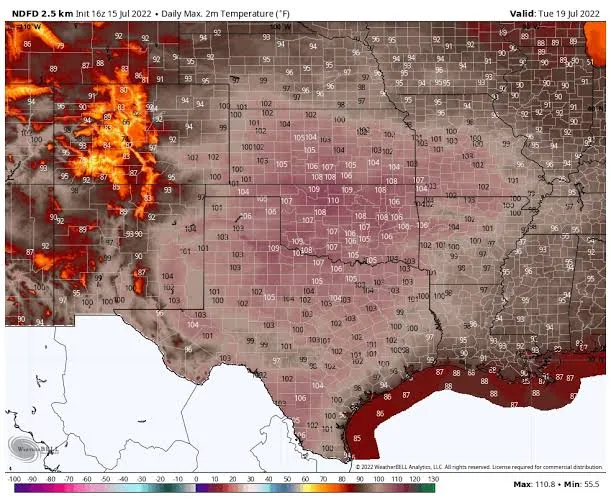
The National Weather Service has issued extreme heat warnings and advisories across Texas and Oklahoma as dangerously high temperatures and humidity grip the region. Actual air temperatures in multiple Texas counties, including Taylor, Nolan, and Haskell, are expected to reach up to 111 degrees Fahrenheit. Meanwhile, peak heat index values across northern Texas and parts of Oklahoma are forecast to climb as high as 114 degrees Fahrenheit. The active warnings remain in effect during peak afternoon hours from 1 PM to 8 PM CDT, elevating public health risks for heat-related illnesses such as heatstroke. Authorities advise residents to limit outdoor sun exposure, remain in air-conditioned environments, maintain high fluid intake, and check on vulnerable neighbors. Officials explicitly warn against leaving children or domestic pets unattended in enclosed vehicles due to rapidly rising lethal interior temperatures. This severe weather pattern follows widespread heat events and destructive wildfires impacting the broader American West.
More context
Timeline
- On August 20 2026 Meteorologists identified building high pressure ridges across southern plains.
- On August 22 2026 Initial hazardous weather outlooks warned of upcoming extreme temperatures.
- On August 24 2026 National Weather Service issued official extreme heat warnings early.
- On August 25 2026 Extreme heat warnings activated across designated Texas and Oklahoma counties.
- On August 25 2026 Peak afternoon heat indices climbed toward 114 degrees Fahrenheit.
- On August 26 2026 Elevated temperatures will continue maintaining stress on regional utilities.
- On August 28 2026 Incoming cold front might alleviate dangerous regional humidity levels.
- On September 2 2026 Seasonal average temperatures should return across southern plains states.
- On October 1 2026 Post-summer climatological evaluations will document total heat event casualties.
- On November 15 2026 Emergency management agencies will publish comprehensive summer safety reviews.
Why it matters
Immediate US impact: Severe heat strains regional power grids and spikes public health risks. Possible long-term US impact: Extended climate warming increases frequency of dangerous southern plain heatwaves. Most affected groups: Outdoor workers, elderly residents, and rural communities face elevated risks. Reader priority: Monitor local National Weather Service updates and emergency alert broadcasts.
Coverage notes
Left: Emphasizes climate change patterns and vulnerable population health risks. Center: Reports official National Weather Service warnings and safety advisories neutrally. Right: Highlights individual preparedness, regional commerce, and utility grid stability.
Primary report
National Weather Service issued extreme heat warnings on August 25, 2026.
Sources
- CNN
- ABC News
- NBC News
- NPR
- Reuters
- Associated Press
- The Weather Channel
- CBS News
- USA Today
- Bloomberg
- Wall Street Journal
- The Hill
- Axios
- Weather Underground
- Dallas Morning News
- Houston Chronicle
- Austin American-Statesman
- Tulsa World
- The Oklahoman
- Fort Worth Star-Telegram
- San Antonio Express-News
- El Paso Times
- Lubbock Avalanche-Journal
- Amarillo Globe-News
- KOCO News
- KFOR-TV
- KWTV-DT
- WFAA
- KXAS-TV
- Fox News
- : National Weather Service
JQJO Editorial Desk · Human reviewed · AI assisted. Report a correction.