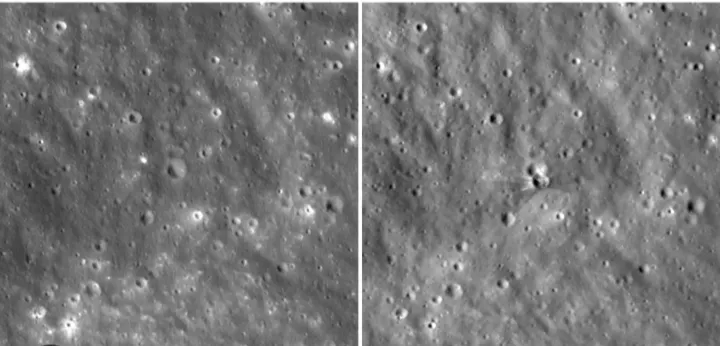
NASA Captures Double-Lobed Moon Crater from Uncontrolled SpaceX Rocket Crash
Tap title to read story
NASA released high-resolution orbiter images confirming a spent SpaceX Falcon 9 upper stage struck the lunar surface on August 5, 2026. The rocket booster previously launched Firefly Aerospace's Blue Ghost 1 lunar lander mission in January 2025 before drifting in high orbit. Tracking data from independent astronomers and NASA's Center for Near Earth Object Studies guided South Korea's Danuri spacecraft to locate the initial impact site. NASA's Lunar Reconnaissance Orbiter subsequently executed precise maneuvers on August 11 and 12 to photograph the site from ninety-six kilometers above the surface. New images reveal a fresh crater measuring eighteen meters in diameter and under three meters deep at confirmed coordinates 19.4759 N, 266.7138 E. Kinetic force exposed fresh subsurface lunar regolith alongside older space-weathered soil. The collision represents only the second documented accidental rocket impact on the Moon, highlighting escalating cislunar space debris risks as commercial and governmental lunar operations expand globally
More context
Timeline
- On October 23, 2014, China launched the historic Chang'e 5-T1 experimental lunar space mission.
- On March 4, 2022, an uncrewed Chinese rocket upper stage crashed into lunar farside.
- On January 15, 2025, SpaceX launched Falcon 9 booster carrying Blue Ghost 1 lander.
- On March 2, 2025, Firefly Aerospace successfully landed Blue Ghost 1 on lunar surface.
- On August 5, 2026, spent SpaceX Falcon 9 upper stage struck the lunar regolith.
- On August 6, 2026, South Korea's Danuri spacecraft captured preliminary images of impact site.
- On August 11, 2026, NASA Lunar Reconnaissance Orbiter executed initial targeted imaging flyby pass.
- On August 18, 2026, NASA officially confirmed LRO imaged fresh SpaceX lunar impact crater.
- On August 24, 2026, international space agencies continue analyzing lunar crater soil reflectance data.
- Global space agencies will establish strict cislunar orbital tracking protocols.
- Increased lunar missions will produce additional uncontrolled rocket stage collisions.
Why it matters
Immediate US impact: US space operators face increased scrutiny over cislunar orbit management. Possible long-term US impact: Federal regulators may require active de-orbit systems for lunar rockets. Most affected groups: US commercial launch providers, NASA, CNEOS, and satellite orbital trackers. What readers should prioritise: Focus on verified orbital tracking reports rather than exaggerated claims.
Coverage notes
Left: Focuses on corporate responsibility and environmental sustainability in cislunar space. Center: Emphasizes scientific measurement, international tracking cooperation, and lunar orbital imagery. Right: Highlights American private space sector capability while noting international tracking
Primary report
: NASA LRO imaged Falcon 9 impact crater on August 18.
Sources
JQJO Editorial Desk · Human reviewed · AI assisted. Report a correction.