New York Sewage Tanker Explosion Kills One, Injures Two
Tap title to read story
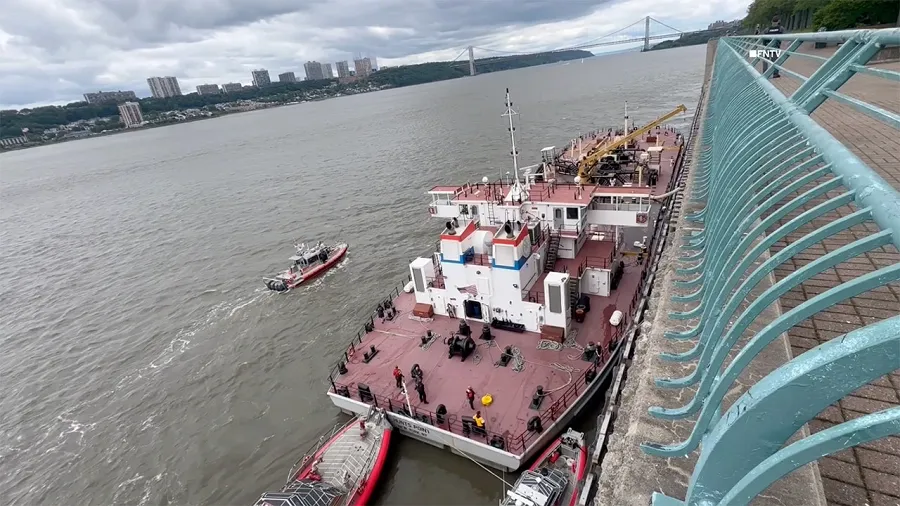
The National Transportation Safety Board determined that unapproved hot work caused the May 24, 2025, explosion aboard New York City’s sludge vessel Hunts Point. The vessel was moored at the North River Wastewater Treatment Plant on Manhattan’s Hudson River when methane generated by sludge ignited above a cargo tank, overpressurizing it. Chief Marine Engineer Raymond Feige, 59, was killed, while three crewmembers sustained minor injuries, according to the NTSB’s final report issued July 15, 2026. The vessel suffered more than $10 million in damage, but no pollution was reported. New York City’s Department of Environmental Protection initially said methane ignition was likely and confirmed facility operations were not disrupted. The NTSB found that a propane torch was used without approval to heat a seized bolt near a cargo-tank opening. The incident underscores hazards of hot work around methane-producing wastewater sludge and provides a federal safety finding for municipal marine operations.
More context
Timeline
- On May 24, 2025, at 10:20 a.m., Hunts Point exploded. �
- NTSB
- On May 24, responders found one crewmember dead, three injured. �
- NTSB
- On May 29, DEP confirmed methane ignition was likely initially. �
- NYC Government
- On August 5, 2025, NTSB docket materials were created publicly. �
- NTSB Data
- On July 17, 2025, investigators interviewed assistant engineer Robert Greenslade. �
- NTSB Data
- On July 15, 2026, NTSB issued its final investigative report. �
- NTSB
- Present
- On July 30, 2026, NTSB publicly released its investigative docket materials. �
- NTSB Data
- On August 10, 2026, gCaptain reported NTSB’s finalized safety finding. �
- gCaptain
- Future scenarios
- In months, agencies may strengthen hot-work controls aboard sludge vessels.
- Over years, municipal fleets may adopt stricter methane-safety procedures.
- Future inspections may emphasize ignition hazards around wastewater cargo tanks.
- Additional training could reduce recurrence risks during maintenance operations.
Why it matters
Immediate US impact: One municipal worker died; three others suffered minor injuries. Possible long-term US impact: Municipal wastewater fleets may tighten hot-work and methane safety. Most affected groups: NYC DEP workers, marine crews, wastewater agencies, Manhattan communities, taxpayers. Reader priority: Readers should prioritize NTSB findings, official records, and dated follow-up reporting.
Coverage notes
Left: Coverage emphasizes worker safety, municipal accountability, environmental safeguards, and prevention. Center: Coverage emphasizes verified casualties, investigation findings, official statements, and operational consequences. Right: Coverage emphasizes government workplace safety failures and municipal infrastructure risks.
Primary report
May 24, 2025, 10:20 a.m.: DEP vessel exploded; investigation followed.
Sources
JQJO Editorial Desk · Human reviewed · AI assisted. Report a correction.