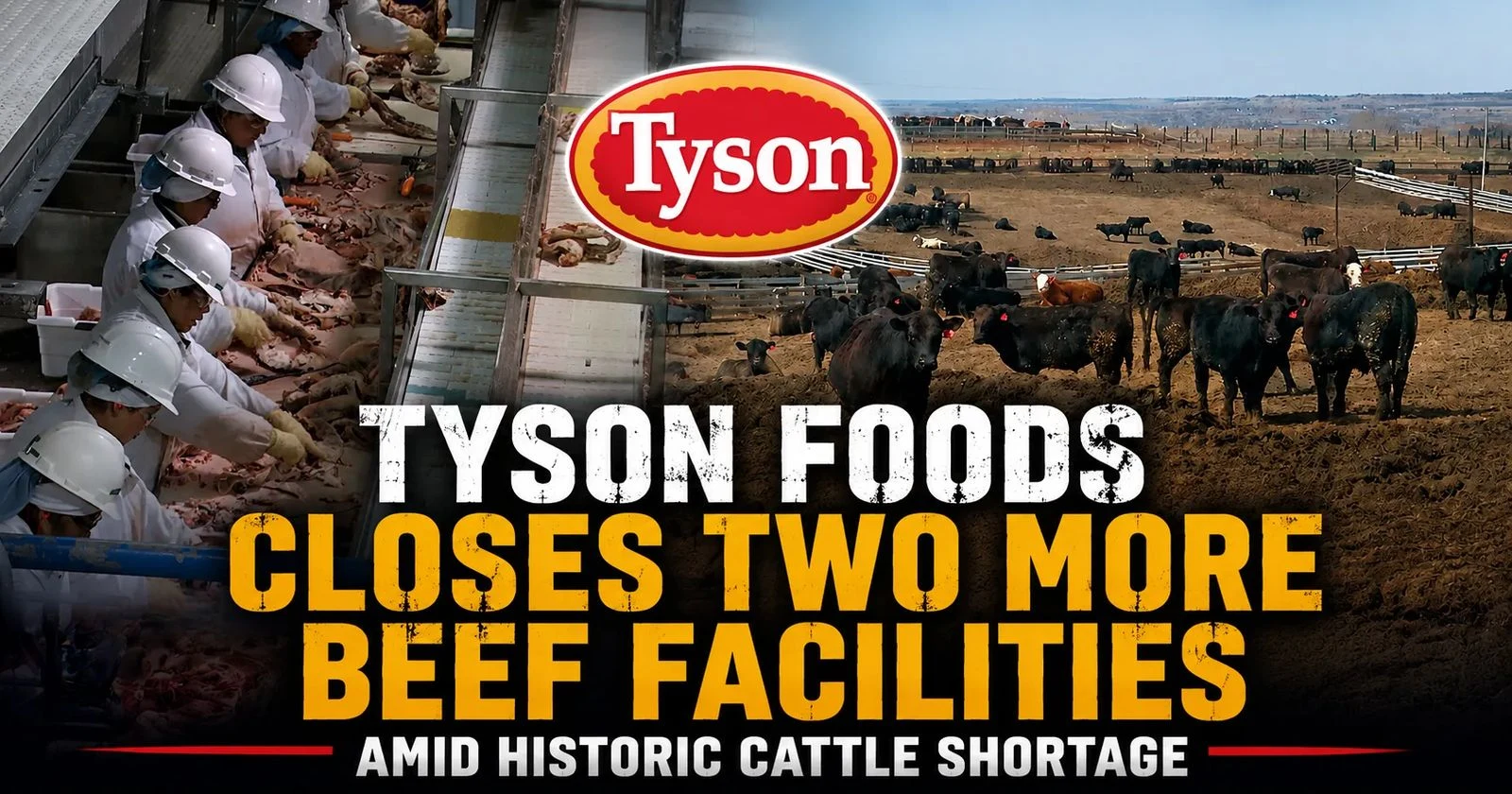
Tyson Foods Shuts Plants, Lays Off 3,200+ as Cattle Crisis Hits
Tap title to read story
Tyson Foods announced on August 13 it will close beef processing plants in Joslin, Illinois, and Eagle Mountain, Utah, eliminating over 3,200 jobs as the U.S. faces its most severe cattle shortage in decades . The U.S. cattle herd fell to approximately 86.2 million head as of January 1, 2026, a 75-year low, according to USDA data . Tyson plans to concentrate operations in Dakota City, Nebraska; Holcomb, Kansas; and Amarillo, Texas, while seeking a buyer for its Pasco, Washington, facility . The company warned its beef segment could post an adjusted operating loss of $500 million to $650 million in fiscal 2026 . Retail ground beef prices reached a record $8.65 per pound in June . President Trump announced a 90-day tariff exemption on up to 300,000 metric tons of ground beef imports to lower prices .
More context
Timeline
- 2026-08-13: Tyson announced closure of Joslin and Eagle Mountain plants.
- · 2026-08-21: Trump announced 90-day tariff exemption for ground beef imports.
- · 2026-10-12: Eagle Mountain facility is expected to cease operations finally.
- · 2026-06-27: Tyson's beef segment posted a Q3 adjusted operating loss.
- · 2026-01-01: USDA reported U.S. cattle inventory at an 86.2 million head.
- · 2026-02-02: USDA confirmed cattle inventory hit the lowest since 1951.
- · 2026-03-01: Tyson previously closed its large beef plant in Lexington, Nebraska.
- · 2025-01-01: Previous year's cattle inventory was 86.5 million head.
- · 2025-12-01: Prolonged drought severely reduced grazing availability for ranchers.
- · 2027-01-01: Analysts expect tight cattle supplies to persist into 2027.
Why it matters
Immediate impact: Plant closures devastate local workers and regional cattle producers. Long-term impact: Consolidation reduces competition and keeps consumer beef prices high. Affected groups: 3,200 workers, rural communities, Midwest cattle producers, consumers. Reader priorities: Monitor layoffs, consolidation impacts, and fresh import tariff exemptions.
Coverage notes
Left: Emphasize worker dislocation, community economic harm, and corporate consolidation consequences. Center: Detail supply-and-demand imbalance, company restructuring, and consumer and industry effects. Right: Highlight market-driven response to drought and regulations, with import tariff relief measures..
Primary report
Tyson Shutters Plants Amid Historic Cattle Shortage
Sources
JQJO Editorial Desk · Human reviewed · AI assisted. Report a correction.