U.S. National Debt to Hit $40 Trillion, 30-Year Treasury Yields Spike to 2007 Highs
PUBLISHED Aug 19, 2026, 7:39 AM ET
Read, Watch or Listen
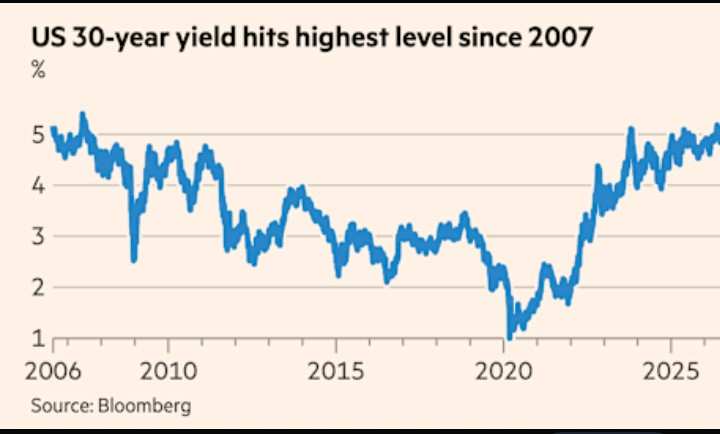
U.S. federal debt is nearing $40 trillion, while the 30-year Treasury yield has climbed to its highest level since 2007, underscoring mounting fiscal and market pressures. Treasury data put gross federal debt near $39.9 trillion on Aug. 17. Tariff refunds following the Supreme Court’s February ruling against tariffs imposed under the International Emergency Economic Powers Act have added to cash outflows, but they are not the driver of debt growth. Treasury figures show the government refunded $33.4 billion in tariffs in July, after returning $49.2 billion in June. Meanwhile, the 30-year Treasury yield reached 5.31% on Aug. 17, while an Aug. 13 auction produced a 5.216% yield. Reuters reported that investors continue buying Treasuries but are demanding higher returns amid inflation, fiscal and issuance concerns. Stocks fell Aug. 17 as yields rose, while oil prices and geopolitical tensions also contributed to market pressure. The Federal Reserve’s meeting minutes remain watched.
By James Porter | JQJO News
Timeline of Events
- February 20, 2026 — On February 20, 2026, Supreme Court invalidated broad IEEPA tariffs.
- June 3, 2026 — On June 3, 2026, gross national debt reached $39.20 trillion.
- July 6, 2026 — On July 6, 2026, gross national debt reached $39.39 trillion.
- July 13, 2026 — On July 13, 2026, tariff refunds pushed June deficit higher.
- August 12, 2026 — On August 12, 2026, Treasury reported $432 billion July deficit.
- August 13, 2026 — On August 13, 2026, 30-year Treasury auction yielded 5.216 percent.
- August 17, 2026 — On August 17, 2026, debt approached $39.9 trillion, nearing milestone.
- August 17, 2026 — On August 17, 2026, 30-year Treasury yield reached 5.31 percent.
- August 18, 2026 — On August 18, 2026, 30-year Treasury yield eased toward 5.30%.
- August 19, 2026 — On August 19, 2026, Treasury prepared a $16 billion auction.
- Coming months — Over coming months, elevated yields could increase federal interest expenses.
- Coming years — Over coming years, persistent deficits could keep debt-service costs elevated.
News Intelligence
- Immediate US impact: Higher Treasury yields raise borrowing costs across government and markets.
- Possible long-term US impact: Persistent deficits could increase interest costs and constrain fiscal flexibility.
- Most affected groups: Taxpayers, borrowers, homeowners, businesses, investors, Treasury officials, and policymakers face pressures.
- Reader priority: Prioritize Treasury data, Federal Reserve records, court documents, and Reuters reporting.
- Articles Published:
- 22
- Right Leaning:
- 4
- Left Leaning:
- 1
- Neutral:
- 17
- Distribution:
- Left 5%, Center 77%, Right 18%
Left: Coverage emphasizes fiscal costs, tariff fallout, inequality, and household borrowing pressures. Center: Coverage emphasizes debt levels, Treasury yields, market forces, and competing causes. Right: Coverage emphasizes government spending, fiscal discipline, deficits, and taxpayer burdens.
August 18, 2026 Washington Post reported debt would cross $40T. https://www.edgen.tech/zh/news/post/30-year-treasury-yield-hits-5327-highest-since-2007
Coverage of Story:
From Left
What smart investors are saying about a 2007-era warning flashing in the bond market
Business InsiderFrom Center
U.S. National Debt to Hit $40 Trillion, 30-Year Treasury Yields Spike to 2007 Highs
The Washington Post via 经济日报 Reuters Reuters Reuters Reuters Reuters The Wall Street Journal Barron's Barron's Fortune Fortune Fortune Fortune Yahoo Finance The Times Associated Press ReutersFrom Right
The national debt is about to hit $40 trillion. Here's how it can hurt Americans.
MarketWatch MarketWatch Fox Business Breitbart News






Comments