U.S. Consumer Spending Plunges as Recession Fears Intensify
Tap title to read story
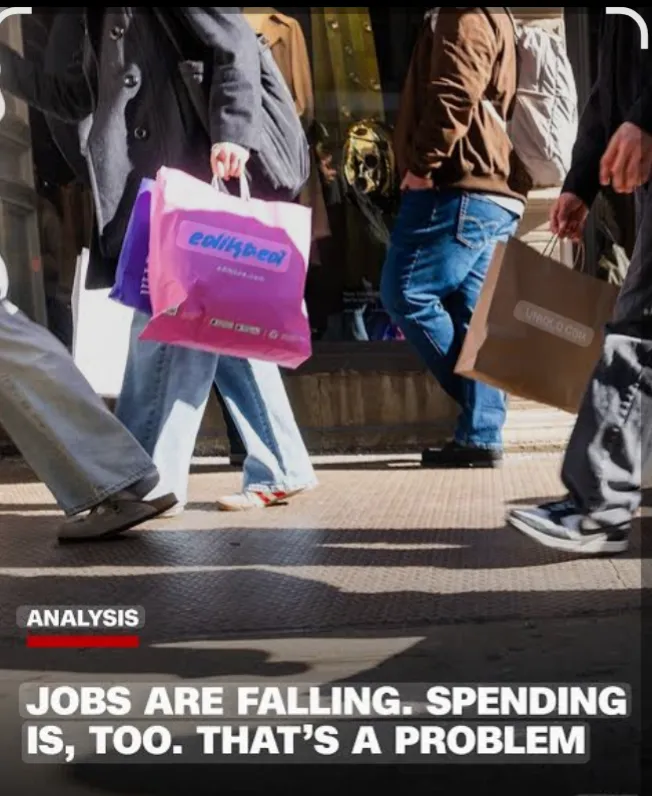
U.S. retail sales fell 0.6% in July, the first monthly decline in nine months, raising concerns about weakening consumer demand. The Commerce Department reported Friday that sales totaled $763.6 billion, while sales excluding gasoline also fell 0.6%. Core retail sales declined 0.4%, and nonstore retailers dropped 2.2%. Sales nevertheless remained 5% above July 2025 levels, tempering recession concerns. The University of Michigan’s preliminary consumer-sentiment index fell to 51.0 in August from 55.2 in July, with larger declines among older and lower-income consumers. The labor market also weakened: employers cut 23,000 jobs in July, while labor-force participation fell to 61.4%, according to government data. Chicago Fed President Austan Goolsbee has said inflation remains a greater concern than labor weakness, while recent data show cooling inflation. Analysts say the retail decline partly reflects fading tax refunds and seasonal spending distortions. The evidence signals slower growth, but does not establish a recession yet.
More context
Timeline
- On August 14, 2026, retail sales fell 0.6% unexpectedly nationwide.
- On July 16, 2026, June retail sales increased 0.2% nationally.
- On July 30, 2026, consumer spending increased 0.3% during June.
- On August 7, 2026, employers unexpectedly cut 23,000 jobs nationwide.
- On August 12, 2026, July inflation eased modestly from June.
- On August 13, 2026, wholesale prices unexpectedly remained unchanged nationwide.
- On August 14, 2026, consumer sentiment fell sharply to 51.0.
- On August 14, 2026, online retail sales declined 2.2% monthly.
- By August 26, updated spending data should clarify consumer momentum.
- In September, labor data will test whether weakness persists nationally.
- Through autumn, retailers may face cautious households and softer demand.
Why it matters
Immediate US impact: weaker retail demand signals softer economic momentum. Possible long-term US impact: persistent weakness may slow growth, altering Fed policy. Reader priority: prioritize datasets, original documents, and independently verified updates. Most Affected: lower-income households, retailers, workers, and consumer-focused businesses.
Coverage notes
Left: Coverage emphasizes affordability pressures and disproportionate strain among vulnerable consumers. Center: Coverage emphasizes weaker spending while noting annual growth and uncertainty. Right: Coverage emphasizes tax-refund timing and questions recession interpretations from July.
Primary report
On August 14, 2026, Census Bureau released July sales data.
Sources
JQJO Editorial Desk · Human reviewed · AI assisted. Report a correction.