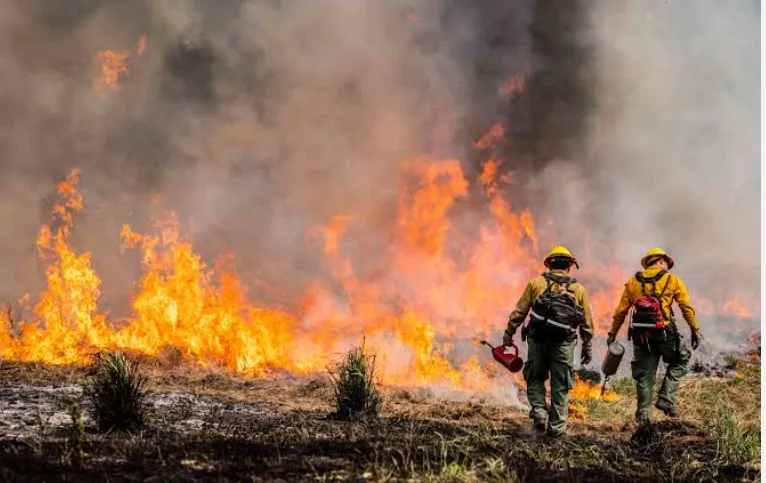
US Firefighter Entrapments Hit 20-Year High Amid Record Wildfires
Tap title to read story
United States wildland firefighting personnel are facing severe conditions as operational entrapments reach a 20-year high during the active 2026 wildfire season. Data compiled by the Wildland Fire Lessons Learned Center and interagency partners indicates that rapid fire propagation, prolonged drought, and erratic wind behavior have compromised escape routes for ground crews across multiple western states. The surge in dangerous entrapment incidents follows intense initial attack responses to multiple fast-moving blazes, resulting in operational casualties and heightening safety concerns for deployed personnel. Federal agencies report that tens of thousands of firefighters remain mobilized nationwide to contain millions of burned acres. Safety officials continue to evaluate tactical protocols as elevated temperatures and dry vegetation sustain high-risk fire environments across the country.
More context
Timeline
- On January 15, 2026, early seasonal wildfires prompted initial interagency firefighting resource deployments.
- On February 17, 2026, major prairie and forest blazes triggered multi-state emergency evacuation orders.
- On March 17, 2026, a volunteer firefighter sustained burns during initial attack operations in Utah.
- On June 27, 2026, an entrapment event during the Knowles Fire caused fatal injuries.
- On July 6, 2026, national wildland firefighting personnel totals reached 11,816 active workers.
- On July 18, 2026, seven helitack crewmembers experienced a burnover entrapment incident in California.
- On July 24, 2026, a critically injured firefighter succumbed previously sustained operational burn injuries.
- On August 13, 2026, safety data confirmed twentieth-year high wildfire crew entrapment metrics.
- Federal agencies will expand predictive weather modeling to enhance ground crew evacuation safety warnings.
- Emergency response teams will adjust standard tactical deployment zones for high-risk seasonal fires.
Why it matters
Immediate deployment risks heighten safety protocols for active national crews. Climate pressures will permanently transform federal wildland firefighter deployment strategies. Wildland firefighters, federal agencies, western state residents, emergency management teams. Monitor official National Interagency Fire Center updates and local warnings.
Coverage notes
Left: Emphasizes climate change drivers and federal firefighter protection policies. Center: Reports factual interagency data regarding seasonal wildfire entrapment statistics. Right: Focuses on resource deployment efficiency and local emergency management responses.
Primary report
Wildland Fire Lessons Learned Center published incident statistics on August 13, 2026, at 2:15 PM PKT.
Sources
- CNN
- The Washington Post
- Los Angeles Times
- Reuters
- Associated Press
- Wall Street Journal
- ABC News
- NBC News
- CBS News
- Denver Post
- USA Today
- Politico
- Bloomberg
- The Hill
- National Public Radio
- Weather Channel
- Sacramento Bee
- San Francisco Chronicle
- Arizona Republic
- Oregonian
- Seattle Times
- Santa Fe New Mexican
- Dallas Morning News
- Miami Herald
- Houston Chronicle
- Atlanta Journal-Constitution
- Boston Globe
- Chicago Tribune
- Wall Street Journal (Markets)
- Fox News
- Reuters
JQJO Editorial Desk · Human reviewed · AI assisted. Report a correction.