United States firm unveils noninvasive brain-to-text AI
PUBLISHED Jun 30, 2026, 6:59 AM ET
Read, Watch or Listen
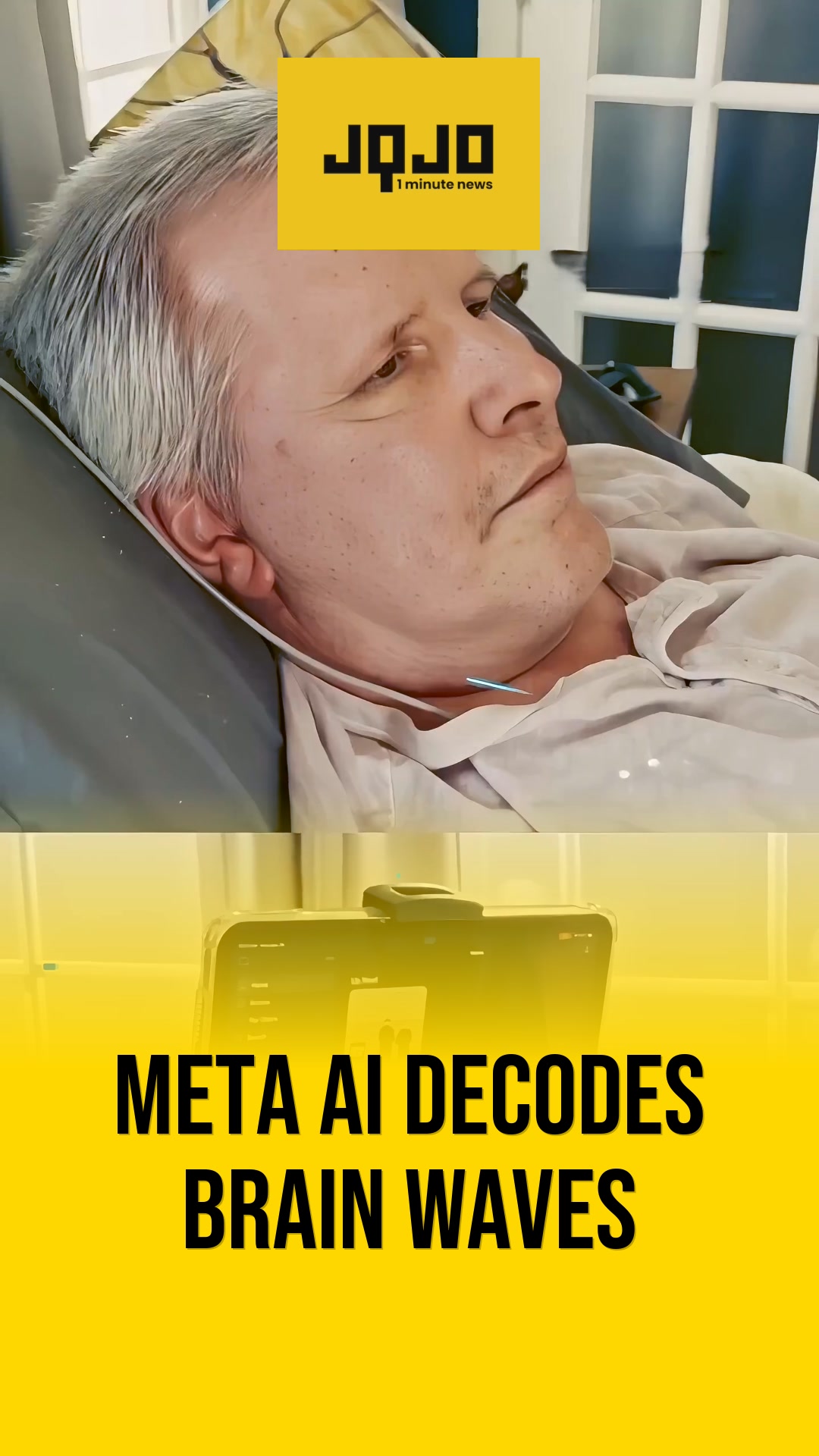
United States – Meta has introduced Brain2Qwerty v2, an artificial intelligence system that converts brain activity into text using non-invasive magnetoencephalography (MEG), avoiding the need for surgical brain implants that have historically been required for comparable accuracy. The company said the system approaches performance levels previously seen only with invasive methods, marking a major advance for non-invasive brain–computer interfaces. Researchers trained the model on about 22,000 sentences collected from nine volunteer participants, each of whom spent roughly 10 hours wearing an MEG device while actively typing so that the system could link patterns of neural activity to specific words and sentences. United States – Brain2Qwerty v2 uses an end-to-end deep learning approach that decodes language directly from raw brain signals, rather than relying on manually designed processing steps, and incorporates large language models fine-tuned on neural data to use semantic context to turn noisy signals into coherent text. The system achieved an overall word accuracy rate of 61 percent, compared with about 8 percent for other non-invasive techniques, and reached 78 percent word accuracy for the best-performing participant, with more than half of all decoded sentences containing one or zero word errors. Meta said the technology could support millions of people with brain lesions or other conditions that limit speech, and it will release the full training code for Brain2Qwerty v1 and v2, while its research partner, the Basque Center on Cognition, Brain and Language, will release the Brain2Qwerty v1 dataset. The findings were published in Nature Neuroscience on June 29, 2026.
By Ayesha A. | JQJO News
Timeline of Events
- Prior research Noninvasive decoding achieved about 8 percent
- Earlier this year Meta completes Brain2Qwerty v2 development
- Training phase Nine volunteers provide MEG recordings
- Training phase 22,000 sentences captured during typing
- This week Meta reports 61 percent average word accuracy
- This week Best participant reaches 78 percent accuracy
- This week Meta releases Brain2Qwerty v1 and v2 code
- Future studies Larger datasets expected to narrow performance gap
News Intelligence
- This tech could be a game-changer for those with speech-limiting conditions. It's non-invasive, meaning no surgery. It's also showing promising accuracy rates. If you know someone who struggles with speech, keep an eye on this development.







Comments