Ben James Leads RBC Canadian Open After 63
Tap title to read story
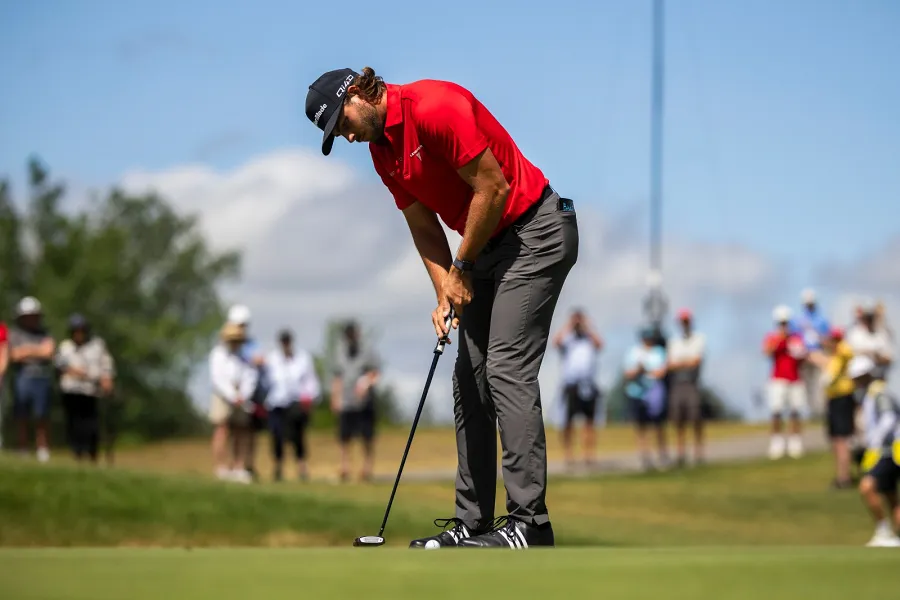
CALEDON, Ontario — On June 12, 2026, Ben James fired a 7-under 63, including a 25-foot eagle to start his round, and took the second-round clubhouse lead at the RBC Canadian Open with a 10-under total; he played bogey-free on the Osprey Valley course at TPC Toronto and held a one-shot advantage.
The result left James one stroke ahead of a group including Haotong Li, Sam Burns and Jackson Suber while Brooks Koepka and Tommy Fleetwood stood two shots back; the projected cutline was 2-under, and James enters the weekend having not made a bogey in his last 33 holes and holding PGA Tour status through 2027.
More context
Timeline
- 1. Prior to June 2026: James became a four-time All-American at Virginia and led PGA Tour University, earning a tour card through 2027.
- 2. Morning June 12, 2026: Matthew Anderson and others shared an early six-way tie atop the leaderboard.
- 3. Afternoon June 12, 2026: James holed a 25-foot eagle, shot a 7-under 63 and finished at 10-under.
- 4. June 12, 2026 post-round: Haotong Li, Sam Burns and Jackson Suber were among those immediately behind James on the leaderboard.
- 5. After round: Projected cutline reported at 2-under; James entered the weekend with a prolonged bogey-free streak.
Why it matters
If you're a golf fan, this is a thrilling moment. Ben James, a four-time All-American, is leading the RBC Canadian Open. He's showing exceptional skill, playing bogey-free for 33 holes. It's a great time to tune in and watch a rising star in action.
Sources
JQJO Editorial Desk · Human reviewed · AI assisted. Report a correction.