US Carrier Leads Blockade in Arabian Sea Operations
Tap title to read story
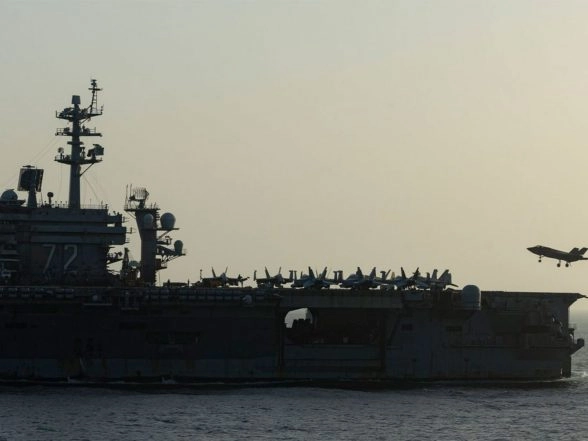
Washington — The US Navy deployed the aircraft carrier USS Abraham Lincoln (CVN 72) to conduct blockade operations in the Arabian Sea on April 16, CENTCOM said this week. The announcement detailed the ship's embarked air wing, including F-35C, F/A-18, EA-18G, E-2D, MH-60 and CMV-22B aircraft, as part of maritime enforcement activity.
The enforcement measures follow maritime restrictions that took effect on April 13; CENTCOM and ANI reported more than 10,000 personnel, over a dozen naval vessels and upwards of 100 aircraft supporting the operation this week. SANA reported on April 18 that 21 vessels complied with U.S. instructions and turned back, and Pentagon officials reiterated readiness to resume combat operations if ordered.
Timeline
- 1. April 13: CENTCOM-related maritime measures came into effect, restricting port access near Iran.
- 2. Following failed talks, President Donald Trump announced a naval blockade on a Sunday, per reporting.
- 3. April 16: CENTCOM posted that USS Abraham Lincoln conducted blockade operations in the Arabian Sea.
- 4. Thursday (this week): Defense Secretary Pete Hegseth renewed warnings about striking Iran's infrastructure during a Pentagon briefing.
- 5. April 18: SANA reported that 21 vessels had returned to Iran after complying with U.S. instructions.
Sources
Asian News International (ANI)
JQJO Editorial Desk · Human reviewed · AI assisted. Report a correction.